The dollar is down 11% over the past year and more than 2% so far in 2026, as measured by the U.S. Dollar Index, or DXY, which gauges the dollar's strength against a basket of U.S. trade partner currencies.
The change in the dollar's value relative to other currencies is happening for a number of reasons, chief among them the unpredictable and volatile policies by the White House, including threats to take over Greenland, pressures on the Federal Reserve to cut interest rates, and unfunded tax cuts that will drive the national debt higher.
Such policies drive global investors away from dollar-denominated assets and into other safe haven assets like gold, which decreases global demand for dollars and the value of the dollar with it. So how is an investor to play this global macro trend?
Well, one great way is to invest in emerging market (EM) stocks. When the dollar weakens, they tend to do well. That was definitely the case in 2025, when the dollar fell 9% and EM stocks, as measured by the Vanguard FTSE Emerging Markets ETF (VWO 2.03%), rose 25.6%, crushing the S&P 500, which gained 17.7%.

NYSEMKT: VWO
Key Data Points
A weaker dollar signals risk on for investors
When the dollar weakens, it's often a sign of reduced risk aversion among global investors, meaning they're looking to put their money into jurisdictions and regions less secure than the U.S. and other advanced economies. So money flows into emerging market stocks, sending them higher. A weaker dollar also means more favorable exchange rates for emerging markets, boosting their economies and stock markets.
And of course, there's the current U.S. administration, which is embracing the weakening of the greenback. In fact, President Donald Trump continues to reiterate that he wants a weaker dollar. "I think it's great," Trump said on Jan. 27 about the weakening currency. "I think the value of the dollar -- look at the business we're doing. The dollar's doing great."
Also, there's the impending end of Jerome Powell's term as Federal Reserve chair, which will happen in early May. Powell has been very prudent with interest rate cuts. In fact, this past week the Fed's rate-setting committee declined to cut the Fed's target rate despite intense pressure from the White House to do so.
If you believe like I do that Trump will attempt to replace Powell with a chair who is much more willing to ease monetary policy, then it's likely that the dollar's decline will accelerate this year, as global capital drifts toward countries with higher rates. So the decline in the value of the dollar looks likely to continue for the foreseeable future.
And VWO is a great way to play it. By emerging markets, I'm not talking about the world's poorest nations. VWO holds about about 6,200 large-, mid-, and small-cap stocks from more than 20 emerging economies. Its biggest holdings are:
- Taiwan Semiconductor Manufacturing (11%)
- Tencent Holdings (4.35%)
- Alibaba Group Holding (3%)
- HDFC Bank (1.2%)
Other than Taiwan Semiconductor, no stock accounts for more than 5%, and the fund's 10 largest positions account for about 20% of its assets, which makes it highly diversified. Chinese stocks account for about a quarter of the fund's holdings, Taiwanese stocks about 23%, Indian stocks 15%, and Brazilian stocks 4%. The remainder is a diverse mix of stocks from middle-income emerging market countries around the world, from Mexico to South Africa and Thailand.
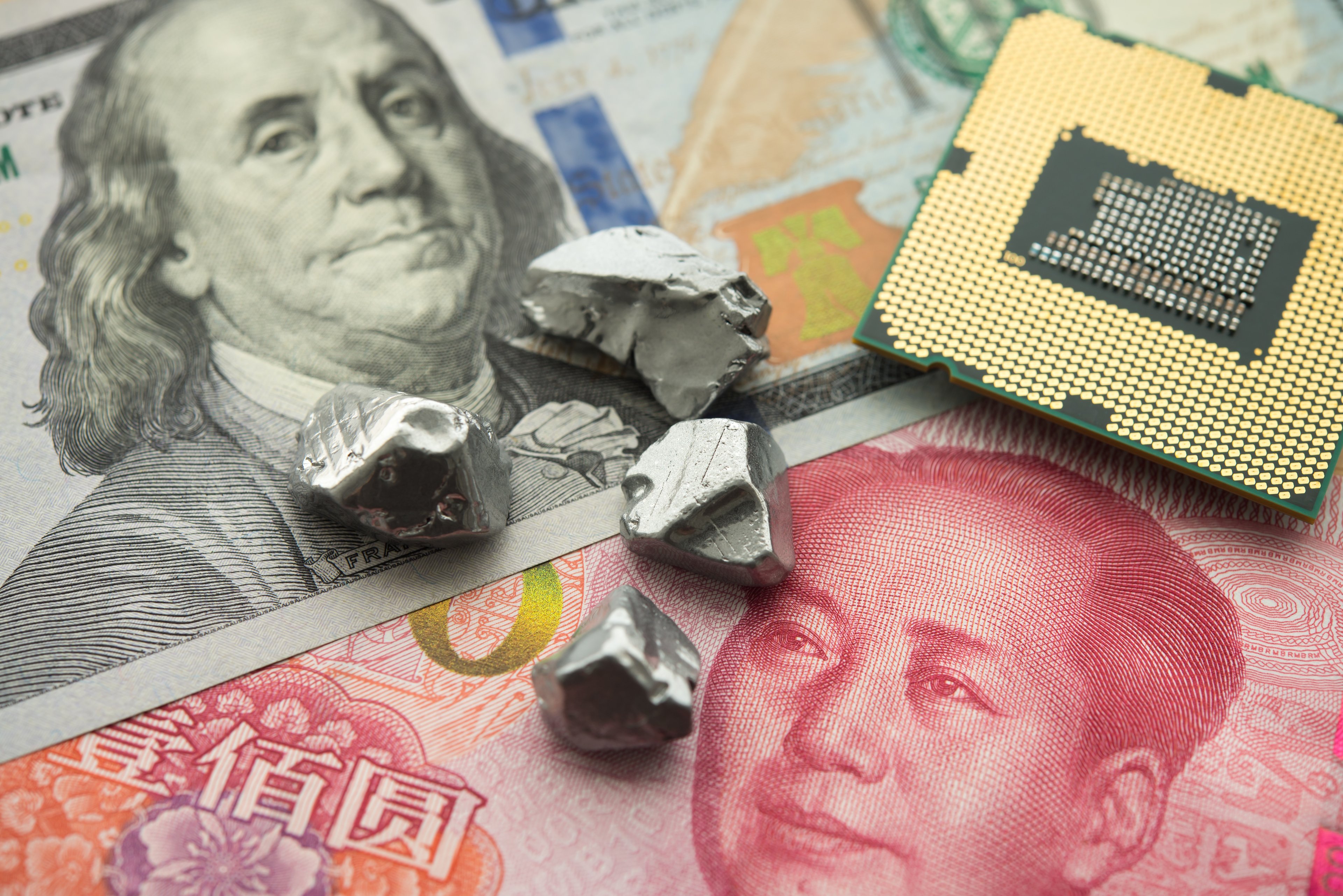
Image source: Getty Images.
Economic performance in many of these countries is improving as structural changes are bolstering growth. The International Monetary Fund recently raised its outlook for economic growth across emerging markets from 3.7% to 4.1%, and much of that improvement comes from a brighter forecast for China's economy.
Emerging markets are a bargain compared to U.S. equities
And compared to U.S. stocks, which have had a huge run-up in recent years, emerging market stocks are cheap. The forward price-to-earnings ratio for these stocks is about 13.4. For the S&P 500 index, that ratio stands at about 22 right now. That makes emerging market stocks a huge bargain compared to U.S. stocks. Emerging market stocks are a great deal right now, and they look primed to outperform U.S. stocks again this year. Now is a great time to get in.