Ford Motor Company (F 0.58%) said late on Tuesday that it lost $11.1 billion in the fourth quarter of 2025. That sounds awful, but more than 100% of that loss was related to some one-time special items announced in December, when Ford revamped its electric vehicle (EV) strategy.
On an adjusted basis, excluding one-time items, Ford earned a profit of $0.13 per share. That sounds much better, but it fell short of Wall Street's estimate, as reported by Reuters, which predicted a profit of $0.19 per share.
When a company misses Wall Street's profit estimate, its stock will often take a swan dive. That didn't happen to Ford's stock, though. Ford's shares were up slightly in after-hours trading following the news and were up modestly again on Wednesday morning.
That's because Ford's "earnings miss" had a story -- and the story isn't one that should worry investors. Here's what happened.

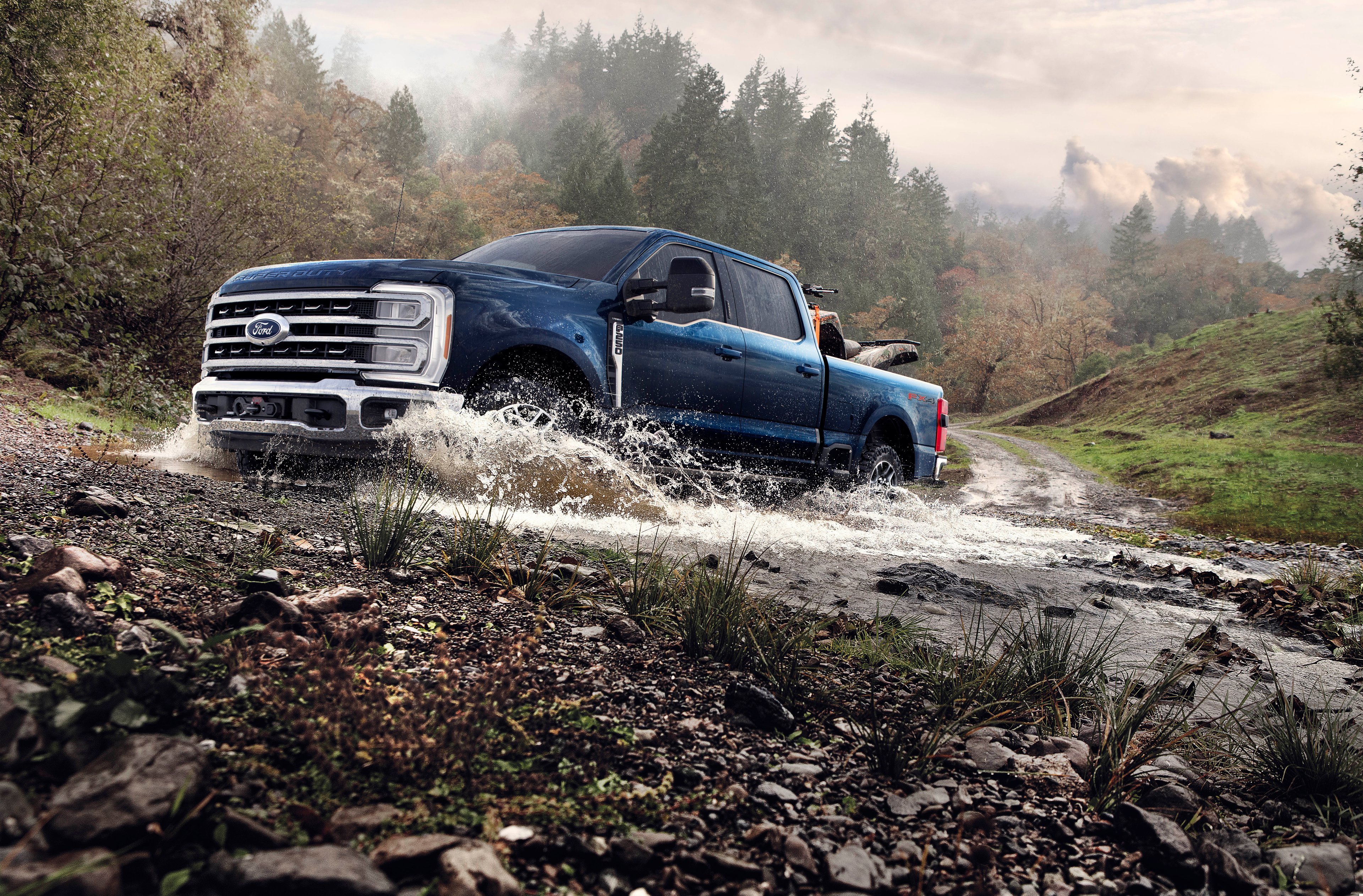
Ford's fourth-quarter earnings missed Wall Street's estimates, but it didn't hurt the stock. Image source: Ford Motor Company.
Why Ford's earnings fell short of Wall Street's -- and its own -- expectations
Chief Financial Officer Sherry House said that Ford received updated guidance on tariff credits from the Trump administration in late December. Simply put, Ford received less tariff relief on imported parts than it had expected. That left Ford with additional tariff costs of roughly $900 million in the fourth quarter, throwing off its own -- and Wall Street's -- expectations for 2025 earnings.
Wall Street analysts had based their guidance on Ford's Dec. 15 forecast of $7.7 billion in adjusted earnings before interest and taxes (adjusted EBIT) for the year, and on Ford's October guidance, which had estimated the full-year impact of tariffs at about $1 billion.
The added tariff costs ended up dropping Ford's 2025 adjusted EBIT to $6.9 billion, bringing in its fourth-quarter result below Wall Street's estimate. It also meant that Ford missed its own guidance, which had called for adjusted EBIT of $7 billion for the year.

NYSE: F
Key Data Points
Why that "miss" didn't tank the stock
So why did the market choose to overlook Ford's earnings miss? I think it's because at this point, the market has priced in the idea that the White House's tariff policies can change quickly.
What happened to Ford in the fourth quarter was an understandable extra cost that was outside of the company's control -- and importantly, one that it could absorb without a huge impact on its operations.
Of course, Ford also provided upbeat guidance for 2026, and the results for its business units were all roughly in line with what Ford told investors to expect.
The upshot: Ford's stock was unbothered by the fact that the company "missed" Wall Street's estimates.