The Pentagon's aggressive push into artificial intelligence (AI) is rewriting the rules of defense contracting in real time. Rather than simply buying more jets and missiles, the military is focused on building systems that think, adapt, and decide faster than any adversary.
In an April 1 press release, the Department of Defense talked about "President Trump and Secretary [of Defense Pete] Hegseth's vision to build the Arsenal of Freedom" to "accelerate the delivery of critical capabilities to the warfighter, and create thousands of jobs across the defense industrial base."
The windfall isn't going to be awarded to anyone who simply touches defense. The most lucrative contracts are flowing to those who make AI operate as if it were purpose-built for the battlefield.
Three contractors, Palantir Technologies (PLTR +2.45%), Anduril Industries, and Lockheed Martin (LMT 0.94%), are treating AI as a central nervous system of warfare and not just a bolt-on feature. Together, these companies reveal a deeper truth: The Pentagon's AI budget is reserved for those who make situational intelligence, autonomy, and legacy platforms work together seamlessly.
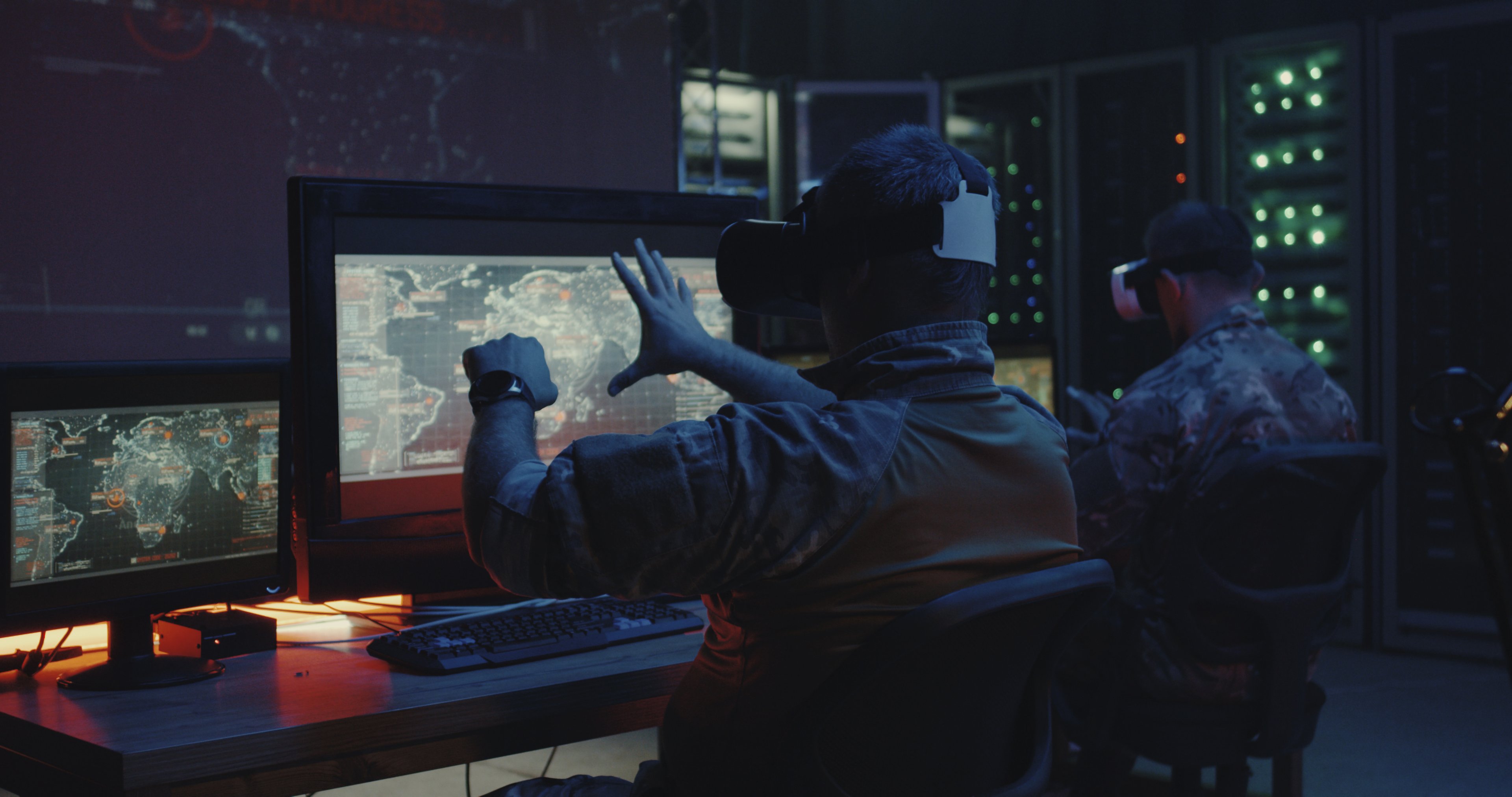
Image source: Getty Images.
Palantir turns data overload into real-time command intelligence
Raw volume is the enemy in multidomain operations. Commanders are flooded with feeds analyzing satellite images, drone and shipping routes, ground sensors, and more.
Palantir's AI platforms, Foundry and Gotham, digest data from these sources a single evolving picture, called an ontology. These ontologies are constantly updating thanks to machine learning models that predict and simulate enemy moves before they form.
The result is not generic, commoditized software sales, but a backbone that every military service branch now relies on as indispensable infrastructure -- delivering compounding revenue as AI becomes the new language on the battlefield.
Anduril builds AI systems that can operate without constant human intervention
Legacy defense contractors are scrambling to retrofit AI onto antiquated platforms developed several decades ago. Anduril took a different approach: designing hardware and software together so autonomy is a native feature from the start.
Similar to Palantir, Anduril's operating system ingests data from swarms of military equipment -- drones, cameras, sensors, maritime fleets -- and uses AI to filter and detect potential threats.
The company's Lattice platform can integrate with third-party systems already embedded across the government. This architecture provides an edge to the DOD as disparate systems become meshed together -- able to respond to threats more efficiently.
Because Anduril remains private, direct shares are restricted to accredited investors or venture capital and private equity firms. However, retail investors can still gain exposure in Anduril prior to an initial public offering (IPO) through the ERShares Private-Public Crossover ETF (XOVR +5.23%).
Lockheed Martin is achieving hybrid dominance by embedding AI into proven architecture
While newer entrants to the defense landscape build products from scratch, Lockheed Martin is embedding AI into fifth-generation fighter jets, missile batteries, and command nodes -- turning legacy architecture into real-time, adaptable learning systems.

NYSE: LMT
Key Data Points
For a legacy platform like Lockheed, this new hybrid architecture brings advantages: The company can retrofit existing aircraft with real-time AI reflexes without spending years designing and building new fleets. This is a cost-effective approach that extend Lockheed's relevance into the next era of combat effectiveness -- allowing the company to diversify its R&D budget into other defense pockets that complement its core aircraft operations.
Lockheed's unmatched scale and integration expertise should help keep the company deeply integrated with the Pentagon's AI mandates -- turning technology modernization into a self-reinforcing growth vector rather than a risky side project.