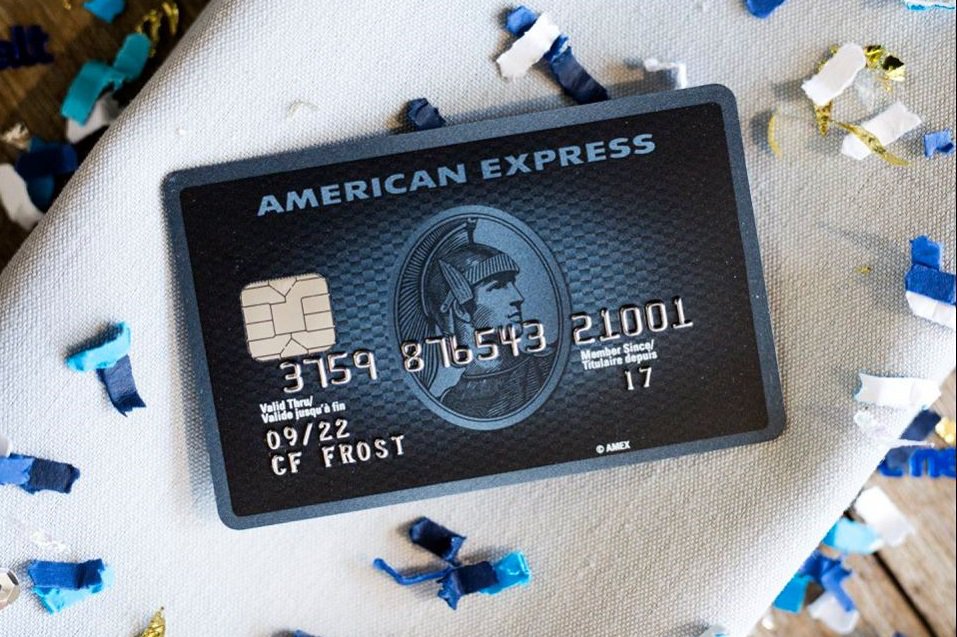
It's been a Berkshire Hathaway (BRKA +0.39%) (BRKB +0.58%) holding for so long now that it goes unnoticed as much as it goes unmentioned. The fact that American Express (AXP -0.54%) has grown into Berkshire's second-biggest holding, however, speaks volumes. Berkshire's new chief executive officer, Greg Abel, seems to love it as much as Warren Buffett did when he began building the 151 million-share position back in the 1990s.
The thing is, there's good reason the conglomerate has stuck with this investment for as long as it has. Amex just proved it again last month, with its first-quarter numbers. It was the color added to those results, however, that really underscores what makes this stock such a must-have.
American Express is just built differently
You know the company. American Express is, of course, a credit card brand, often lumped in with the likes of Visa and Mastercard (which Berkshire also owns, by the way).
It's distinctly different from Mastercard and Visa, however, in one key way. That is, whereas Visa and Mastercard manage payment networks, neither company actually provides credit or issues its own credit cards -- they simply process transactions. American Express, on the other hand, is both the network operator and the card issuer.

NYSE: AXP
Key Data Points
This structure offers obvious advantages, not the least of which is that it allows American Express to exert more cost-effective control of its relationships with and between merchants and cardholders.
That's not what makes this company such a consistently strong performer, though. It certainly helps. But what makes Amex a true powerhouse is how it's capitalized on its opportunity.
Amex built a perks and rewards business that not only appeals to more affluent consumers but also incentivizes them to pay an annual fee of as much as $895 per year (for its Platinum card). It wouldn't be a stretch to describe American Express as a perks and rewards subscription service; it just uses payment cards as a means of managing them.
And this dynamic remains reliably evident in the company's results, including through last quarter, despite the backdrop of economic worry.
Persistently superior results prove the point
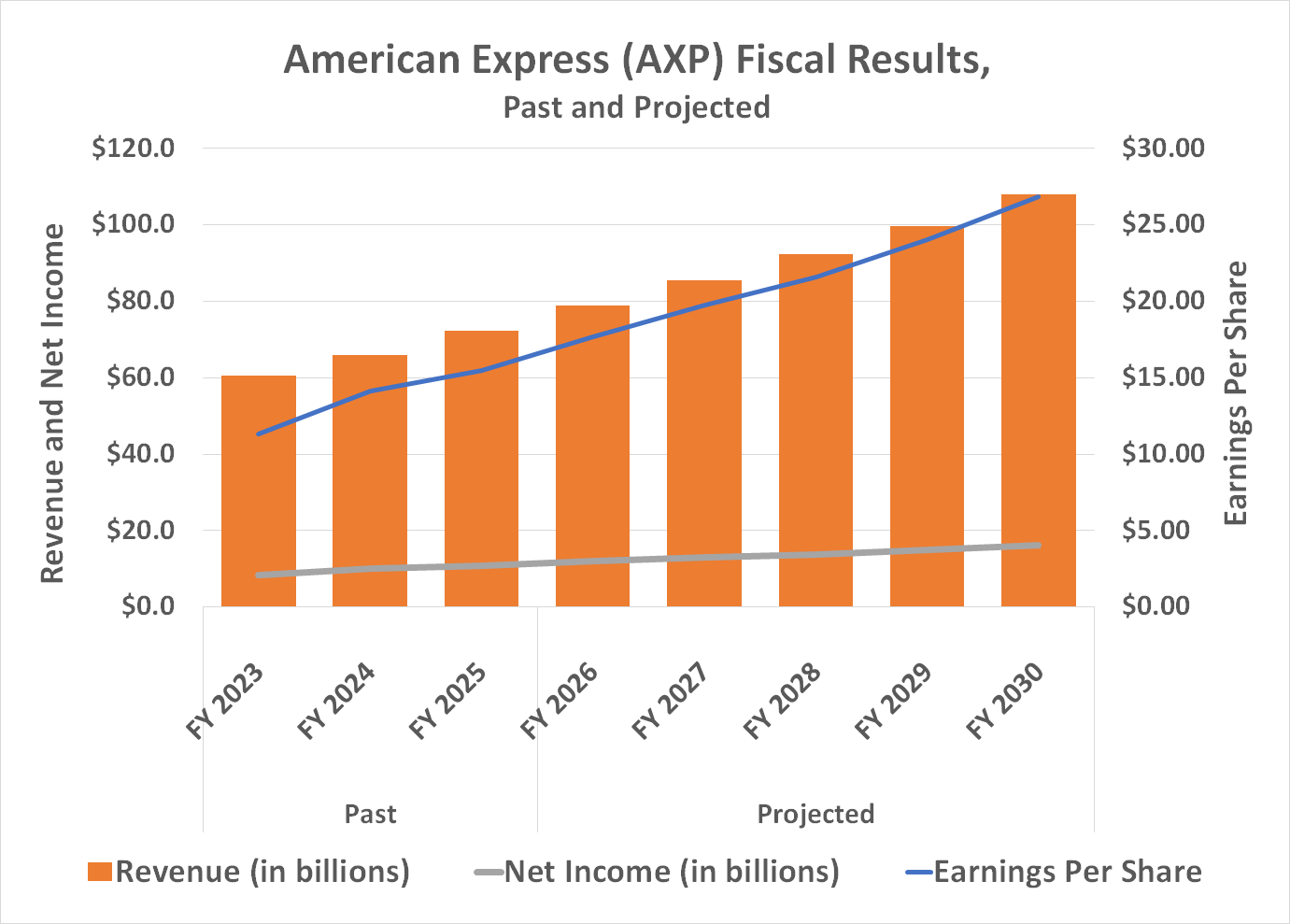
American Express turned $18.9 billion worth of revenue into a per-share profit of $4.28 for the three months ended in March, up 10% and 18%, respectively, and topping analysts' estimates for revenue of $18.6 billion and earnings of about $4 per share.
The stock didn't log gains on the good news, though. It fell, in fact, mostly in response to disappointing projections and concerns about spending on marketing and technology in the near future. Specifically, the company still expects top-line growth of between 9% and 10% for 2026, leading to a per-share profit of between $17.30 and $17.90, which is in line with analysts' forecasts, but investors were tacitly expecting the company to raise its outlook from January's figures. When they didn't see that happen, the market protested in the form of a sizable sell-off.
Now take a step back and look at the bigger picture. American Express mustered solid double-digit percentage growth in an environment that includes a lingering military conflict in the Middle East and, subsequently, soaring gas -- and other -- prices. Management clearly knows these challenges are still in place, too, and could be for a while. They decided to stick with what's still a healthy growth target anyway, despite the risks ahead, assuming the company's well-established history points to what's likely in the future.
Data source: Morningstar. Chart by author.
Give most of the credit to American Express's more affluent cardholders, who continued showing up to spend when less affluent consumers wouldn't, or just couldn't. As Chief Financial Officer Christophe Le Caillec highlighted during the Q1 earnings conference call, "Restaurant spending was up 9% once again this quarter. At the same time, airline spending picked up, growing 8%, driven by higher growth across consumers, SMEs [small and medium-sized enterprises], and large corporates."
Don't make it overly complicated by overanalyzing it
One good quarter doesn't make a trend. Neither does one good year, for that matter. And it's not as if American Express's cardholders are entirely immune to economic weakness. When things get bad enough, they will tighten their purse strings too.
They did in 2008, for instance -- but not nearly as much as you might think. Although 2008's net income took a tumble due to rising defaults, Amex's total revenue still managed to rise 3% during that turbulent year. And things certainly aren't as difficult now as they were then.
Perhaps more important to today's investors, the narrative about American Express's affluent cardholders continues to be recycled because it matters in a way that makes a meaningful difference. Most investors weren't initially impressed by the company's forecast for the remainder of the year, but revenue growth of between 9% and 10% paired with an even-better improvement on last year's per-share profit of $15.38 is actually quite impressive, particularly in this environment.
In light of the stock's modest recovery from its post-earnings setback, most investors seem to be easing into agreement with this idea now. Berkshire Hathaway's management never really seemed to stop agreeing, though, even when the stock was peeling well back from its early-January peak.
This company wasn't just built to last. It was built to perform well in all environments. Anyone who's bought its stock on the dips like the current one has done pretty well with this major Berkshire holding. Don't overthink it.