Talk of an AI bubble has faded since late last year, when signs of weakness in some AI stocks and fears around circular deals triggered a sell-off in names like Nvidia.
Since then, a shortage in memory chips and strong demand growth have sent AI stocks surging again, with major indexes hitting all-time highs following the dip over the Iran war.
However, a bursting bubble is still a very real possibility. Semiconductors are historically cyclical, after all, and prone to price swings due to inventory gluts and shortages. That's especially true with memory.
Now, the AI bubble could face its biggest test with the IPO of SpaceX, which just filed its S-1, showing key numbers ahead of its intended listing in June.
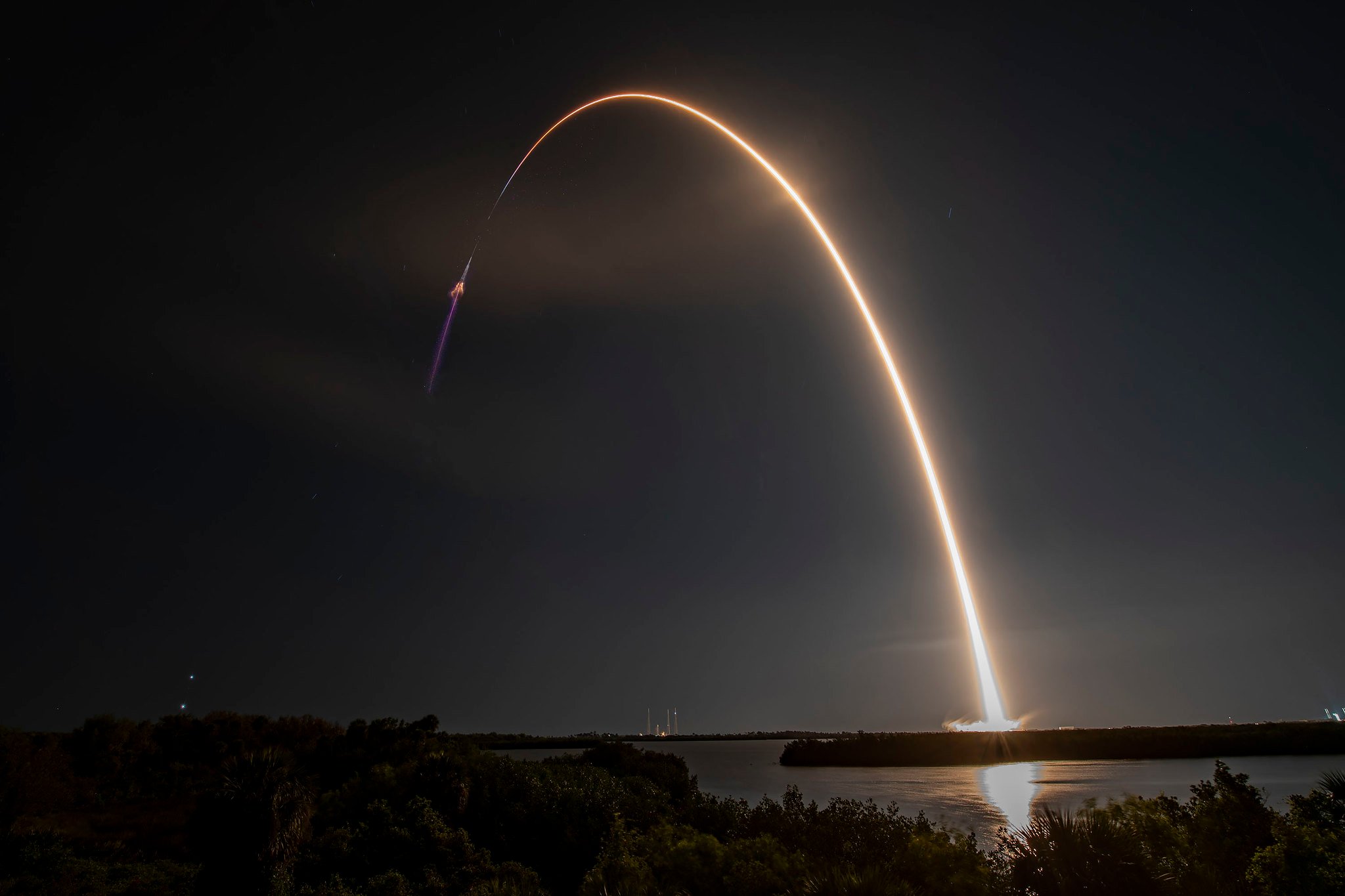
Image source: SpaceX.
What we just learned about SpaceX
SpaceX has gotten a lot of attention because it's a unique company with leading positions in reusable rockets and satellite internet, and because it's led by Elon Musk, the visionary entrepreneur who has already built one trillion-dollar company, Tesla, and is set to take another one public, as SpaceX could fetch a valuation of as high as $2 trillion.
However, we now have a clear view of SpaceX's financials, and they don't look like the typical $2 trillion company.
In the first quarter, SpaceX's revenue grew by just 15.4% to $4.7 billion, and it reported a generally accepted accounting principles (GAAP) operating loss of $1.9 billion, compared to a profit of $27 million in the quarter a year ago.
In 2025, revenue rose 33.2% to $18.7 billion, and it reported an operating loss of $2.6 billion, compared to a profit of $466 million in the quarter a year ago. While SpaceX is delivering solid growth, those aren't particularly remarkable numbers, especially for a company that is already one of the most valuable in the world.
Why the SpaceX IPO could trigger a bubble
Based on those numbers, SpaceX's valuation would be off the charts. At a $2 trillion valuation with $19.3 billion in revenue, SpaceX would trade at a price-to-sales ratio of more than 100. The only S&P 500 stock that can be compared to SpaceX at that price tag is Palantir, which trades at a price-to-sales ratio of 64.
However, Palantir is growing much faster than SpaceX, and it is profitable. By comparison, the median stock on the S&P 500 has a price-to-sales ratio of just 3.
If SpaceX is successful in achieving a valuation of $2 trillion, or something close, one of two things will happen in the rest of the market.
First, other high-tech, growth stocks like those exposed to AI could soar as well as SpaceX feeds the frenzy in the market and encourages retail investors to pile into AI stocks, including SpaceX. Such a spike in stocks would make a subsequent sell-off more likely. Something similar happened in the dot-com era as stocks went parabolic in 1999 before peaking in March 2000.
The other possibility is that SpaceX stock flops shortly after going public, which would likely trigger a sell-off in other AI stocks as investors grow suspicious of their valuations.
In fact, SpaceX is worried enough about insiders selling that it's devised a workaround for the traditional 180-day IPO lockup period that prevents insiders from selling during that period. It's deemed a certain percentage of shares as early release eligible, and insiders can sell them if the stock goes high enough.
SpaceX has bold ambitions, but that's much different from a business that deserves to be worth $2 trillion. For it to go public at such a high valuation, 100 times its revenue, is a warning sign for the rest of the market and raises the chances of a bubble.