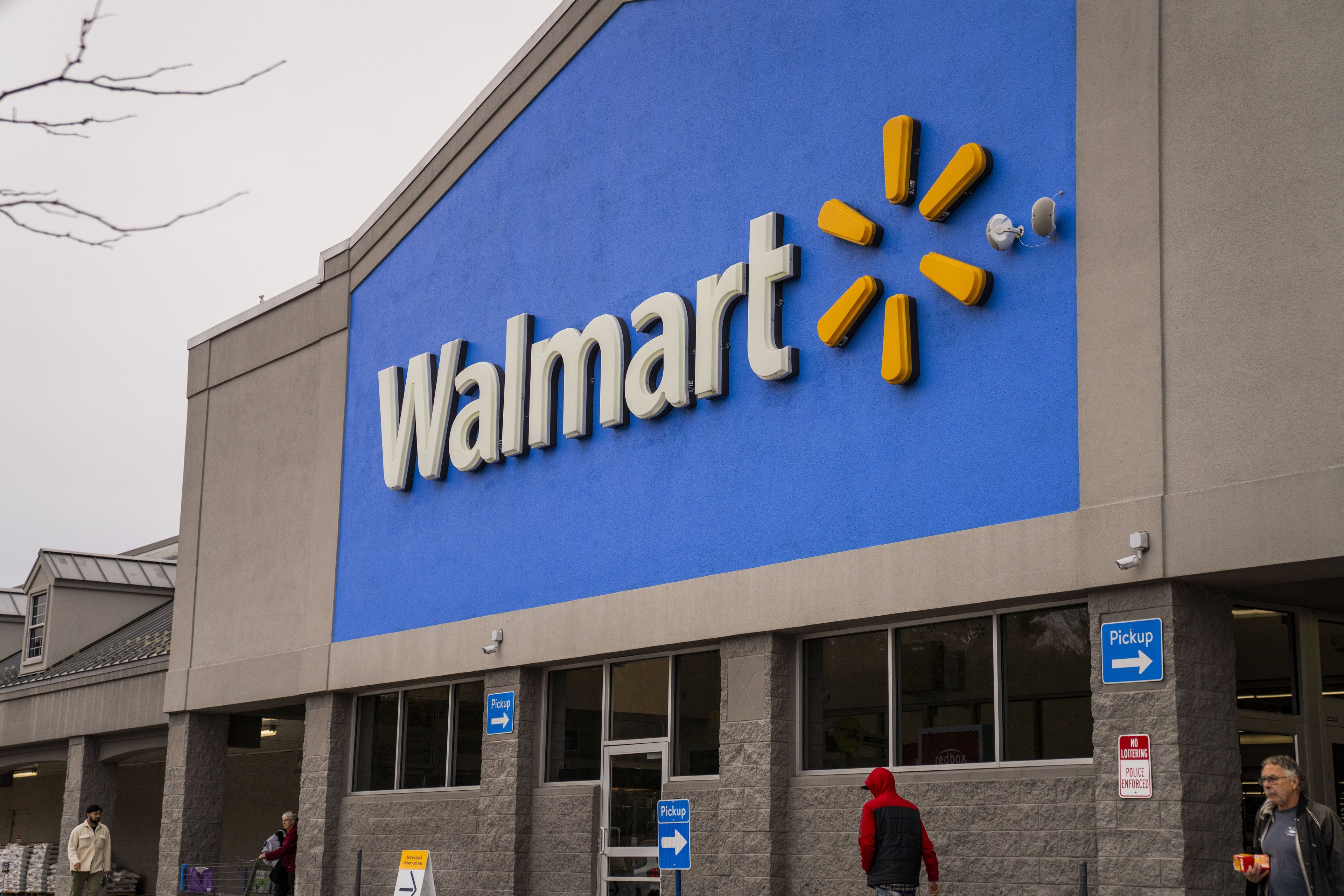
Shares of big-box retailer Walmart (WMT 0.93%) slid about 7% on Thursday after the company posted results for the first quarter of fiscal 2027 (the period ended April 30, 2026). Measured on just about any metric from the report, it was a good quarter. Revenue rose 7.3% year over year to $177.8 billion, e-commerce sales climbed 26%, and the numbers landed above the guidance management itself had laid out three months earlier. And yet the stock fell anyway, slipping to around $120 as of this writing after closing near $131 the day before the report.
So why would investors sell a stock on a quarter like this?
Part of the answer is what management didn't do. Walmart held its full-year forecast steady rather than lifting it.
Image source: The Motley Fool.
Solid earnings momentum
Walmart's appeal in recent years has rested on a shift toward faster-growing, higher-margin businesses layered on top of its low-margin grocery base. That shift was on display again in the fiscal first quarter. Its global advertising business grew 37%, with Walmart Connect (excluding the VIZIO acquisition) up 44% in the U.S. And membership and other income rose 27%, helped by a 17.4% increase in membership fee revenue and a record number of first-quarter sign-ups for the Walmart+ program. Because advertising and membership fees carry far better margins than selling groceries, they're supposed to let profits grow faster than sales.
This quarter, they didn't. But there's more to the story.
Yes, operating income rose just 5% -- slower than the 7.3% increase in revenue. But the reason was fuel. During Walmart's fiscal first-quarter earnings call, chief financial officer John David Rainey said the company absorbed about $175 million in higher-than-planned fuel costs across its global distribution and fulfillment operations, a hit equal to about 250 basis points of operating income growth. Strip that out, and profit growth would have outpaced constant-currency sales growth, just as the higher-margin strategy is designed to do.
Also highlighting strength in Walmart's business, earnings per share grew about 8% year over year on a non-GAAP (adjusted) basis.

NASDAQ: WMT
Key Data Points
A cautious consumer and a rich price tag
But here's where investors may have been spooked. Management was cautious about the overall consumer environment.
"The high income customer is spending with confidence into many categories, while the lower income consumer is more budget conscious and perhaps navigating financial distress," Rainey told investors during Walmart's earnings call. He pointed to one telling figure: the number of gallons customers buy when they stop at Walmart's fuel stations recently "fell below 10 for the first time since 2022." In his words, "That's an indication of stress."
For a company with stores and clubs within 10 miles of about 90% of the U.S. population, weakness at the lower end matters. And it helps explain why Walmart, even after exceeding its own fiscal first-quarter guidance, chose not to raise its full-year targets. The company still expects constant-currency sales growth of 3.5% to 4.5% and adjusted earnings per share of $2.75 to $2.85 for the year -- the same outlook it issued back in February.
And Walmart stock's premium valuation raises the stakes. Even after the pullback, Walmart trades at a price-to-earnings ratio of about 42 -- far richer than most retailers. The dividend yield, meanwhile, sits below 1%.
The shares had climbed to record highs earlier this year and remain higher for 2026, so a good deal of optimism is still priced in.
Of course, there's still plenty to like here. Walmart is gaining market share, and its higher-margin businesses keep compounding. Additionally, new CEO John Furner is leaning further into technology; the company said it completed its one-millionth drone delivery during the quarter. And Furner described Walmart in the company's earnings call as "becoming AI native."
The retailer is returning cash, too, repurchasing $2.1 billion of stock in the quarter under a fresh $30 billion buyback authorization.
So is the post-earnings dip a buying opportunity? For long-term investors who value Walmart's durability and steady share repurchases, the lower price could be a reasonable entry point. But the valuation still leaves little room for disappointment, and a strained low-end consumer and volatile fuel costs are real risks. For that reason, interested investors may want to consider starting only a modest position at today's price and waiting for a deeper pullback before adding more. The business looks as sturdy as ever. It's the price that keeps me cautious.