Shares of server and PC maker Dell Technologies (DELL +3.79%) and PC and printer maker HP (HPQ 0.79%) each jumped about 15% last Friday, capping a strong week for hardware stocks. The catalyst wasn't anything either company said. It was a standout quarter from rival Lenovo (LNVGY 9.38%), whose revenue climbed 27% and whose artificial intelligence (AI)-related revenue soared 84% -- a signal that the AI boom may be spreading well beyond chipmakers and into the servers and PCs that Dell and HP actually build.
Notably, both companies report earnings this week -- HP on Wednesday and Dell on Thursday. And after a move like that, the bar is high. Given that backdrop, here's what to watch going into the reports.

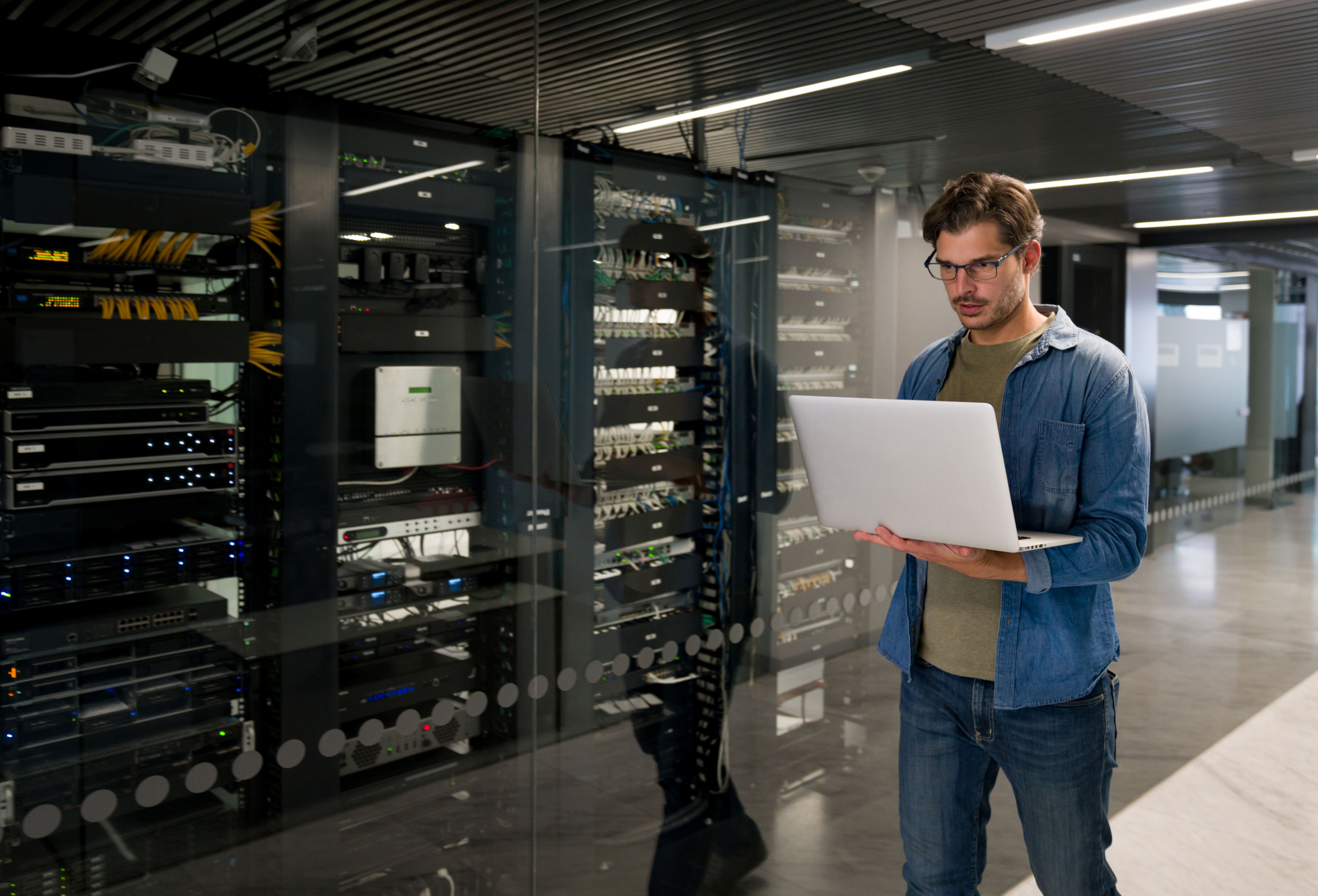
Image source: Getty Images.
Dell: the AI server engine
Dell's story is now an AI server story.
In its last fiscal year, which ended Jan. 30, 2026, revenue rose 19% to a record $113.5 billion, and its infrastructure solutions group (the division that houses servers and storage) grew 40% to $60.8 billion. The figure that stood out, however, was demand: Dell booked more than $64 billion in AI-optimized server orders during the year and entered the new year with a record $43 billion order backlog. That backlog had stood at just $18.4 billion three months earlier, so it more than doubled in a single quarter.

NYSE: DELL
Key Data Points
That brings us to Thursday's report, covering the fiscal first quarter of 2027 (the period ended May 1, 2026). Dell has guided for revenue of roughly $35.2 billion at the midpoint, up about 51% year over year. And it expects AI-optimized server sales to approximately double this year, to around $50 billion.
The things to watch are whether that backlog keeps climbing and whether Dell nudges its AI target higher.
The PC side, on the other hand, has been quieter (but still solid). Dell's client solutions group grew about 14% last quarter, as commercial client revenue rose 16% and consumer revenue was flat.
And there's a subtler risk worth watching. On the company's fiscal fourth-quarter earnings call in February, chief operating officer Jeff Clarke acknowledged that customers pulling purchases forward now could "drain those IT budgets to some degree" later -- a reminder that today's record orders may borrow from tomorrow's financials.
HP: a PC rebound with a catch
HP's most recent quarter, the fiscal first quarter of 2026 (the period ended Jan. 31, 2026), told a more complicated story.
Revenue for the period rose 7% to $14.4 billion, with non-GAAP (adjusted) earnings of $0.81 per share. The strength came from personal systems, HP's PC business, where revenue climbed 11% as the Windows 11 upgrade cycle and AI-capable laptops pulled buyers back in. AI PCs made up more than 35% of shipments, up from 30% a quarter earlier and 25% the quarter before that.

Key Data Points
The catch, however, is profitability. That growing PC business carried just a 5% operating margin, while the shrinking printing business (down 2%) still delivered an 18.3% margin. HP, in other words, is expanding in its thinner-margin business and slipping in its richer one.
And hanging over everything are rising memory costs. On HP's fiscal first-quarter earnings call, interim CEO Bruce Broussard said the company is seeing "increased input costs, driven primarily by the rising prices of DRAM and NAND" -- the memory chips inside every device -- and warned the volatility could stretch into fiscal 2027.
Further, this uncertainty comes at a time when HP has no permanent leader right now. Longtime CEO Enrique Lores stepped down in early February, and the board is still searching for a successor.
When HP reports on Wednesday, the questions are whether the PC momentum holds and whether management keeps its full-year forecast intact.
The common thread
Overall, Dell and HP come down to the same issue: The AI boom fueling demand for their machines is also driving up the price of the memory chips inside them, and both management teams flagged it on their last calls. For Dell, with its slimmer AI server margins, and for HP, with its already-thin PC margins, that pressure could decide how much of this quarter's growth actually reaches the bottom line.
Looking at valuation, the stories start to differ quite a bit. Dell is up about 140% so far this year and, as of this writing, trades at about 35 times earnings -- a price that leaves little room for disappointment. HP, by contrast, is still climbing back from a rough stretch and sits below where it traded a year ago, even after Friday's pop.
Either way, this week the margins -- and what management says about expectations for margins going forward -- may tell you more about both companies than the headline revenue growth.