At a recent rally in New York, President Donald Trump spoke warmly about memory-chip maker Micron Technology (MU +1.87%). He referenced the company's ambitious plans to invest an estimated $200 billion into expanding its domestic chip fabrication capacities over the next several years.
More broadly, Trump's remarks reflected his enthusiasm for onshoring U.S. manufacturing. I think this raises an intriguing possibility: The U.S. government could choose to invest in Micron, building on the existing framework of support it has demonstrated for Intel and others.
While I'm just speculating, I think that type of move would align with Washington's broader goals of maintaining U.S. technological leadership, supply chain security, and economic resilience, particularly in light of some potentially pressing timing considerations.

Image source: Micron Technology.
Did Micron receive funding from the CHIPS Act?
In August 2022, President Joe Biden signed the CHIPS and Science Act into law. The bipartisan agreement was intended to help revitalize semiconductor manufacturing in the U.S. In total, the legislation allocated $280 billion in grants, loans, and incentives designed to reduce dependence on foreign chip suppliers and bolster domestic production. President Trump, however, has altered how the act is being administered. He has converted some of those loans and grants into purchases of equity stakes in the businesses receiving them, shifting the nature of these funds away from the pure subsidies that they were originally envisioned as.
Micron has already benefited meaningfully from the CHIPS Act, securing $6.1 billion in funding back in 2024. This was used to support the construction of new memory fabs in Idaho and New York, as well as modernization efforts across existing facilities in Virginia.
For the pure-play memory specialist -- one of the world's leading producers of DRAM and high-bandwidth memory (HBM) -- this government assistance should enable faster progress toward the production of its next-generation HBM4E chips. Those chips will be essential hardware for training and inference deployments of expanding and ever-more-sophisticated AI workloads.
Why should the U.S. invest in Micron?
MU Micron Technology
NASDAQ · As of 4:00 PM ET 10/15/26

I see a few compelling reasons to support deeper U.S. government involvement with Micron.
First, memory chips play a critical role within AI processor stacks, and their production is dominated by just a few players: U.S.-based Micron, and Korean incumbents SK Hynix and Samsung. Supporting Micron strengthens domestic supply chains and enhances national security by reducing vulnerabilities from geopolitical disruptions or other nations' export restrictions.
Second, additional funding would accelerate fab construction timelines and help fund the development of next-generation HBM solutions, thereby lowering the cost of capital for these capital-intensive projects.
In turn, this could create opportunities for more favorable contractual agreements with U.S. customers -- specifically, the tech giants building AI data centers at scale, as well as defense contractors who might be incentivized, through policy or procurement preferences, to increase their sourcing from American vendors rather than overseas competitors.
Lastly, an investment made under the Trump administration could send a powerful message about long-term policy continuity. Considering that semiconductor projects have years-long horizons and require hundreds of billions of dollars in cumulative investment, a decision to sustain a government partnership with Micron across administrations could help reassure markets and counter any perspective that might view the U.S. commitment to the chip sector as fleeting.
Why timing matters with Micron
Perhaps the most compelling argument for Washington to invest in Micron sooner rather than later centers on China's accelerating push into advanced memory for AI applications. Chinese firms such as ChangXin Memory Technologies (CXMT) are investing aggressively in producing HBM3 chips, though ChangXin has reportedly fallen behind its schedule for getting those chips into mass production; that likely won't happen until 2027. Beijing's heavy state backing of CXMT and NAND flash leader YMTC aims to help Chinese companies close their technological gap with Micron, Samsung, and SK Hynix.
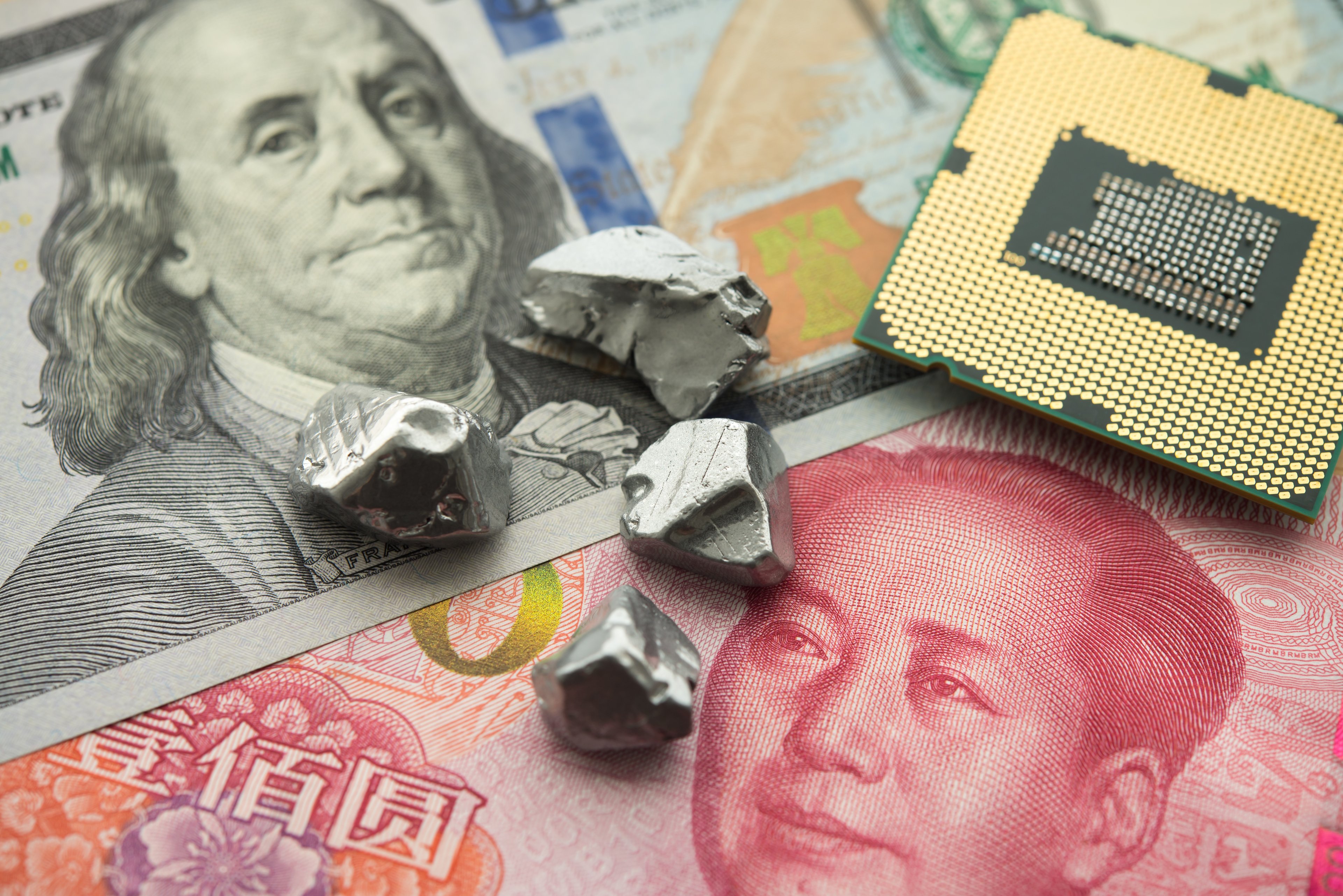
Image source: Getty Images.
In theory, a meaningful Chinese ramp-up in HBM production could flood certain market segments -- leading to pricing pressures, and also eroding the U.S. and allied lead in AI memory and storage. By investing in Micron now, the U.S. government could help ensure American chipmaking capacity scales up ahead of Chinese competition.
Delaying the distribution of additional funding could risk ceding momentum in an industry where construction lead times span years and hardware demand from hyperscalers shows no signs of slowing. I think further U.S. investment in Micron would not only build logically on the CHIPS Act's bipartisan legacy, but also achieve explicit national security and economic objectives while addressing an urgent competitive timeline driven by China's ambitions in AI memory.