Space Exploration Technologies (SPCX +1.25%) is experiencing a bumpy ride in its post-IPO takeoff. After a three-day winning streak from its public market debut, SpaceX's stock has fallen 30% from its intraday high. As of this writing on June 24, it trades below its closing price from the first day of trading.
Investors who missed out on the stock's early trading days are now being given another chance. But readers should consider why the stock has fallen so sharply and whether it could keep dropping from here.
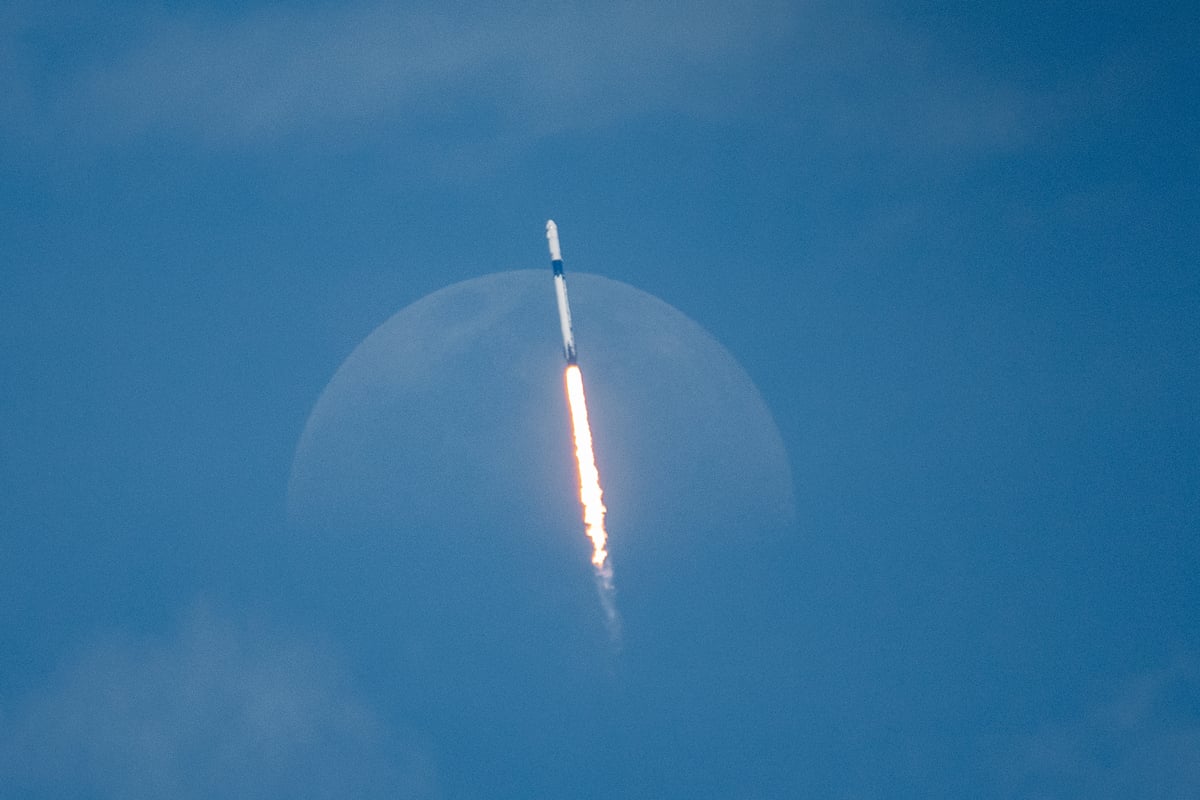
Image source: Getty Images.
Is it time to buy SpaceX?
SpaceX is a unique company, and that makes it extremely difficult to value. Its businesses are incredibly speculative, based on technology that's, for the most part, still in the developmental stage. Starlink, its satellite internet service, is the exception as it's already generating meaningful revenue. Otherwise, the company's growth thesis depends on far more speculative ventures.
While SpaceX is home to xAI, which develops the Grok large language model, the business has seen a sharp shift in strategy. As it struggles to gain traction with its artificial intelligence service, xAI is now focused on signing contracts to sell excess compute infrastructure. It's made large deals with Anthropic and Alphabet so far. But that business model puts additional pressure on SpaceX's ability to deploy AI servers at low cost.
Management sees orbital data centers as a path toward cost advantage for AI compute. But that advantage relies on successfully launching and scaling Starship, its super-heavy, fully reusable rocket.

NASDAQ: SPCX
Key Data Points
To that end, the company just announced a $25 billion bond offering, despite having raised $86 billion in its IPO. Management said it has $100 billion on its balance sheet already. Most countries have smaller cash reserves.
That could be a sign that Starship requires significantly more development before it's ready for commercial use. Management said in its IPO registration filing that it expects Starship to start payload delivery to orbit in the second half of this year.
Overall, the path to profitable revenue growth remains highly uncertain, which means SpaceX investors are likely to experience significant volatility from here. Those who expect successful Starship launches in the near term may be able to stomach that volatility. But a couple of factors could continue to weigh on the stock over the next year or so.
Don't discount these two important factors
The first consideration for investors is valuation. Even if the potential for SpaceX's revenue is absolutely massive, valuation based on foreseeable revenue and earnings is still important to consider. Today's stock price represents a price-to-sales ratio above 100.
The reason valuation is so important is that it reflects the very high expectations for revenue growth over the next few years. Underwriters Goldman Sachs and Morgan Stanley see revenue reaching $470 billion and $330 billion, respectively, by 2030. Elon Musk said in a since-deleted post on X that he thinks the company could reach $1 trillion in revenue that year. Any setbacks or shortfalls in those sky-high (and varied) expectations could lead to severe drops in the stock price. And there seems to be more downside risk at this point than upside potential.
The second factor that could weigh on the stock over the next year is the lockup expiration. SpaceX sold only about 4% of the company's stock in its IPO. As more stock becomes available to trade, early investors will look to sell and take profits, putting pressure on the stock price.
Investors interested in SpaceX may want to wait on the sidelines and let some of the dust settle on the IPO before buying. Even after the stock's pullback from its stellar debut, it still looks expensive, with significant downside risk and several warning signs.