Market conditions and sentiment can turn on a dime. Something that was once a clear bullish indicator can become a bearish one in a hurry, and vice versa. And sometimes, something that's a critical factor in the narrative can be both a positive and a negative.
That seems to be where capital expenditures among hyperscalers driving the artificial intelligence revolution are heading.
Joachim Klement, an analyst at British investment bank Panmure Liberum, recently told MarketWatch that the market has put itself in a "capex pickle" that could soon come into focus.
Here's what that could mean for the stock market.

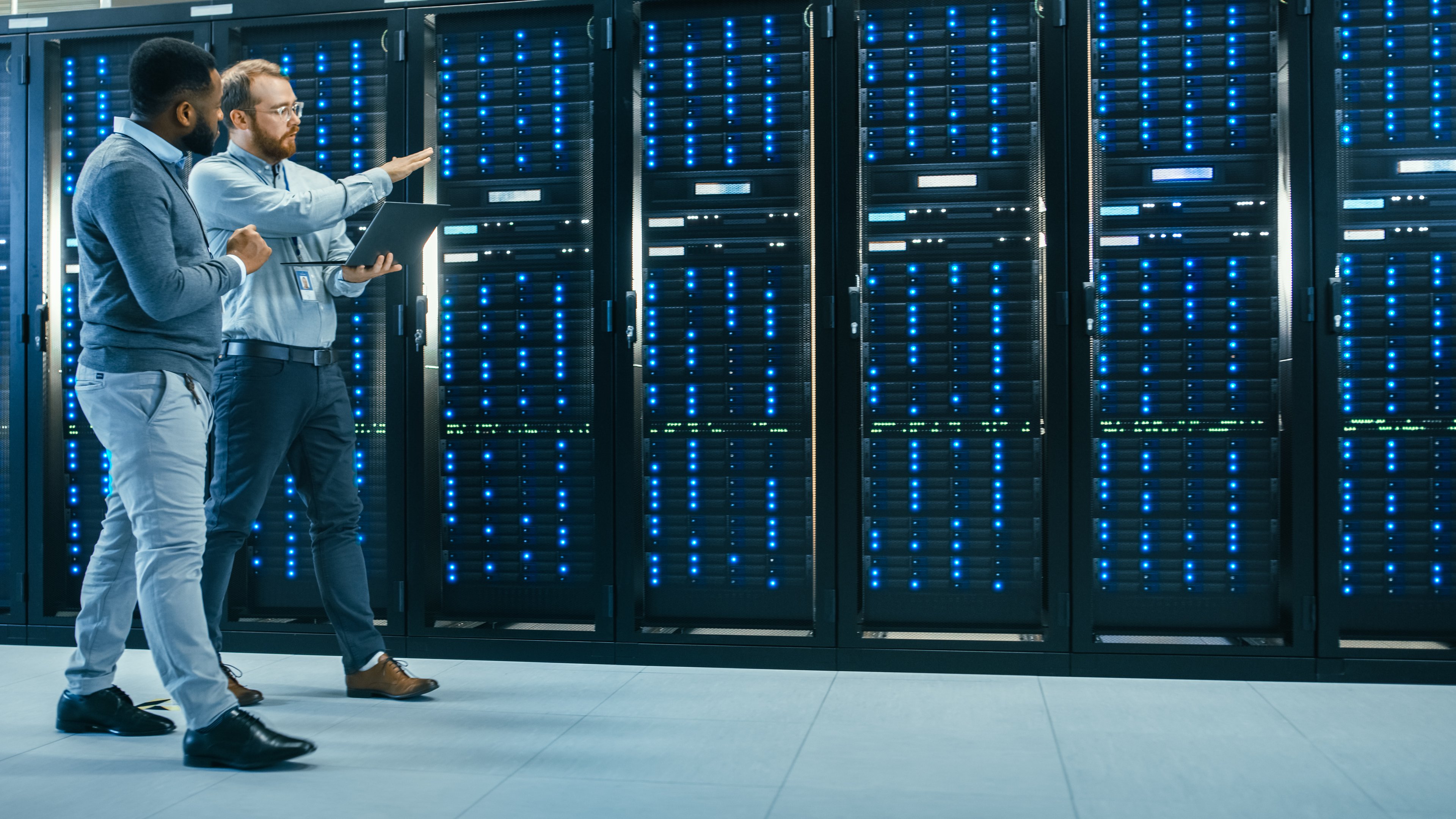
Image source: Getty Images.
What's good for the hyperscalers may no longer be aligned with what's good for the market
In 2024 and the bulk of 2025, whenever a major hyperscaler announced it was increasing its capex for AI-related infrastructure due to increased demand, its stock jumped.
And for a while, it seemed like all gravy. Some hyperscalers, like Microsoft (MSFT -1.35%) and Amazon (AMZN -2.25%), were seeing their cloud revenue jump 30% to 40% year over year due to AI-related demand.
However, that enthusiasm began to fade as their free cash flow deteriorated, and several hyperscalers are expected to experience negative free cash flow over the next few years. The market has become more stringent: If you are going to spend big, you need to provide clear evidence of returns on your investments.
In the most recent quarter, hyperscalers that have shown strong revenue growth have been rewarded, while those boosting their 2026 capex guidance have seen their stocks sold off intensely if the market is unimpressed by their growth.
However, the $800 billion that the five largest hyperscalers are projected to spend this year is going into the pockets of other publicly traded companies, lifting their revenue and profits.
S&P 500 Index
Key Data Points
These dynamics are increasingly at odds with themselves, argues Klement. If the hyperscalers continue to increase their capex, they are likely to be punished by the market. But if they don't, companies across the broader market may be punished because those hundreds of billions of dollars of spending are contributing in a major way to the revenue and earnings growth of so many other companies.
"The upcoming Q3 earnings season and then the full-year earnings and guidance for 2027 in January will provide a critical reality check," Klement said, according to MarketWatch.
Recently, I've seen analysts at Goldman Sachs and S&P Global say that hyperscaler capex could land between $1.2 trillion and $1.3 trillion in 2027. A result like that would likely leave many of them free-cash-flow negative for 2027, and potentially for 2028 as well.
Klement anticipates that the AI bubble will burst next year or in 2028, with the S&P 500 falling roughly 35% to about 5,000 as sentiment toward the AI space darkens.
Spending can't keep rising like this forever
Klement certainly raises some interesting points. I would agree that one way or another, data center capital expenditures are becoming an issue.
I also don't believe that capex can keep climbing like this forever. Whether matters come to a head because the hyperscalers built too many data centers too quickly, or because they're simply running out of options for funding their build-outs, eventually, something's got to give.
What will happen after that is hard to predict.
Perhaps the hyperscalers will choose to slow their spending and benefit as their financials improve, while a host of companies across the rest of the market see their earnings decline as AI-related capex retreats. Or the hyperscalers might keep spending regardless of the damage it does to their share prices, but the broader market performs better. Maybe it will all end up balancing out.
It's also possible that Klement is right and there is a bear market coming, even if AI ends up being as transformational as many expect. I do think that a correction would be a helpful reset for the market at this point.
Investors should prepare for a range of scenarios. Long-term investors don't necessarily need to adjust their portfolios, but having a clear understanding of why the market may become more volatile will help you make more rational decisions should action be required.