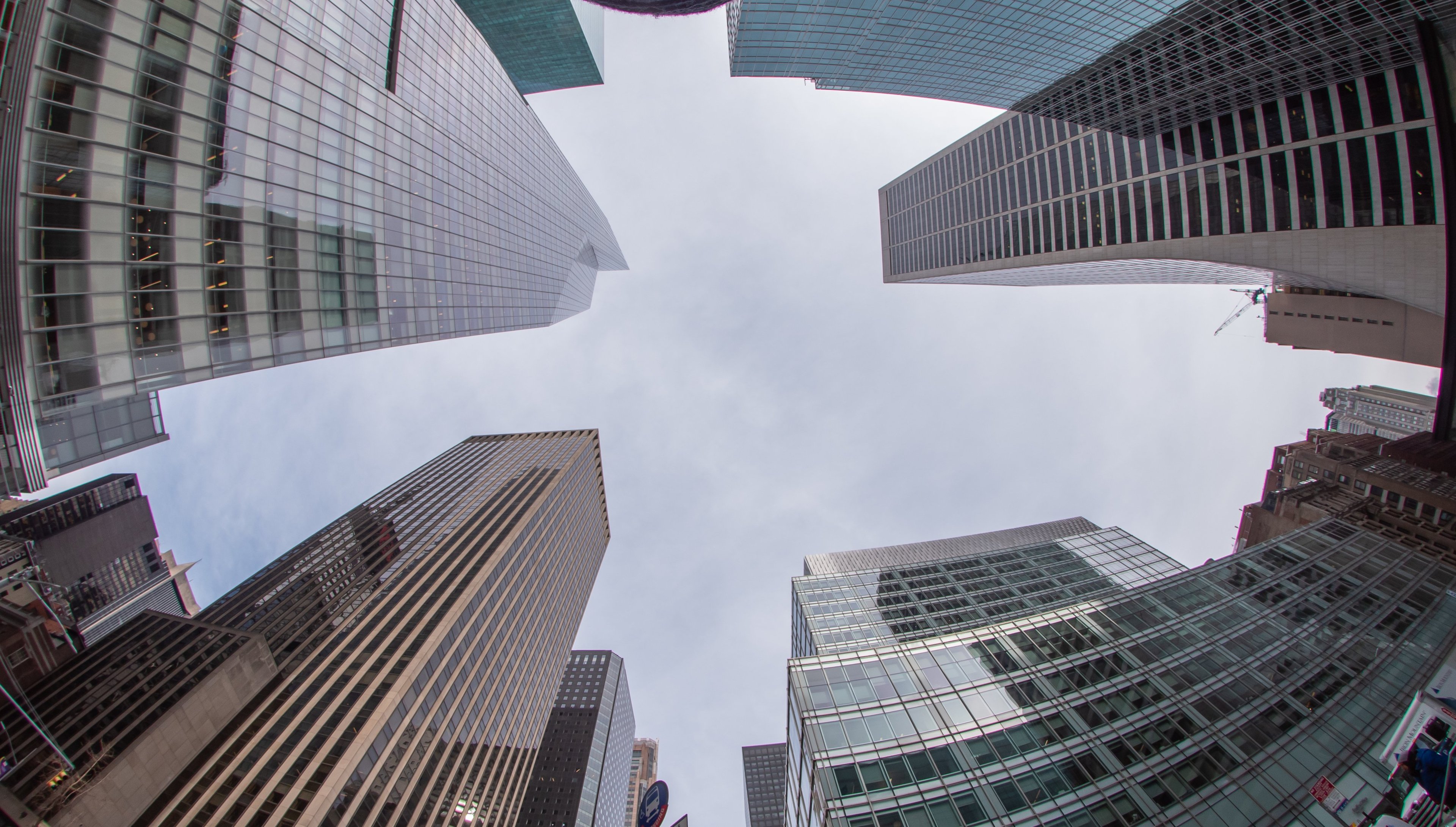
I love the concept of the "Occupy Wall Street" movement, if we can call it that. The middle class has had enough of Wall Street bankers, corporate executives, and the rich in general taking a disproportionate amount of the wealth while they themselves suffer with unemployment and stagnant wages.
But I find it ironic that the same middle-class people who are marching on Wall Street are the same people who are funding Wall Street's oversized paychecks. If change is what they want, they need to educate themselves on how they're actually feeding the Wall Street beast and find better ways to get the message across.
Problem 1: Rich bankers and investors
The "fat cats" on Wall Street have taken the brunt of the abuse after the financial meltdown in 2008 after complicated derivatives and mortgage securities helped take down our economy. At the same time, hedge fund managers, private equity managers, and investment bankers took home millions, if not billions, of dollars while the rest of us ended up unemployed (this Fool included) or at the very least without a raise.
But the truth is, there's a reason hedge funds make money, private equity deals are made, and Wall Street trading continues. They get funding from investors to do it.
And who is providing Wall Street with all of this money? Yep, it's you and me, and a lot of the same people occupying Wall Street and cities across the country today. In fact, public pension funds are some of the biggest investors in private equity firms, a gateway to Wall Street.
- The 20 largest public pension funds in the U.S. have $224 billion allocated to private equity investments. That includes Wall Street buyout firms like Blackstone (NYSE: BX), which alone has received investments from 61 different public pension funds.
- Kohlberg Kravis Roberts (NYSE: KKR) gets 62% of its funding from public pension/sovereign wealth funds. Another 14% comes from funds of funds (where similar funds invest).
Another irony is that some of the same unions that demand pensions are now occupying Wall Street. Because of funding gaps, pension funds are increasing allocations in alternative investments like private equity and hedge funds. So these unions are supporting policies that actually benefit the same corporations that the protesters are angry with today.
Problem 2: Everything is intertwined
Say your problem with Wall Street is the bailed-out banks, not the private equity firms or hedge funds. It's Goldman Sachs (NYSE: GS), JPMorgan Chase (NYSE: JPM), and Citigroup (NYSE: C) that really get your blood boiling.
The problem with singling them out is that the whole system is so interconnected that no matter which investment vehicle you use, you're likely funding these big banks. Hedge funds use big banks as prime brokers, not only paying to trade but also paying for the analysts we chide so frequently at The Motley Fool. Private equity firms are buying and selling companies, usually with the help of an investment bank on one or both sides of the deal. One of these firms is likely involved in some way with a buyout and is making money off those buyout deals. And even most mutual funds are run either by big banks or by a company that uses one of the big banks as its prime broker.
Then there are credit cards, bank accounts, and mortgages that all help feed the Wall Street monster.
It seems like there's almost no way to escape the stranglehold Wall Street has on our money.
Bring the problem to the forefront
The funding to Wall Street from public pension funds is a large problem that Occupy Wall Street could call much-deserved attention to. For starters, public unions can make sure that their funds aren't going into hedge funds and private equity funds.
Below are three of the largest public pension funds in the U.S. and their percentage of assets allocated to private equity. (If you're so inclined, click on the links to see their complete list of asset allocations). In total, these three funds have $70.1 billion invested in private equity funds.
- California Public Employees' Retirement System (14% private equity)
- California State Teachers Retirement System (14.8% private equity)
- New York Common Retirement Fund (10.1% private equity)
Hedge funds play a smaller role in public pension funds, but that's beginning to change. A report by Preqin says that public pension funds have increased allocation to hedge funds from 3.6% to 6.6% since 2007.
Do it yourself
The only way to truly escape Wall Street's grasp is to stop feeding the beast. Don't invest in hedge funds, private equity firms, or any of the million oddball products they sell. Do the research yourself and become a long-term investor -- that way, traders don't get rich off your buying and selling, a manager doesn't get rich by taking a percentage of your assets, and most of Wall Street's machine stays out of your pockets. (And of course, read my articles and all the other great free content here at the Fool.)
If you don't want to do your own research, you can still take charge of your own finances by moving into low-cost ETFs like SPDR S&P 500 (NYSE: SPY), which follows the S&P 500, or the broader-based Vanguard Total Stock Market ETF (NYSE: VTI). These funds are still run by investing giants, but over the long-term, they will outperform most actively managed mutual funds in the same asset class.
Stop feeding the beast
The bottom line is that millions of us who have pension funds, bank accounts, mortgages, and investment accounts are helping feed the excess that Wall Street has created. The only way to change it is to move our money to local banks, take responsibility of our own investments, and demand that our pension assets don't end up in big bonuses on Wall Street.
Otherwise, the protests won't do a thing to stop Wall Street excess.