

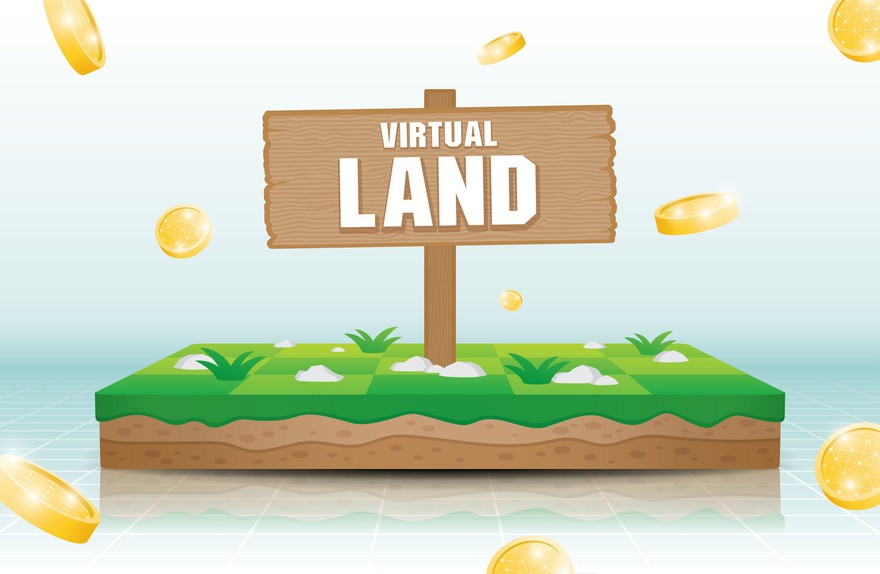
Real estate has always been an important part of most people's investment portfolios. Much, if not all, of that real estate has been "real." Today's real estate investor, however, may also be considering something a little less touchable: virtual land. Virtual land is a unique type of property that has a deed and exists in a digital world. It represents land in said world, allowing you to own your own little corner of one of many digital villages, just like in real life.
Virtual land exploded in popularity during the metaverse boom of the early 2020s, then cooled just as quickly as hype faded, prices fell, and user activity slowed across many platforms. Today, virtual real estate is best understood as a high‑risk, speculative digital asset, not a replacement for traditional property investing.
That doesn’t mean it has no value. But it does mean buyers should approach it with clear expectations, strong risk tolerance, and a realistic understanding of what they’re getting into.
How is virtual land valued?
Virtual land is sold at auction on sanctioned platforms with programming that enables the immediate transfer of the property upon the completion of a sale. It's valued much like real-world real estate, with potential buyers comparing properties that are similar in size, function, and desirability to determine the property's worth.
However, unlike real-world real estate, values are determined by those directly involved in transactions; usually, no independent appraisers are involved. Like all crypto assets, the value of land in virtual worlds tends to ebb and flow.
How do you buy and sell virtual land?
Buying and selling virtual land is generally straightforward compared with traditional real estate. Most metaverse platforms are accessible from a desktop computer, allowing you to explore neighborhoods, inspect nearby parcels, and get a sense of activity before making a purchase.
After identifying a parcel, many buyers research it on third-party NFT marketplaces such as OpenSea or NonFungible. These sites can show prior sales history, recent prices for comparable nearby parcels, and overall trading activity for the platform. This extra step won’t eliminate risk, but it can help you avoid overpaying.
To complete a purchase, you’ll need a digital wallet that can store both cryptocurrency and NFTs. Supported wallets vary by platform, and setup is usually quick. Security matters here -- losing access to your wallet can mean losing your assets permanently.
Next, you’ll need the platform’s required cryptocurrency. For example, Decentraland transactions use MANA tokens, while The Sandbox uses SAND. These tokens can typically be purchased on major crypto exchanges and transferred into your wallet.
Once your wallet is funded and connected, the purchase itself is simple. You confirm the transaction, the platform verifies sufficient funds, and within seconds the cryptocurrency leaves your wallet while an NFT representing the land is deposited into it. The blockchain records you as the new owner.
Selling virtual land works the same way in reverse. You list the parcel, set a price or auction terms, and wait for a buyer. When a sale occurs, the buyer’s crypto is transferred to your wallet and the NFT moves to theirs. Unlike traditional real estate, however, finding a buyer isn’t guaranteed -- especially during slow periods -- so liquidity can be a challenge.
Key risks to understand
Before buying virtual land, it’s important to understand the downsides:
- Platform risk: If the platform declines or shuts down, land may become worthless.
- Liquidity risk: You may not be able to sell when you want — or at any price.
- Volatility: Prices can rise or fall sharply in short periods.
- Security risk: Wallet hacks or lost keys can permanently erase ownership.
- Regulatory uncertainty: Rules around crypto and NFTs continue to evolve.
These risks make virtual land unsuitable for most long‑term, conservative investors.
The bottom line
Buying virtual land in the metaverse is no longer about chasing the “next big thing.” In 2026, it’s a speculative digital bet that depends on platform adoption, user engagement, and broader crypto sentiment.
For a small subset of investors, particularly those already active in digital worlds, virtual land may offer creative or experimental value. For everyone else, it’s best viewed as a high‑risk curiosity rather than a serious investment strategy.
Related investing topics
FAQ
FAQ about buying virtual land in the metaverse
About the Author

