Claiming Social Security benefits is an exciting step in your retirement journey, especially if you're retiring at the same time. It's more important than ever, though, to ensure you've planned enough for this important milestone.
Sometimes, even minor misconceptions can have a major impact on your finances in retirement, and there's one Social Security misunderstanding that trips up nearly 80% of U.S. adults. Before you begin claiming benefits, there's one thing you absolutely need to do: double-check your full retirement age.

Image source: Getty Images.
Why your full retirement age matters
Your full retirement age (FRA) is the age at which you'll receive 100% of the benefit you've earned based on your work history. According to a 2025 survey from the Nationwide Retirement Institute, though, only 21% of U.S. adults can correctly name their FRA.
If you're among the nearly 80% who are unsure of their FRA, you're in good company. But not knowing this figure can affect your monthly payment for the rest of your life.
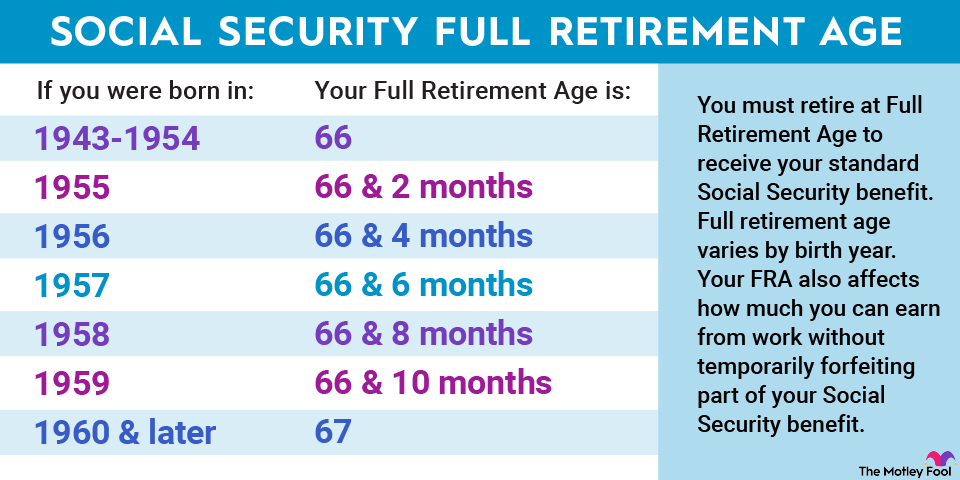
Image source: The Motley Fool.
The average baby boomer believes their FRA is 66 years old, the Nationwide survey found. Among Gen Xers, the average FRA estimate is 65 years old. While some retirees' FRA is 66, it's actually age 67 for everyone born in 1960 or later. While that may seem like an insignificant difference, it can affect your benefit amount.
Claiming before your FRA will result in permanent benefit reductions. So if you file at age 66 thinking it's your FRA, you might expect to receive your full benefit amount. But if your FRA is actually 67, claiming a year early will reduce your payments by 6.7%.
If you would be earning, say, $2,000 per month at your FRA, a 6.7% deduction would reduce your payments by $134 per month, or $1,608 per year. These reductions are generally permanent, too. So if you file early, expect to receive smaller checks for the rest of your life.
What's the best age to take Social Security?
This isn't to say that filing for Social Security early is wrong. In some cases, it can be the best-case scenario. But it's important to know when you're filing early so you can prepare for the resulting benefit reductions. If you accidentally file early because you were unsure of your FRA, you may receive smaller-than-expected checks.
Filing early can be a smart move when you have ample savings and are eager to get a jump-start on retirement. If you're planning to retire in your early 60s, taking Social Security at the same time can provide an extra source of income so that you don't need to rely entirely on your savings. For those with plenty of savings, the benefit reduction from filing early may not be a deal-breaker.
On the other hand, those looking to maximize their monthly income may benefit from delaying benefits. Waiting until your FRA to file will earn you 100% of your earned benefit, and delaying a few more years until age 70 can result in a bonus of up to 32% on top of your full benefit amount.
The average retiree collects around $800 more per month at age 70 compared to age 62, according to December 2024 data from the Social Security Administration. If you know your finances will be stretched thin in retirement, waiting a few years to claim can significantly boost your monthly income.
Knowing your Social Security FRA can make it easier to plan for retirement, as you can avoid any surprises with your future benefit amount. By considering your unique situation and goals, you can decide on the right filing age to set yourself up for a more financially secure retirement.