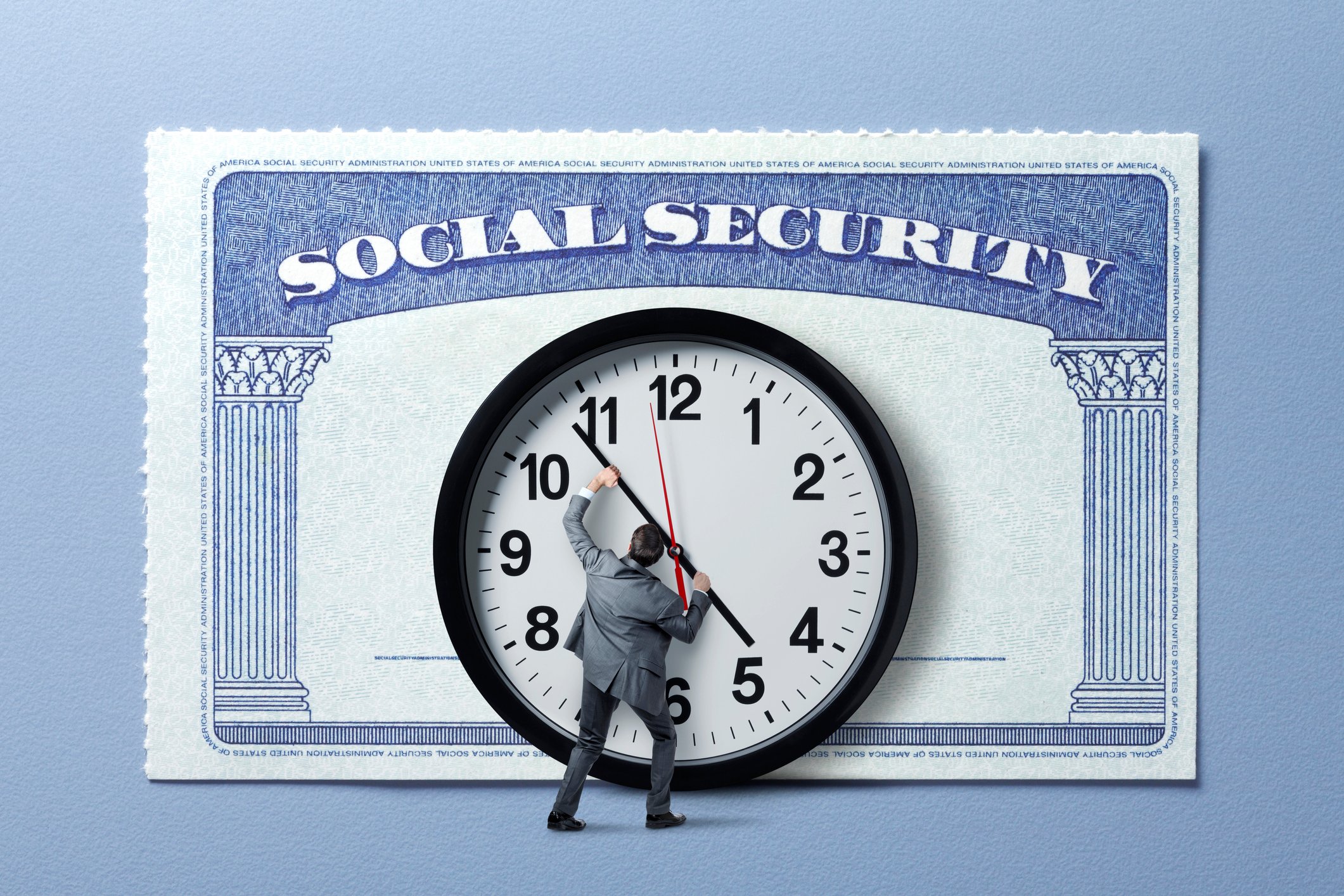
Any investor who's going to be 73 years old or older at any point in 2026 probably already knows they're required to take taxable distributions from ordinary IRAs and 401(k) accounts. You've got the entire calendar year to facilitate this required minimum distribution, however, and if it's your first one -- for the year in which you turn 73 -- you've got until April 1 of next year to get it done.
And this begs the question: Is now a smart time to get this year's RMD out of the way?
It depends.
There's no need not to think a little strategically
Getting straight to the point, the ideal time to facilitate a required minimum distribution -- or RMD -- depends on what you intend to do with this distribution after you receive it.
As an example, if you intend to convert assets that are currently invested into cash that you'll use to cover your living expenses, it makes sense to sell while the market is up, as it is right now. Since the amount of your RMD for this year was established at the end of last year (and won't be changing despite changing market conditions), selling anything at this time and removing this calculated amount of cash leaves more value remaining in your IRA or 401(k). Conversely, if it's your plan to take a cash distribution and simply reinvest it in the market, know that you're likely to be buying into stocks near a major high. Although not disastrous, it's also certainly not ideal.

Image source: Getty Images.
In other words, as always, you still want to scale out of the market at highs and get in at lows. We're not currently at a low. We're at a high.
That said, there's no rule that says your RMD must be taken in cash. You can also take what's called an in-kind transfer of assets, which just removes investments from your IRA and puts them in an ordinary, taxable brokerage account. As long as the value of the assets being moved is at least equal to your calculated RMD on the day the transfer is completed, this will satisfy the IRS's required minimum distribution rules.
The bigger strategic goal remains, however. That is, you want to facilitate an in-kind transfer while the market or the assets in question are up as a means of leaving as much value as you can in your retirement account. Again, whatever's left in this IRA, 401(k), or other non-Roth retirement vehicle will continue growing tax-free.
Just don't overthink it
Just don't get too picky about the matter. The quest for perfectly timed entries and exits can often do more harm than good. Besides, in a few years it won't really matter if you made your 2026 RMD exactly at the current high.
If it's going to gnaw at you to not at least take some strategic action, though, bear in mind that any year's required minimum distribution doesn't have to happen in one shot. You can space it out over several withdrawals, as long as you remove the total required minimum before the end of the year.