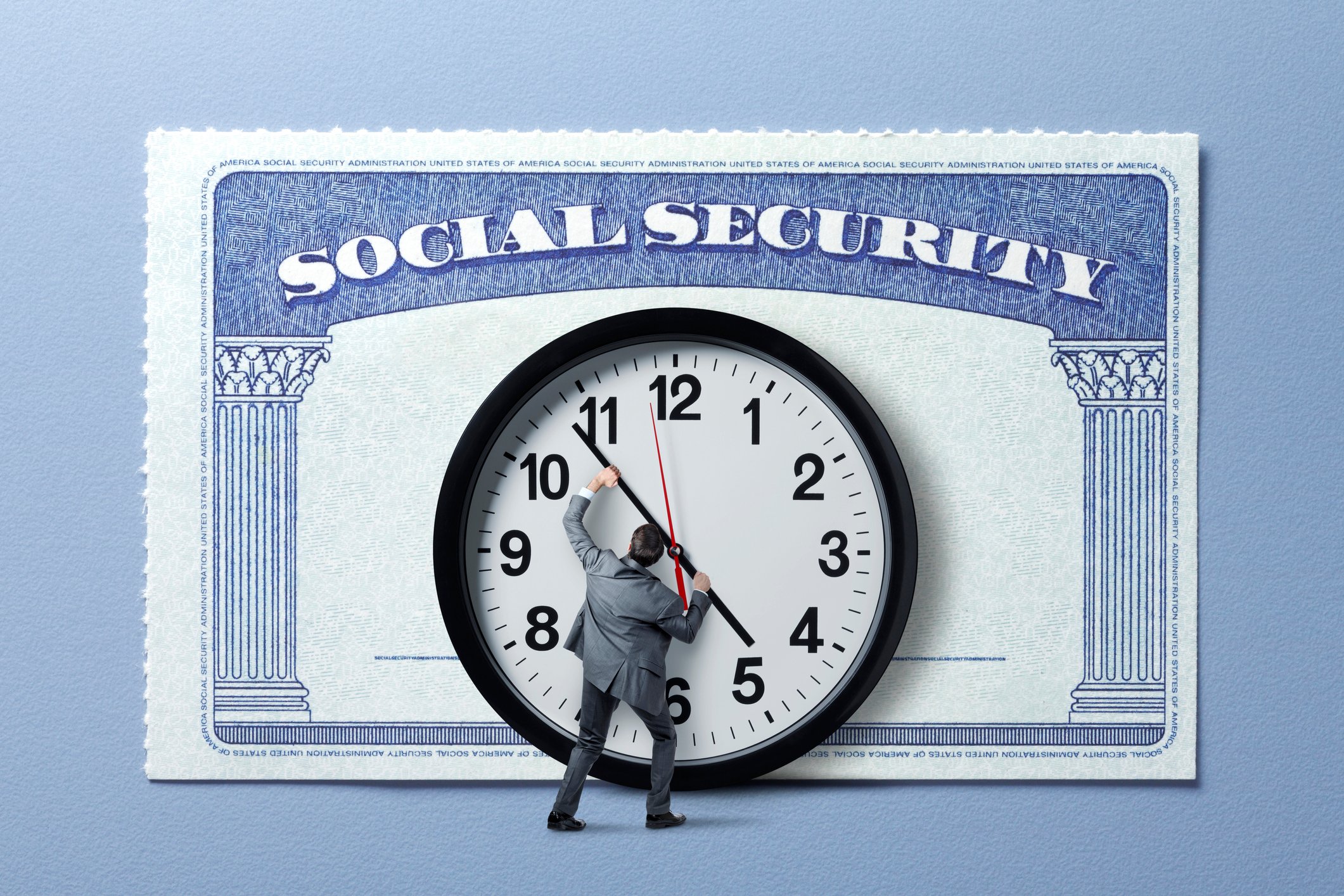
If you're thinking about claiming Social Security at 62, you'll probably encounter at least a few people who tell you that's not a good idea. Applying for Social Security as soon as you become eligible can permanently reduce your checks by up to 30%. For some, it also shrinks their lifetime benefit.
But it's actually not the biggest Social Security mistake you can make. There's one that could prove even more devastating, but fortunately, it's easy to avoid.

Image source: Getty Images.
You can't optimize your Social Security claim if you don't understand the rules
Indeed, claiming Social Security at 62 often short-changes people, but this isn't universally true. If you delay checks without understanding the advantages and risks, you could end up costing yourself more than you gain.
Every month that you delay Social Security increases your benefit, and the rate of increase changes over time, too. This depends in part on your full retirement age (FRA), which is 67 for most people. The following table breaks down how quickly your checks will grow by waiting:
|
If You Have an FRA of 67, Benefits Grow by: |
From: |
|---|---|
|
5/12 of 1% per month (5% per year) |
62 to 64 |
|
5/9 of 1% per month (6.67% per year) |
64 to 67 |
|
2/3 of 1% per month (8% per year) |
67 to 70 |
Data source: Social Security Administration.
Age 70 is when you qualify for your largest checks, so you won't gain anything by delaying benefits longer than this. Some people choose to wait until 70 to claim, so they can claim their biggest checks and hopefully maximize their lifetime benefit as well.
But waiting that long is only possible if you can afford to cover your living expenses another way in the meantime, and that's not realistic for everyone. It could also be the wrong move if you have a short life expectancy.
What to consider when choosing a Social Security claiming age
The first thing you have to consider when choosing when to apply for Social Security is whether delaying benefits is even on the table for you. If you can't work and you don't have a ton of personal savings, claiming checks at 62 might be the best option for you, even if it means getting a smaller lifetime benefit.
If you have a short life expectancy, you might also decide to claim earlier so you can get as much as you can while you're still alive. Or, if you have a family you expect will rely heavily on your survivor benefits after you're gone, you might prefer not to claim Social Security at all. This will maximize the amount they receive after you've passed away.
Your anticipated claiming age doesn't have to be set in stone, either. Choose what currently works best for you, and feel free to update it if your health or lifestyle changes.