Remember when Wall Street considered Lucid Group (LCID +0.65%) a possible future competitor to Tesla (TSLA -5.96%)? It may seem like ancient history now, but at the height of the early 2020s "EV mania," investors considered the electric vehicle maker a "Tesla killer" in the making.
Flash forward to now, and few, if any, still hold this view. Lucid has fallen short of expectations in terms of vehicle sales, not to mention profitability. Not surprisingly, this resulted in steep declines for shares.
Shares have significantly underperformed the S&P 500. Worse yet, this trend is likely to continue. In large part, due to Lucid's ongoing share dilution spiral.

Image source: Getty Images.
Lucid Group versus the S&P 500
As seen in the table below, Lucid Group has vastly underperformed the S&P 500 over the past one, three, and five-year periods:
| Period | LCID % Return | S&P 500 % Return | Difference |
|---|---|---|---|
| 1 Year | (37.3%) | 13.1% | 50.4 percentage points (pp) |
| 3 Years | (86.4%) | 71.9% | 158.3 pp |
| 5 Years | (86.4%) | 87.2% | 173.6 pp |
Data source: Yahoo! Finance.
In fact, using the phrase "vastly underperformed" could be an understatement. While Lucid Group has destroyed substantial shareholder value over each of these time frames, the S&P 500 has steadily created more wealth for those owning it via an index fund. Consider the impact of S&P 500 dividends reinvested, and the difference is even more dramatic.

NASDAQ: LCID
Key Data Points
To make matters even worse, it's not as if Lucid has just had a troublesome past few years, with a more prosperous future ahead of it. Although some other high-profile EV start-ups seemingly still have a shot of attaining EV winner status, the latest results from Lucid underscore the low probability of a similar scenario playing out here.
Instead, this stock remains at high risk of eroding in value, as persistent high losses and cash burn continue to require additional outside capital.
As cash burn continues, more losses are likely
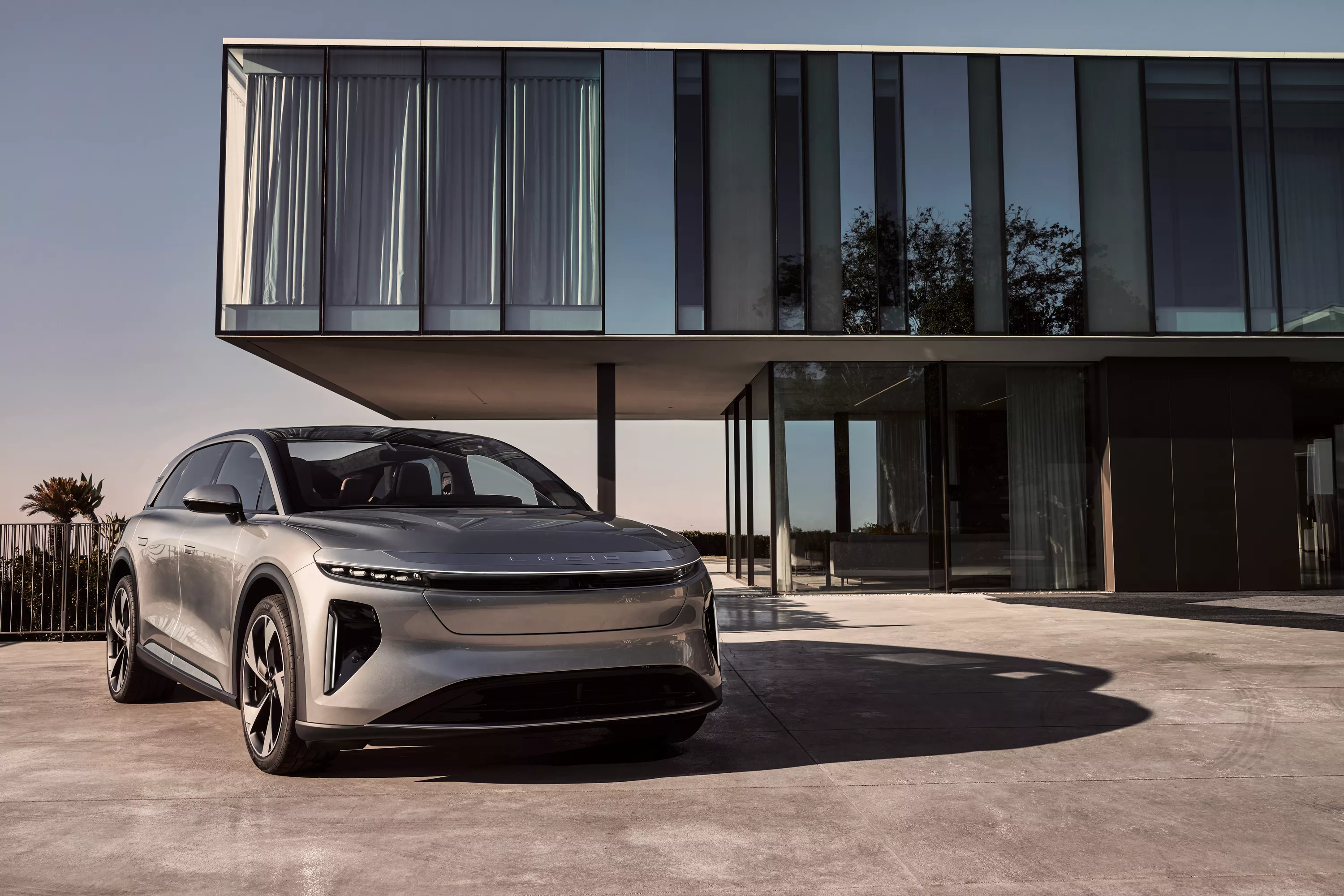
Far from scaling into a formidable Tesla competitor, Lucid Group has struggled to scale up in size. Even as Lucid now has the best-selling luxury EV sedan in the U.S. market, this only represents a few thousand vehicles each quarter, not enough to reach the point of profitability.
For several years, Lucid Group has burned through billions annually. To absorb the impact of this heavy cash burn, Lucid has resorted to raising additional equity capital, through the sale of new shares -- mainly to the company's majority shareholder, Saudi Arabia's Public Investment Fund (PIF).
Although currently sitting on around $5.5 billion in total liquidity, Lucid could burn through this cash within the next two years. Considering the smaller market the company is pursuing with its higher-end EV models, coupled with the expiration of the U.S. EV tax credit, for now it remains doubtful that a sudden surge in production and sales is just around the corner.
Hence, chances are that the EV maker will again need to sell more equity. Considering Lucid's current market cap of $4.3 billion, even an additional $1 billion equity raise would lead to high share dilution. With this, the stock appeared at risk of experiencing further steep price declines, making it a highly risky buy, even after its latest pullback.