This episode of Motley Fool Money features discussions on energy, technology, real estate, and more. Motley Fool contributors Tyler Crowe, Matt Frankel, and Jon Quast discuss:
- Solar energy and nuclear energy.
- Quantum computing and AI trends.
- A real estate meme stock.
- Stocks on their radar.
To catch full episodes of all The Motley Fool's free podcasts, check out our podcast center. When you're ready to invest, check out this top 10 list of stocks to buy.
A full transcript is below.
This podcast was recorded on Dec. 11, 2025.
Tyler Crowe: Looking back at some of the stock market darlings of 2025, this is Motley Fool Money. Welcome to Motley Fool Money. My name's Tyler Crowe. Today, I'm joined by longtime contributors, Matt Frankel and Jon Quast. The end of the year is sneaking up on us pretty quick, and I don't know, there's some instinctual feel as investors to look back at the year as December rolls around and take stock, if you will, don't mind my pun of the stock market darlings of 2025. What did well? What worked, and what could work again in 2026? Normally, we like to do some analysis of companies, a little bit of reaction to things in the news, but we're going to change it up a little bit on this theme of looking back, and we're going to look at some of the companies that did incredibly well in 2025. Specifically, companies that actually saw their stocks double in this year to date, as of our recording here on December 11th. Now, we can't do all of it because there was more than 300 companies that more than doubled this year. What we did is we each picked one stock that we think will continue to do incredibly well in 2026, despite the large run-up this year. At the same time, we're also going to pick one of that list that had a great year, but 2026, we're not so certain about. Of course, we'll finish out the show with stocks on our radar because maybe they didn't double, but we like them anyways. Let's start off on an optimistic note here in 2026, and the companies that we saw do incredibly well in 2025 and what we'll do well next year. Matt, kick us off.
Matt Frankel: Well, first, the fact that we've had 326 public companies double or much more in some cases, is pretty remarkable. One thing that I asked when looking at this list is, is the business or are its opportunities twice as strong as they were when we started this year? That really narrowed it down. I'll do somewhat of a contrarian take here because two years ago, I wouldn't have believed I'm saying this. But I'm going to go with Lemonade, ticker symbol LMND. The insurance technology company. They had a rough few years in 2022-2024, but we're really starting to see things come together right now. Although it is, to be fair, still a pretty speculative company, the 114% rally so far this year is well deserved. The company's top-line growth is not only growing but accelerating. The company is finally hitting its loss ratio targets. Lemonade aims to keep a loss ratio, which is the claims that it pays out as a percentage of its premiums collected of 75% or less, and it's well below that over the past 12 month period. This isn't just because of seasonality or anything, that's over a year. Lemonade is now cash flow positive and they expect to be EBITA break even by the end of 2026. Another thing I wouldn't have believed I was saying a couple years ago. As their car insurance product continues to ramp up, there is a lot of potential upside here still to come.
Tyler Crowe: Matt, I want to ask a follow-up question about Lemonade specifically and we'll do this with all the companies we're talking about here. I've sniffed at Lemonade a couple times. The loss improvements or loss ratio improvements are really nice. The thing that really sticks with me a little bit in loss ratios, there was also a mild year in terms of weather-related disasters. I think for all insurance companies, we'll keep that in mind. I'm putting that in the we'll see bucket for 2026. My question is combined ratio losses. This is where you include all the operating expenses. It has very high customer acquisition costs that lead to GAAP losses and maybe not cash losses because use some stock-based compensation. Can Lemonade really achieve that GAAP profitability and reasonable growth rates without these really high customer acquisition costs? That's the thing that I keep looking at and be like, can they scale down that acquisition cost and deliver profitability and growth?
Matt Frankel: Well, sure, well, that's a big reason why they're not EBITA profitable yet, is because of that acquisition cost. A couple of things. One, as they build their ecosystem, I mentioned the car insurance product. The car insurance product brings in roughly 10 times what the average renter's insurance policy does, which is their flagship product. They're not spending 10 times as much to get an auto insurance customer. As the bigger, more profitable types of insurance build out, that should start to take care of itself. That is part of what they're factoring into their profitability targets for the end of this year. I think that we're going to see that continue to head in the right direction. It certainly has over the past few years, but you are right, it has been a very mild weather year. As a Florida homeowner I'm very happy for that, but it's something to watch going forward.
Tyler Crowe: Jon, I know you're in the Florida area, too. I'm sure you enjoyed the mild hurricane season as well. But when we looked at this list year, what was the stock that really popped out for you?
Jon Quast: Well, one of the larger market cap companies on this list was Micron Technology and ticker symbol MU with that. This is a computer memory product business, and it's often a good idea to avoid a commoditized business in a cyclical industry. Micron is both of those things. Yet, I do believe that the stock is up for very good reason in 2025. I believe many investors still don't grasp how much longer current business trends can play out. Here's what's interesting. Because of AI and some of the present needs, the demand for memory products is just skyrocketing. Micron itself has already sold out for 2026. There are some reports out there that are already saying between all of the major players out there, which includes Micron, Samsung, and SK Hynix, there won't be enough supply for 2027 either, broadly speaking. These are things that can keep the profit margins very high. In the past, these players have all been trying to balance supply and demand so that they don't see their profit margins erode away. But right now, the demand is beyond what the three combined can even make. It's very interesting and very different from past cycles that we've seen in the computer memory space. It's one reason why I think that well, not only has Micron already sold out its supply for perhaps the next two years, but margins could, I believe, hit all-time highs during this trend. Right now trading at 15 times its Ford earnings. That's not bad. Especially, if this trend lasts for longer than what investors believe it will. This is very interesting right now and one that I'm still optimistic on in the coming year.
Matt Frankel: Jon, how do you think of Micron in terms of an AI play? For example, when I think of NVIDIA and AMD the headline AI names, do you think of Micron as the value to their growth, or is that how you think of it?
Jon Quast: That's a really good question, Matt. It's not quite how I think about it. Let me answer it like this. If you're bullish on NVIDIA here or AMD, for that matter, you're still expecting this AI trend and the buildout of the infrastructure to last at least a couple more years. I can see why you would prefer NVIDIA over AMD or AMD over NVIDIA, perhaps, because they're very similar in what they do. But if you're bullish on either NVIDIA or AMD, I believe that you need to be bullish on Micron as well, because what they are supplying to its part of the AI infrastructure buildout is just as important as what the other companies are providing. I think it's a boost. If you're bullish on the GPU component, you need to be bullish on memory.
Tyler Crowe: I feel like a trend here. We're talking about either AI empowered companies or AI buildout companies here in the ones that'll do well in 2026. I went in the same direction. It leaves me going last. I want to discuss Nextpower. The company's ticker is NXT. They recently changed its name. It used to be called Nextracker, which gives away what they do. Their primary business is building tracking equipment for utility-scale solar installations so the panel will follow the trajectory of the sun during the day. They've also branched out into other utility-scale components for solar installations, whether that be structural elements, electrical wiring and harnesses, power converters, software for power output optimization, and even got a cool new thing with some remote AI-powered field monitoring robots. They look really cool. I don't know how much of an actual business it is yet, but looks nice on an investor presentation. Now, I think we've been doing this for a while. I've been talking solar power quite a bit with some of our stocks on the radar section, and this fits into that theme, as well. I think so many people are looking at other power sources to fuel data centers. Of all of them, solar is the fastest right now to deploy at scale relative to anything else. For all the headaches solar panel creates with intermittency of power and grid strain, which is a real thing that we don't talk about as much with solar power. They are still extremely cheap electrons, and the speed to scale up power production is the fastest you're going to see. I think those are going to be incredibly valuable traits over the next several years of the AI buildout, while we're all still waiting for the miracle that is these other next generation types of power sources that we don't have. From a company perspective, we got a founder-led business. It's been profitable since going public. You don't see that much in the solar industry, nice balance sheet and the stock. Even though it doubled, it's still trading for right around 20 times earnings, which seems pretty reasonable.
Jon Quast: Tyler, I love this idea. One of the reasons that I love it is because there are so many things that are stretching our power grid to the max. I think for investors, a really important thing to consider is, how can we do more with what we already have? Tracking the sun with these solar panels, I think, is a great way to just maximize what infrastructure we already have. But my question for you is, solar tracking tech, in my mind, seems pretty easy to replicate. I'm just curious, does Nextracker have any advantage or a moat here?
Tyler Crowe: Look, if I'm going to be really honest with myself and scrutinize, they don't. These types of components, there are companies that are in it. It's hard to really gain any real distinct competitive or technology advantage, other than just good execution, good sales team, good products, easy to use, things like that. You're never going to just automatically win in these spaces, it is much like any type of product manufacturing that you have. It's the idea of just presenting solutions to your customers that are going to reverberate well and just continue to execute on that. So far, Nextpower has done that, and if it can continue to do that, I think it's going to do incredibly well. That brings us to most of the companies we saw doing well. Coming up after the break, we're going to look at great 2025 stocks that we think might not do so well next year.
Talking about not-so-great companies for 2026 that did well this past year. We're going to go snake draft style. I'm going to go first this time. I think there's a lot of companies on this list. I think you, me, and a lot of other people have seen might be a little dubious. It's one-time gainers. We might never see it again. But for me and the things I've been looking at in this show and what you might detect is a theme here because I'm doing another energy stock, and the one that I picked out was Oklo and ticker OKLO, very similar to the company name. Now, I don't want to come across this like anti-nuclear. It's not. I do wish that we could make nuclear a bigger part of the mix. It's just practical realities of nuclear in general have been so hard in the United States that it's making it really challenging. I think the two primary reasons for nuclear in general are cost and time to deploy. I was just talking about it with solar. I get that in theory Oklo's approach of using a liquid sodium reactor that US researchers at the Argonne National Lab developed back in the 1960s. It could be a faster way to deploy nuclear power because they're smaller, they're less complex. However, it's still a theoretical idea. One of the part of the reasons that this particular reactor never got off the ground in the first place because it took so long, the world came up with slightly better solutions. That's my biggest question with Oklo into 2026 and beyond is they want to do a lot of things. They want to design, they want to build. They want to operate. It's something nobody else in the power industry has ever done. With that, my concern is it will take so long for them to get up to speed that all of these power-hungry data centers aren't going to wait around for the right solution that might be 10 years out from now. They want the right now solution, and I don't think that's going to come from nuclear.
Matt Frankel: That all makes sense. As someone who's lived near a nuclear reactor that's been under construction for about 10 years now, I can tell you firsthand that it takes forever. But I think we both agree that there's going to be a massive need for power for all this AI infrastructure. We hear these $100 billion cathex and things like that from all these companies. What do you think is going to be the near-term solution? Do you think it's all these solar stocks you're talking about? Do you think it's wind? Do you think it's something else?
Tyler Crowe: I think right now, and I think I've mentioned this before. But to me, it's going to be solar and natural gas. I think that's going to push out nuclear in a large way because these people aren't going to build data centers and then just wait and twiddle their thumbs until nuclear power is ready 10 years from now. They're going to want these things to go live. You can go live with solar and with gas today. You look at companies like GE Vernova making natural gas turbines, even Caterpillar talking about using gas turbines and diesel turbines as ways to power data centers right now. That's where they're going. I'm really hard to imagine 10 years from now, all these data centers will be like, well, we built all this gas and solar power. But now that nuclear is ready, let's spend all the money to switch to nuclear. I just don't see that happening. In the short to medium term, it's going to be those types of power sources that are going to make it happen. With nuclear power and all the big fad trends, one of the big ones so far has been quantum computing, and Jon, the one you've been looking at for this particular exercise, is in the quantum computing space.
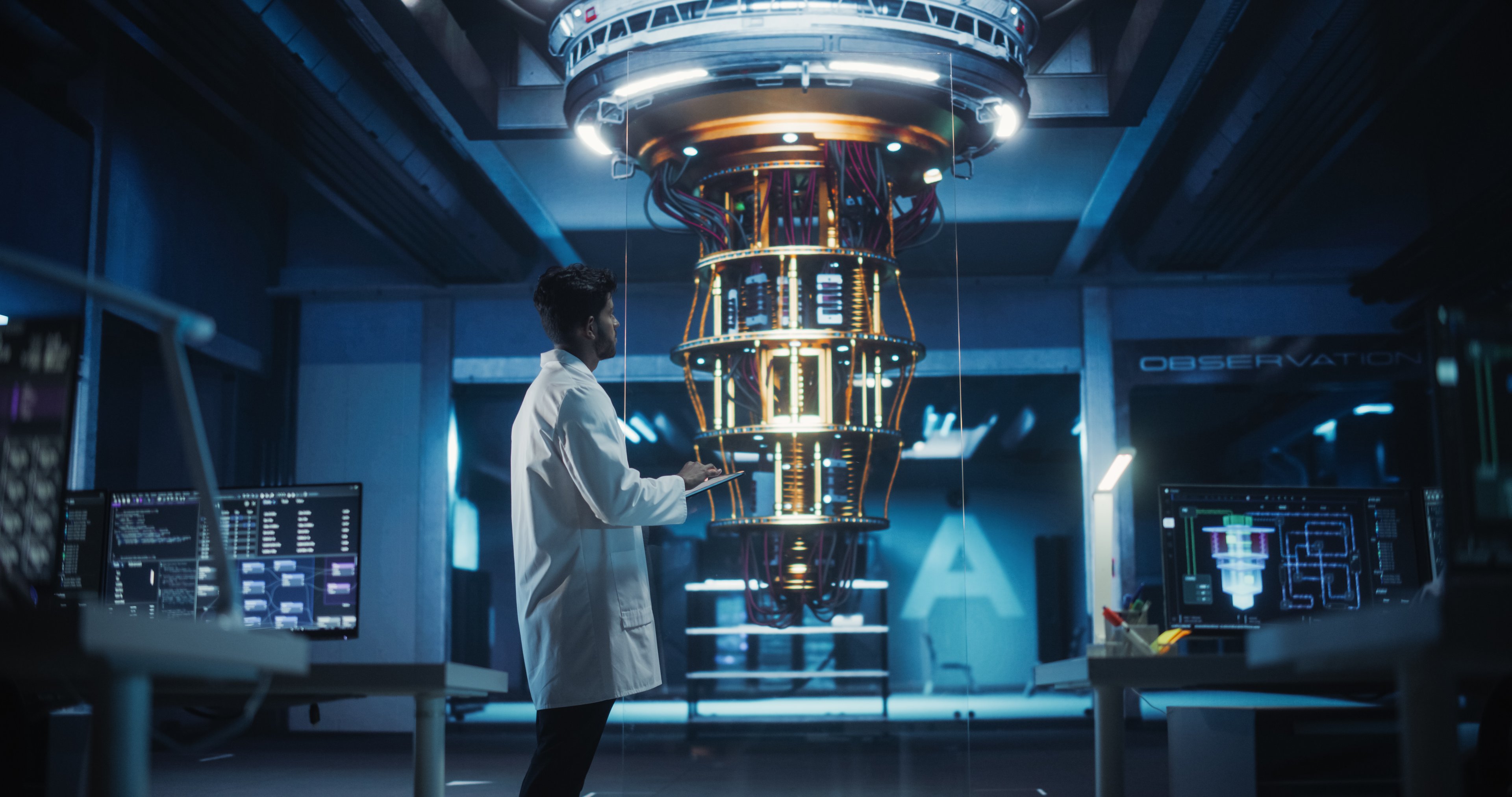
Jon Quast: For sure, Tyler, the one I'm looking at right now, is D-Wave Quantum, ticker symbol QBTS. There are several similar ticker symbols in the space, so I want to make sure I get the right one down here. This stock is up more than 230% this year. What is D-Wave Quantum? It's a quantum computing company. It really adamantly pounds the table that it was the first with commercial viability. It sold a quantum computer or something like a quantum computer in 2011. By that definition of commercial viability, that it had a sale, practically every single quantum computing company out there is commercially viable. They all have revenue. Most of them have revenue. The question is whether or not they're practical and whether or not enterprises are actually adopting them. I now believe that for the most part, the numbers say no. According to D-Wave's own financial report, most recently, its bookings are down. These are recent orders made by customers, and then its remaining performance obligations are also down. That's a little bit further out of what it still has to deliver on the contracts it's already announced. Granted, there's going to be choppiness, I get that. A single deal here, we are talking about very small numbers, so a single deal could flip it back to growth. But for right now, it's been commercially viable for a long time, and there aren't really anything in the bookings and RPO trends that says its customers are interested today in adopting the technology. To me, that still points that we're still too far ways off. Then when it comes to the outlook for 2026, what it means is we're up in 2025 based on sentiment. That can easily flip right back in 2026, because it's not really built on the fundamentals here, and that's normal in stocks. Fear and greed always teeter and tottering back and forth. I say this is on shaky ground for 2026.
Tyler Crowe: But the breakthroughs or purpetted breakthroughs that like D-Wave and many of the other quantum companies, it seems they're much further away, and more or less the things that they're doing are somewhat unpredictable and who's actually going to be the winner in this space in terms of investing in quantum technology, do you see anything that has commercial viability in the nearer term, or is this all very much a wait and see thing?
Jon Quast: I believe that we're really far out for the real practical things that quantum computing might be able to do. I think we can all agree that Alphabet's Google is among the leaders in quantum computing. Even if you don't think it's the leader, it's among the leaders, for sure. According to Google's timeline, basically, a quantum computing company needs to make, connect, and control at least one million qubits to have something that's really useful, really practical, make connect and control. Right now, most of these players are dealing in the hundreds of qubits, and they can only connect and control them to varying degrees. D-Wave its most ambitious computer. The advantage too, says that it has 5,000 cubits. Still you could double that every single year, and you're still more than five years away from a million cubits system. I think that there's just a lot of hope with this space, but I think we're still a ways off before people are actually using quantum computing for normal things.
Tyler Crowe: We have looked so far at some pretty hyped-up things, nuclear power, 10 years out, quantum computing, five years out. Matt, are you continuing our theme of things that are way out in the future, we haven't quite actually figured out yet?
Matt Frankel: I think so. I think that you're on the same page with me. It's rare that we're equally bearish on a stock, but I think this might be it. I'm going to go with Opendoor, ticker symbol OPEN, the real estate iBuyer. To be clear, I think in 30 years, this is how we're going to be buying and selling houses. With the real estate market needs disruption, no one's really figured out the right way to do it yet. Opendoor has more than quadrupled this year. It's up by 10X since it's summer lows. It wasn't that long ago when Opendoor's management was essentially throwing in the towel and planning a reverse split in a lot of ways. Now investors seem very bullish. A hedge fund manager named Eric Jackson gave 100X call on the stock, laid out a big thesis that some of it was a little far-fetched. Some of it made a lot of sense about the company developing AI tools, the fact that all of its competitors are gone, specifically Zillow and Redfin, from the iBuying industry, you make some decent points. But the reality is that outside of an abnormally strong real estate market in 2021, we're yet to see if this model can be profitable at scale. To be fair, if the real estate market does have some inflection point, it could produce a temporary boost to the stock. They need a good real estate market, but there's a lot that needs to go right for Opendoor's current market cap to be justifiable.
Tyler Crowe: Matt, you've invested in real estate. You know this space very well. What do you think that it would take for one of these companies to be successful in iBuying at scale? What are the things that investors should look for?
Matt Frankel: Get your cost structure a lot lower. That's really the big issue. Companies like Opendoor it costs them a lot right now. There's they don't automate enough of their business. They're holding their homes for an average of over 100 days in a lot of cases. They're paying interest on those because they're borrowing money to buy these homes. They're paying interest for that 100-day holding period. Their selling costs aren't what they need to be. The new CEO took over and essentially said this company's got too many employees and too much infrastructure, and we need to automate a lot more. It's about cost structure. It's about quickness. There's a lot to it, but it remains to be seen if it is possible.
Tyler Crowe: Coming up on the break, we'll do maybe not stock doubles, but certainly stocks on our radar.
For stocks on the radar this week, I'm going to go with EMCOR, really sticking with the electricity and AI infrastructure buildout here. The ticker is EME. This is one of the nation's largest electrical, mechanical, and HVAC contractors. Doesn't that sound like an exciting business? But I promise you, this is one of the more compelling investments, I think, in terms of that pick and shovels AI buildout phase. This is a company that I think it's the second largest contractor behind Quanta Systems and demo. They're more in utility-scale power. EMCOR is the company that's going into data centers, they're going into EV electrical manufacturing facilities, semiconductor facilities. They're the ones that are actually doing a lot of the buildout of the electrical, the mechanical, and all the cooling that you see that needs to be installed in data centers. I think I saw a study one time where 55% of the cost of a data center these days is related to the HVAC electrical mechanical. There is tons of money that have to be deployed in this particular part of the buildout for AI. Next couple of years, it looks like EMCOR is going to benefit incredibly well for this. The stock is, I would say, reasonably ish valued, compared to most electrical contractors. It might be a little expensive, but I think with the growth prospects that it has in front of it for the next couple of years, it looks pretty reasonable.
Matt Frankel: I'm going to go with Disney, and not just because they announced a deal with OpenAI this morning to bring their characters onto their video creation platform. The theme parks are a cash machine, they just are. The Cruisine has excellent momentum. It's never been a stronger time for the cruise business, and Disney is really going aggressive on that. They're making some really interesting moves in streaming that could boost profitability long-term. Who knows? As you mentioned the Warner Brothers Netflix deal. Disney could be one of the two streamers left in before too long. Simply put, this is a collection of assets and intellectual property that valued at 16 times earnings is an absolute steal. The OpenAI deal is just a bonus for me.
Tyler Crowe: Matt, I'm going with MercadoLibre today, and that is ticker symbol MELI. I know that listeners are probably sick of hearing us talk about this company, but let me tell you, this company is just that good. You got growth, you got competitive advantages. The valuation. That's a contentious debated subject, but I think it's a great valuation at 30 times its operating income. But let's talk about something we haven't talked about before, and that's autonomy. Earlier this week, MercadoLibre announced that it's partnering with Agility Robotics to test AI humanoid robots in one of its facilities. Maybe it's nothing, but maybe it's the first step for greatly improved logistics financials. In my view, MercadoLibre's competitors are still trying to figure out how to do logistics in Latin America. Meanwhile, MercadoLibre might be having that all figured out and moving on to efficiency. I think this is the name to own in Latin America. Is this the second or third time you may have had MercadoLibre stocks on the radar this year? Let's say yes. We got MercadoLibre, Disney, and EMCOR to round out this week. That's all the time we have for today. Matt, Jon, thanks for sharing your thoughts.
As always, people on the program may have interests in the stock they talk about, and the Motley Fool may have formal recommendations for or against, so don't buy stocks based solely on what you hear. All personal finance content follows Motley Fool editorial standards and is not approved by advertisers. Advertisements are sponsored content and provided for informational purposes only. To see our full advertising disclosure, please check out our show notes. Thanks, producer Dan Boyd and the rest of the Motley Fool team. For Matt, Jon, and myself, thanks for listening, and we'll chat again soon.