Investors love to call Automatic Data Processing (ADP +0.61%) a "boring" company. But the market has rarely priced it like one. The payroll and human resources software provider has often traded at a premium because the business is sticky, recurring, and tied to one of the most essential workflows in corporate America: getting people paid.
But is the stock losing its favor with investors? After all, shares are roughly 23% below their 52-week high.
Of course, there's another way to look at the scenario: Is the market finally serving up a reasonable entry point into a great, long-term compounder?

Image source: Getty Images.
What changed, and what didn't
Looking to ADP's recent business results, let's start with what didn't change: steady growth.
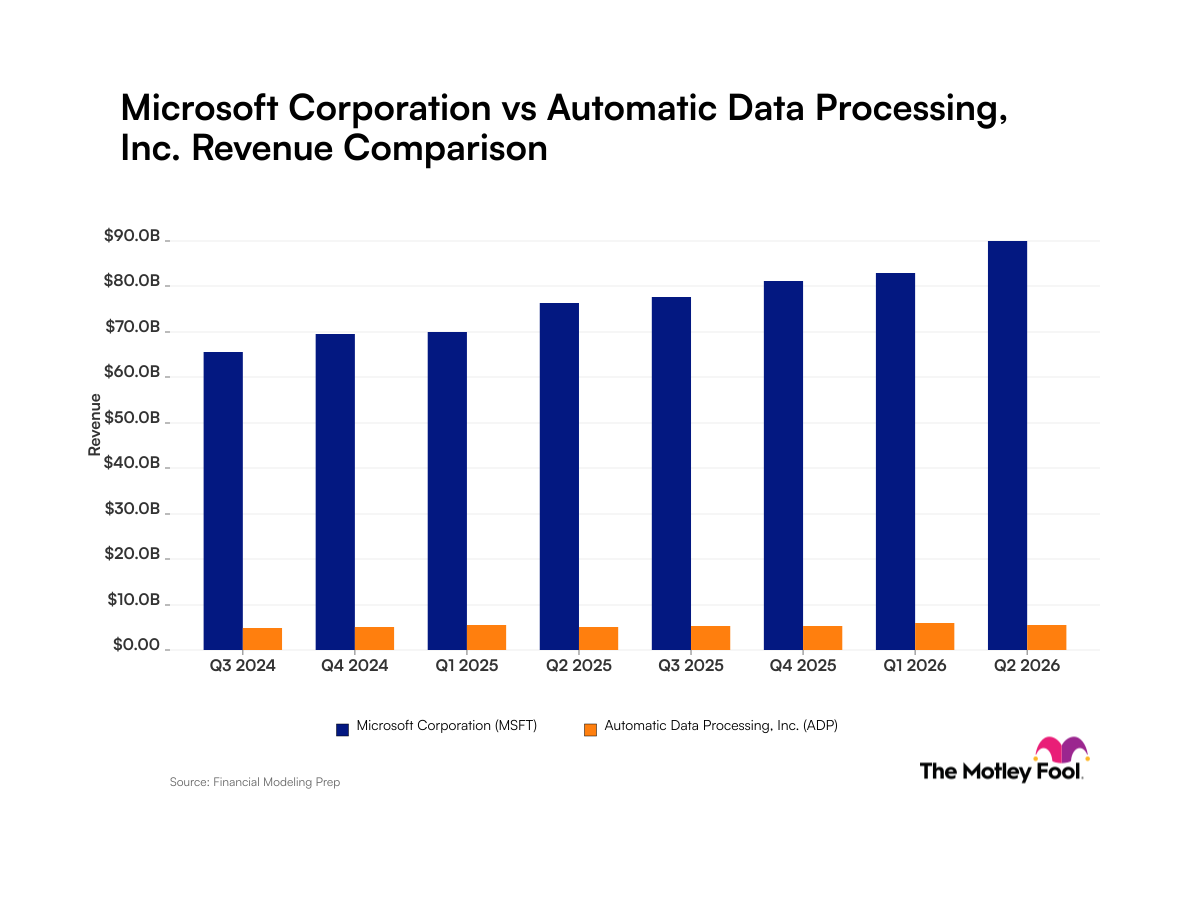
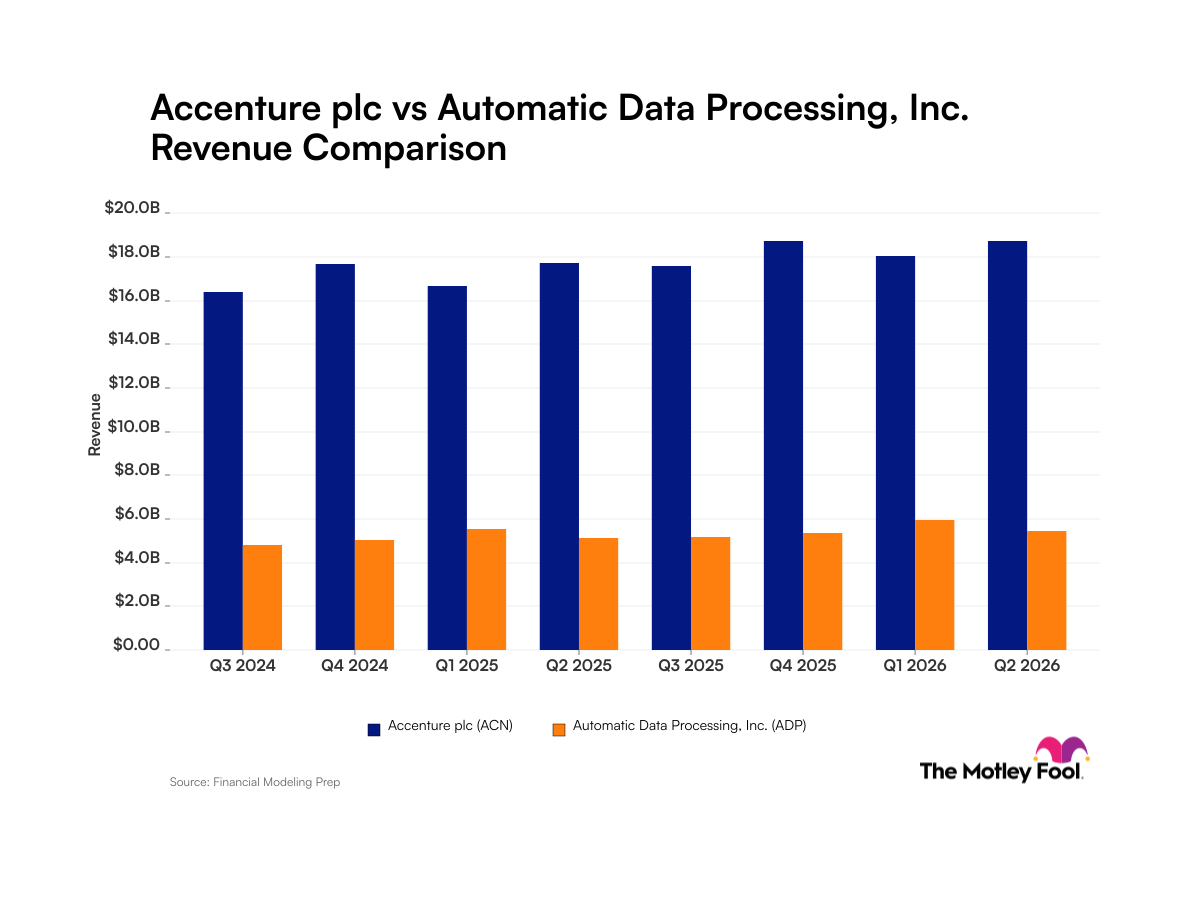
In the first quarter of fiscal 2026 (ended Sept. 30, 2025), ADP's revenue rose 7% year over year to $5.2 billion. And its earnings per share climbed 6% to $2.49, while its non- generally accepted accounting principles (GAAP) earnings per share rose 7% year over year.
At a high level, ADP's steady compounding continued.
Underneath the service, however, there's a problem brewing. ADP's core volume trend, or its "pays per control," is cooling. This metric is essentially ADP's same-store sales-style measure of how many employees are on ADP clients' payrolls in the U.S.
In the first quarter of fiscal 2026, ADP's U.S. pays per control was approximately flat year over year. That's a deceleration from the 1% growth ADP reported in both the third and fourth quarters of fiscal 2025.
While this isn't a massive change in trend, it's still concerning because it represents a deterioration in a key metric. If it stays flat, or even worse, turns negative, investors may begin calling into question the durability of the company's steady growth -- and the stocks' premium valuation.
For now, flat remains the expectation. For fiscal 2026, ADP guided for U.S. pays per control to be "approximately" flat. In addition, its outlook calls for a slight deceleration in top-line growth. The company guided for fiscal 2026 revenue to rise 5% to 6% over fiscal 2024.
New growth opportunities
Of course, the most important part of ADP's long-term story is that it isn't trying to win by simply processing more payroll checks. It's trying to win by becoming a broader human capital management (HCM) platform -- software that bundles payroll, HR, benefits, and compliance into a single system.
In other words, the company can do well even if pays per control remain flat. Its newer platform initiatives like ADP Workforce Now NextGen (a redesigned version of a core midmarket product) and ADP Lyric HCM (its next-generation human capital management platform for larger clients), for instance, are expected to help the company expand its services with existing customers and attract new ones it may not have reached otherwise.
So, even in a slower pays-per-control environment, there are still ways ADP can grow. And the company's fiscal first-quarter results notably showed those levers were working as growth remained robust even as its U.S. pays per control growth turned flat.

NASDAQ: ADP
Key Data Points
But what about the stock's valuation?
Even with the stock's pullback, shares command a solid premium considering that ADP is only growing its earnings per share at a single-digit rate year over year. ADP currently trades at a price-to-earnings ratio of 25 and a forward price-to-earnings of 23.
While this isn't an obscene valuation for a software-as-service company likely to continue growing steadily for years to come, it may be a bit high now that ADP's pay-per-control trends have flattened. With this core volume metric no longer growing, the company is more dependent on expanding its offerings and less so on the steady drumbeat of its core business. This increases the risks that ADP's earnings-per-share growth could slow over time, causing investors to be less willing to pay a price-to-earnings multiple in the 20s for the stock.
So I'll be staying on the sidelines for now -- even at this lower price. If shares fall to the point that the stock's price-to-earnings ratio is closer to 20, I might reconsider.