Sandisk (SNDK 0.64%) led the S&P 500 (^GSPC +0.50%) higher in 2025. Its share price increased 559% following its spin-off from Western Digital (WDC +1.93%) during the first quarter.
Interestingly, Western Digital and Micron Technology (MU 2.64%) ranked second and third, their shares increasing 282% and 239%, respectively. The common thread is artificial intelligence. All three companies provide data storage and memory products, and demand has been quite robust due to the buildout of artificial intelligence infrastructure.
History says Sandisk could have another big year in 2026. Here's what investors should know.

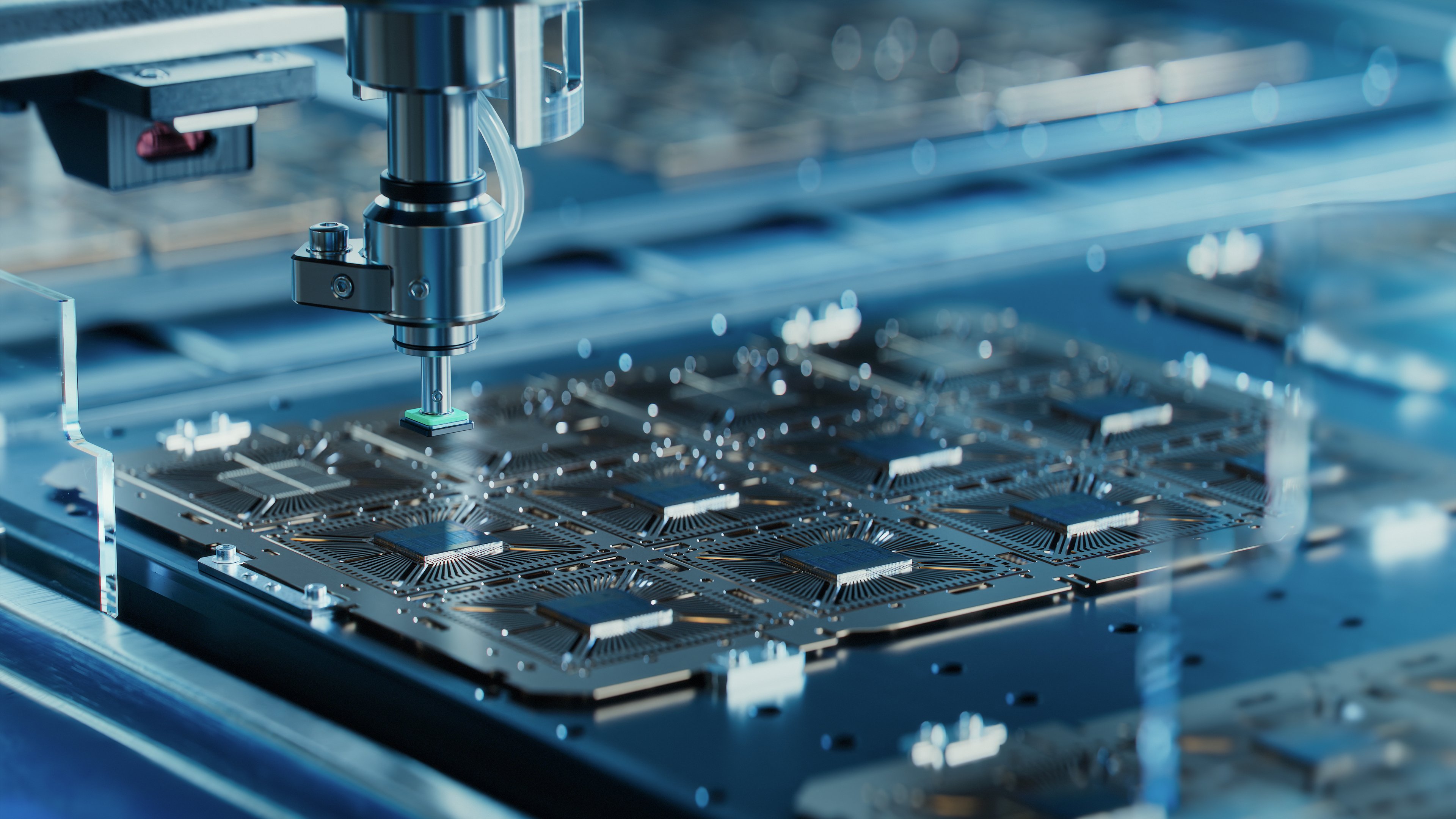
Image source: Getty Images.
History says Sandisk could soar in 2026
Interestingly, the top-performing stock in the S&P 500 in any given year has often generated strong returns in the next year too. For instance, Palantir Technologies stock led the S&P 500 in 2024 with its 341% gain, and it followed that with a 135% gain in 2025.
The chart below lists the top-performing stock in the S&P 500 in each of the last 10 years, and it details how those stocks performed in the next year.
|
Year |
Top S&P 500 Stock |
Return (Next Year) |
|---|---|---|
|
2015 |
Netflix |
8% |
|
2016 |
Nvidia |
81% |
|
2017 |
NRG Energy |
39% |
|
2018 |
AMD |
148% |
|
2019 |
AMD |
100% |
|
2020 |
Tesla |
50% |
|
2021 |
Devon Energy |
40% |
|
2022 |
Occidental Petroleum |
(5%) |
|
2023 |
Nvidia |
180% |
|
2024 |
Palantir |
135% |
|
Average |
78% |
Chart by Author.
As shown above, the top stock in the S&P 500 in any given year has returned an average of 78% in the next year. In other words, based on the last decade, history says Sandisk stock will advance 78% in 2026. Of course, how the stock actually performs depends on financial fundamentals and market sentiment.

NASDAQ: SNDK
Key Data Points
Sandisk is gaining market share in NAND flash memory
Western Digital bought SanDisk (spelled with an upper-case D) for about $16 billion in May 2016. The deal combined Western Digital's hard-disk drives (HDDs) with SanDisk's flash memory products to create a diversified storage company. However, Western Digital split its HDD and flash businesses in February 2025, recreating Sandisk (now spelled with a lower-case D).
Sandisk designs and manufactures data storage devices based on NAND flash technology. Importantly, HDDs are cheaper but slower and more fragile, while NAND-based solid-state drives (SSDs) are more costly but faster and more resilient. Currently, both types of storage products are critical to artificial intelligence (AI), but many experts think flash memory will replace HDDs in the years ahead.
Pure Storage (PSTG +4.39%) executives believe data centers of the future will rely solely on flash memory. In 2023, the company published a white paper that predicted, "By 2028, practically no new all-hard disk drive storage systems will be sold for enterprise data center computing." The company argued that, while HDDs will still cost less per gigabyte, flash products will have a lower total cost of ownership because they are faster, smaller, and more power efficient.
Readers may be wondering why Western Digital stock performed so well last year if HDDs could be phased out of data centers in the near future. HDDs are not only relevant today, but also prices have soared due to a severe supply shortage. In fact, the AI infrastructure buildout has led to supply shortages and significant price increases across all data storage products (e.g., HDDs, NAND, and DRAM). That explains why three data storage stocks led the S&P 500 in 2025.
Sandisk gained 2 percentage points of NAND market share during the 12-month period that ended in June 2025. The company still ranks fifth, but industry leaders Samsung, SK Hynix, and Kioxia lost at least 2 percentage points of market share. The only other notable share gainer was fourth-place Micron Technology, according to Counterpoint Research.
Wall Street expects Sandisk's adjusted earnings to increase at 112% annually through the fiscal year ending in June 2028. That makes the current valuation of 110 times earnings look reasonable. However, the current supply constrained environment may represent a peak in the NAND cycle, and the market may afford Sandisk a much lower valuation multiple if a supply glut forms in the aftermath.
That risk has supressed expectations. Among 23 analysts, Sandisk has a median target price of $280 per share, which implies just 4% upside from the current share price of $269. Personally, I think investors should consider Pure Storage instead of Sandisk. Among 22 analysts, Pure Storage has a median target price of $100 per share, implying 45% upside from its current share price of $69.