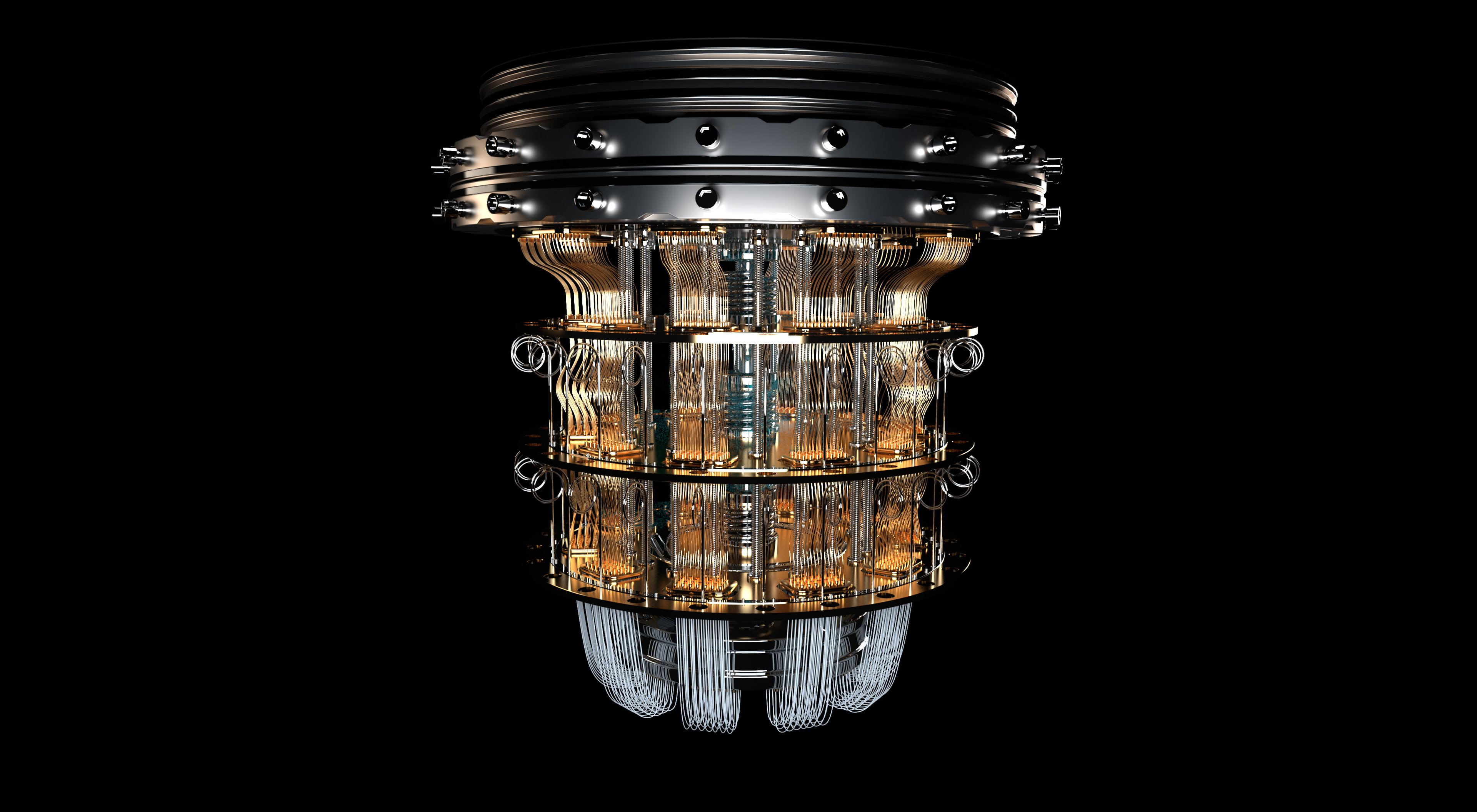
D-Wave Quantum (QBTS +6.04%) and Quantum Computing Inc. (QUBT +2.51%), more commonly known as QCi, represent two distinct ways to invest in the emerging quantum computing market. D-Wave is a more established provider of quantum processing units (QPUs), quantum systems, and quantum annealing services. QCi develops photonic quantum chips, which aren't widely used but might make quantum systems cheaper and more scalable.
Over the past 12 months, D-Wave's stock nearly tripled, while QCi's stock tumbled 35%. Let's examine why D-Wave outperformed QCi and whether it remains the better investment.
Image source: The Motley Fool.
The differences between D-Wave and QCi
Classical computers store zeros and ones separately in binary digits, also known as bits. Quantum computers store them simultaneously in qubits, which enables them to crunch larger amounts of data and process specific computing tasks at much faster rates.
However, quantum computers are also larger, more expensive, and consume more power than classical computers. They also require more maintenance and output a higher percentage of errors. That's why they're still primarily used for niche research projects at universities and government agencies, rather than mainstream computing applications. To address those issues, quantum companies are trying to produce smaller, cheaper, and more scalable systems.

NYSE: QBTS
Key Data Points
D-Wave's systems run on superconducting flux qubits, which accelerate electrons through a superconducting loop to achieve multiple quantum states. That cycle supports its quantum annealing services -- which help organizations streamline their workflows, supply chains, and logistics networks. To accomplish this, it runs those processes through various scenarios and identifies the ones that consume the least computing power as the most efficient.
D-Wave also designs its own QPUs and quantum systems, and it provides remote access to its systems through its cloud-based Leap platform. It recently launched its Advantage2 quantum system, which runs on a 4,400-qubit QPU and can solve 3D lattice problems approximately 25,000 times faster than its first-gen Advantage system while consuming less power. Its sales of these systems, which cost $20 million to $40 million, can temporarily boost its revenues, but most of its recurring revenue still comes from its Leap platform.

NASDAQ: QUBT
Key Data Points
D-Wave's systems, like many other electron-driven systems, require cryogenic refrigeration. As a result, they're large and expensive to operate. QCi addresses this issue with its photonic chips, which utilize particles of light to achieve a quantum state.
QCi's photonic chips can operate at room temperature and can be mass-produced at conventional chip fabrication facilities. That technology sounds promising, but it's only shipped its chips to a handful of design firms and research institutions since it opened its first foundry last year. Photonic chips are also not ideal for larger quantum systems, as photons are absorbed and scattered as they pass through additional optical components.
The growth rates and valuations
D-Wave and QCi are both unprofitable. But from 2022 to 2024, D-Wave generated more revenue from its Leap platform than QCi's consulting and research contracts.
|
Metric |
2022 |
2023 |
2024 |
|---|---|---|---|
|
D-Wave Net Sales |
$7.17 million |
$8.76 million |
$8.83 million |
|
QCi Net Sales |
$0.14 million |
$0.36 million |
$0.37 million |
Data source: Marketscreener.
Those numbers might seem unimpressive, but analysts expect both companies to generate much higher revenues through 2027. D-Wave could sell more of its pricey Advantage2 systems, and QCi could ramp up the production of its first commercial photonic chips.
|
Metric |
2025 (Estimate) |
2026 (Estimate) |
2027 (Estimate) |
|---|---|---|---|
|
D-Wave Net Sales |
$25.62 million |
$39.83 million |
$78.28 million |
|
QCi Net Sales |
$0.80 million |
$2.79 million |
$14.99 million |
Data source: Marketscreener.
Both companies must expand significantly to match those bullish estimates, but a lot of growth is already baked into their stocks. With a market cap of $10.7 billion, D-Wave trades at 138 times its 2027 revenue. QCi, which is valued at $2.7 billion, trades at 179 times its 2027 revenue. Those bubbly valuations could set them up for steep declines in the next market crash.
The better buy: D-Wave Quantum
I wouldn't rush to buy either of these high-flying quantum stocks in this frothy market. However, if I had to choose one over the other, I'd stick with D-Wave because its business is more established, it generates more revenue, and it trades at a slightly lower price-to-sales ratio. QCi's photonic chips have considerable potential, but they still need to overcome numerous technical bottlenecks before they can be considered game-changers for the quantum market.