The Ark Autonomous Technology & Robotics ETF (ARKQ 3.04%) is jam-packed with investable ideas. As part of Cathie Wood's Ark Invest empire, the exchange-traded fund (ETF) holds companies in the emerging fields of reusable rockets, autonomous mobility, adaptive robotics, and much more. Some of those investments include names you're already familiar with, like Alphabet and Nvidia.
But look beyond the large companies in the holdings, and you'll uncover smaller companies with big potential that most investors have yet to discover. One of those companies is Aurora Innovation (AUR 6.87%).

Image source: Getty Images.
Aurora Innovation: Trucking that never sleeps
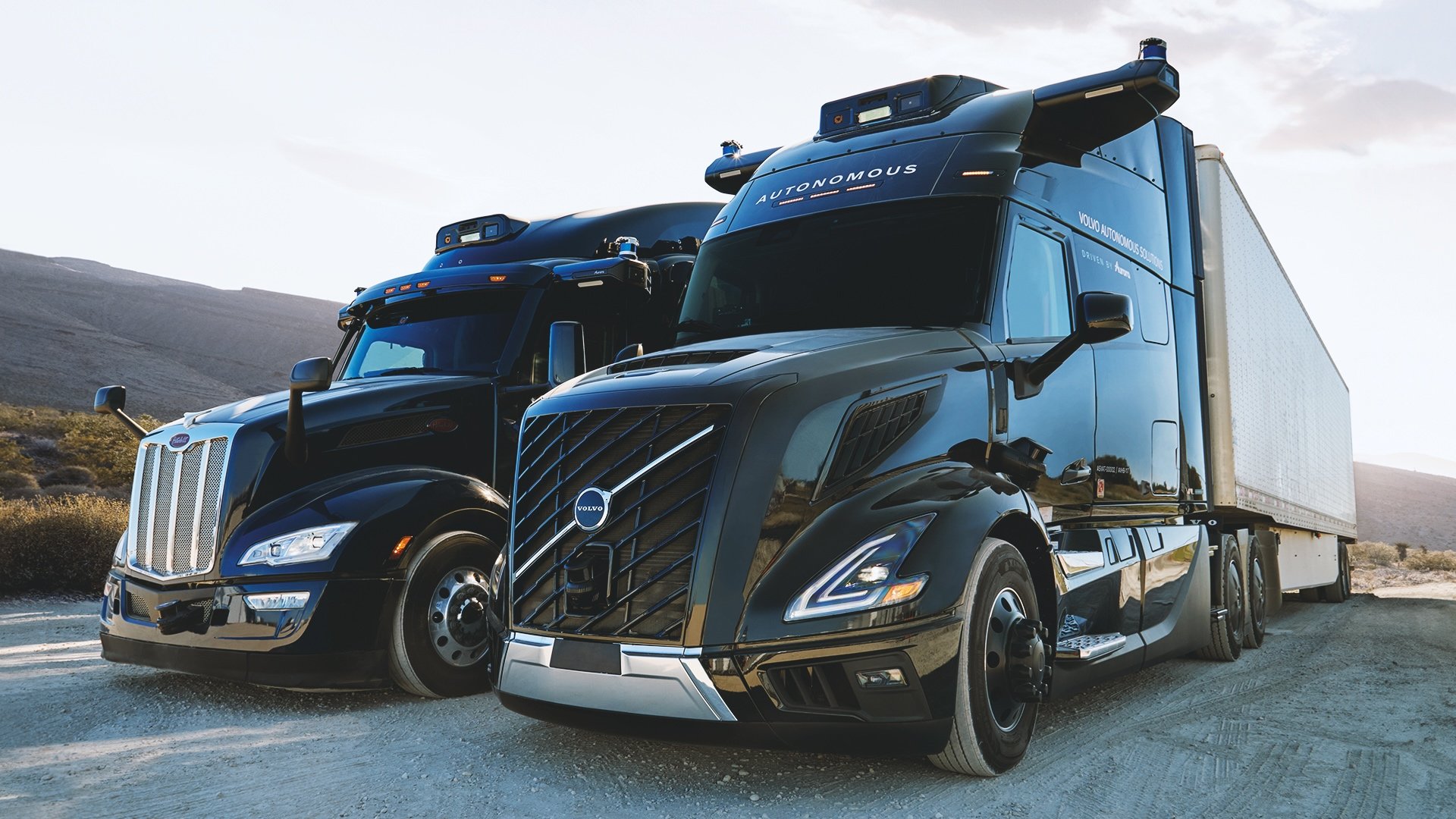
Aurora is an autonomous trucking company led by CEO Chris Urmson, whom Business Insider labeled a "driverless car pioneer." A former professor at Carnegie Mellon, Urmson was part of a team in 2007 that entered the DARPA Grand Challenge, a competition for building autonomous vehicles. Urmson went on to become a project lead for Google's autonomous car division before co-founding Aurora in 2017.
Unlike autonomous vehicles for everyday drivers, Aurora's goal is to address the pain points of the freight industry. The company says that includes a projected shortage of drivers over the next decade, high fuel costs, high insurance costs, and driver limitations.
To touch on those driver limitations a bit more, human drivers have a 14-hour window to drive 11 hours a day, restricting how much freight can move. Also, weather conditions can impact those driving hours.
Aurora is building momentum in addressing those limitations. In May, it was approved for driverless operations between Dallas and Houston. Over the next few months, the company says its Aurora Driver will also be capable of operating in a range of adverse weather conditions, including heavy wind and rain.

NASDAQ: AUR
Key Data Points
The autonomous-trucking legislation catalyst
McKinsey & Company expects the United States will be a leader in autonomous trucking. By 2035, the consulting firm projects 13% of trucks on the road will be autonomous heavy-duty trucks. In comparison, Europe's autonomous trucking industry is projected to be at 4% during that same time.
That percentage could accelerate even faster thanks to a potential tailwind in the form of a bill called the America Drives Act. For autonomous trucking, laws vary by state and lack a national standard. That results in a lack of clarity and additional regulatory hurdles for a company like Aurora.
The proposed legislation aims to create a national framework that would allow commercial trucks with certain automated driving systems to operate without a human driver or remote operator across state lines. Lawmakers are reviewing the America Drives Act.
Aurora Innovation's financials
For those considering investing in Aurora, keep in mind that it is still an early-stage company.
In Q3 2024, it didn't generate any revenue. Things picked up in the third quarter of 2025 with $1 million in sales, but Aurora also reported a $222 million net loss. With so little revenue and so much money going out the door, any potential investor needs to keep an eye on how long the company can keep the lights on.
With $1.6 billion in cash, management says it has enough to fund operations into the second half of 2027. While Aurora isn't cutting things dangerously close with $107 million in debt, it's still prudent to watch that burn rate over the next year and follow along with the company's plans to address it.
That's what to watch for in the short term.
Looking out over the long term, Aurora is in an industry expected to grow by leaps and bounds. Valued at roughly $42 billion this year, the industry is market expected to jump to a little more than $86 billion by 2032 for a compound annual growth rate (CAGR) of 10.6%. For a slower-growing industry like freight trucking, that's a strong signal of more adoption ahead.
There's a lot to like about Aurora's prospects, and it's easy to see why it found a spot in the ARKQ ETF. But for an individual investor, this would still be a speculative investment in a company that loses money. Even for those who understand those risks, Aurora should still only make up a small portion of your overall portfolio.