When Lucid Group (LCID 1.01%) went public back in 2021, some investors eagerly jumped on board and quickly drove its share price higher. But the party didn't last long. Following years of losses, manufacturing difficulties, and a shifting electric vehicle environment, Lucid's stock has cratered 88% since its initial public offering.
Some view this as a buying opportunity, with massive potential upside if Lucid becomes a major player in the global EV industry. The hope is that the company's advanced electric vehicles could eventually help propel Lucid ahead of its competition and push shares high enough to mint millionaires.
Unfortunately, I think those hopes are misplaced. Here are a few reasons Lucid isn't likely to make you rich anytime soon.

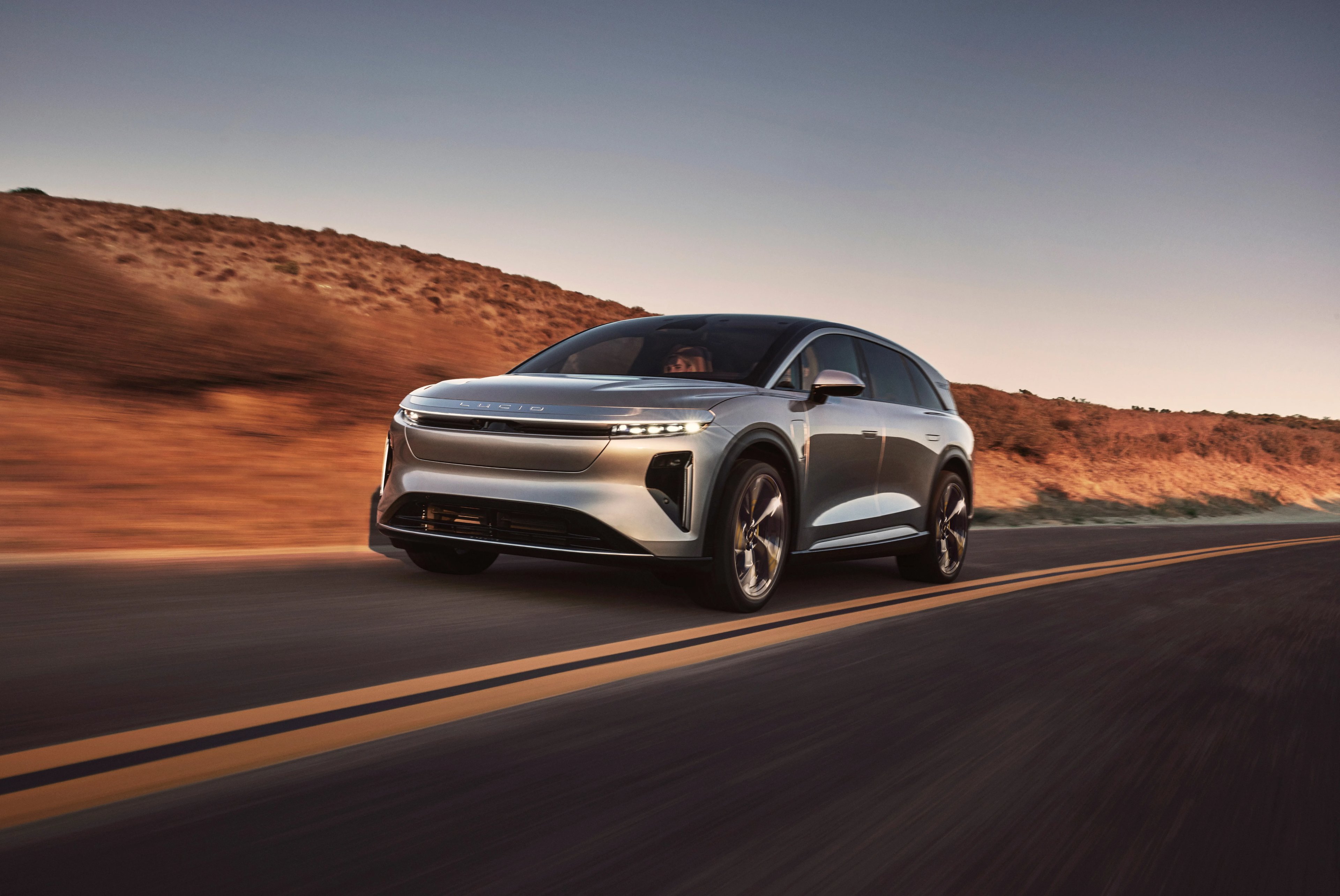
Image source: Lucid.
Lucid has significant losses and minimal revenue
Growth companies typically don't generate significant profits when they're just getting started, and that's been true for Lucid. The company's third-quarter 2025 net loss was approximately $1 billion, a very substantial amount.
Instead, most growth companies generate a lot of revenue and reinvest some of it into their company to spur new growth. The problem for Lucid is that has modest sales, reaching just $337 million in the third quarter (which ended Sept. 30), an increase of 68% from the year-ago quarter. That type of growth isn't enough to help the company invest in new technology, significantly ramp up production, or close the gap on its losses.
Designing and building electric vehicles is a costly and time-consuming endeavor. So to help offset all of its spending and lack of revenue, Lucid has had to receive multiple rounds of investment capital from the Saudi Public Investment Fund to keep the business going. While it's helped Lucid keep the company running, it's unclear whether or not it will have to raise additional capital in the future.
Adding to its difficulties is the fact that Lucid wants to launch a new, $50,000 midsize SUV sometime next year. While selling a car at a lower price point than its current models could be a way to drive sales, launching a new product and ramping up production will continue to sap Lucid's limited resources.
Electric vehicle competition is fierce
Another significant reason Lucid's shares may struggle to make substantial gains is that the EV market is currently experiencing a challenging period, and it remains unclear how long it will last.
Consider that the Trump administration ended the EV tax credits years before they were scheduled to expire, essentially dismantling many consumers' incentive to buy EVs. The effects are already being felt in the industry, with consumer EV sales estimated to drop from 11% of new car sales in December 2024 to about 6.6% in 2025.
While Lucid's vehicles were too expensive to benefit directly from the tax credit, buyers could take advantage of a leasing loophole with the credit. But that's no longer the case.

NASDAQ: LCID
Key Data Points
On top of all this, competition is fierce among global EV makers. Tesla, once the top electric vehicle seller, lost its title as the top-selling global EV brand to BYD, a Chinese automaker, last year. With BYD selling 2.26 million electric vehicles worldwide, not even Tesla's 1.6 million vehicle deliveries was enough to stay ahead of the competition.
While it's not quite an apples-to-apples comparison, it's worth noting that Lucid delivered just 15,841 vehicles in 2025. BYD and Tesla sell in far more markets globally and are much larger companies than Lucid. However, if Lucid wants to compete globally, its shareholders need to understand that its vehicles will eventually have to compete against those of BYD, Tesla, and others.
There's little chance for Lucid to mint millionaires
Lucid makes impressive electric vehicle technology that has earned numerous accolades, including holding the world record for the longest distance driven on a single charge -- a remarkable 749 miles. But even its stand-out technology isn't enough to help the company generate significant sales.
Without a massive ramp-up in vehicle production and sales -- spurred by an influx of consumer demand -- I think it's very unlikely for Lucid's shares to gain enough to help shareholders become millionaires. Competition is too fierce, the company is spending too much money, and production and sales are too low for Lucid.