Artificial intelligence (AI) will have countless use cases, but autonomous driving is particularly compelling. Self-driving cars will change the mobility industry more profoundly than any technology since the automobile was invented in the late 1800s. So, I feel justified in calling it a once-in-a-lifetime opportunity.
Grand View Research estimates robotaxi sales will increase at 74% annually through 2030, and driverless vehicles will eventually handle most ride-sharing trips, a market Straits Research values at $918 billion by 2033. Meanwhile, Morgan Stanley analysts estimate autonomous vehicle sales will top $3 trillion by 2040.
In my opinion, the best way for investors to lean into that opportunity is to own shares of four AI stocks: Nvidia (NVDA +1.60%), Uber Technologies (UBER 0.38%), Tesla (TSLA 0.04%), and Alphabet (GOOGL 0.79%) (GOOG 0.73%). Here are the details you need.
Image source: Getty Images.
1. Nvidia
Last year, Nvidia CEO Jensen Huang discussed autonomous driving technology and robotaxis at the GTC conference. "We've been working on self-driving cars now for over a decade. We build technology that almost every single self-driving car company uses," Huang said. That list includes Alphabet's Waymo, Uber, Tesla, and Amazon's Zoox.
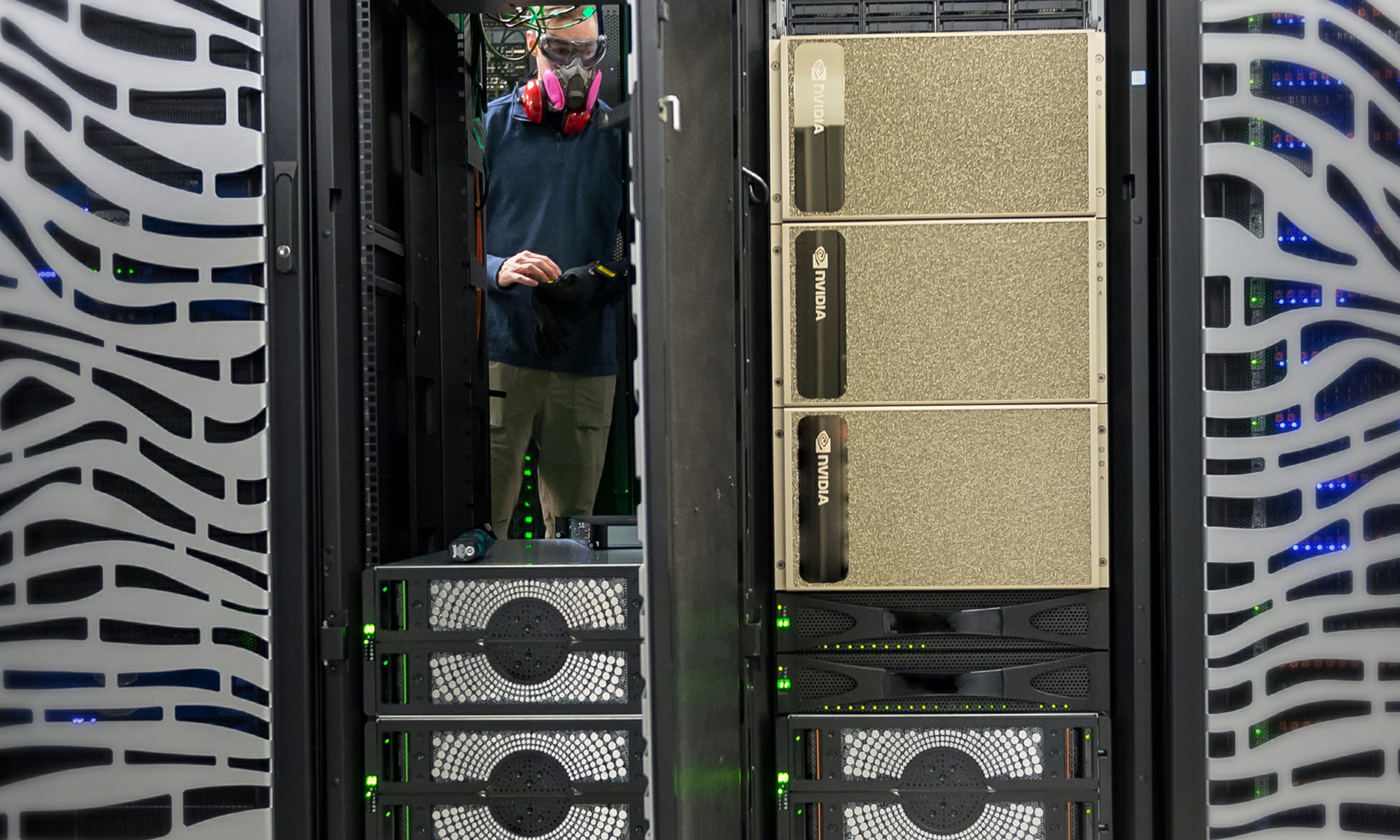
Nvidia is unique in offering an end-to-end autonomous driving platform that spans hardware and software. Its data center graphics processing units (GPUs) train the artificial intelligence (AI) models. Its Omniverse simulation platform (with Cosmos foundation models) generates synthetic training data and validates model safety. And its AGX systems run autonomous driving software within vehicles.
Last year, Nvidia introduced its Hyperion platform, which brings together AGX hardware, autonomous driving software, and a sensor suite (cameras, lidar, and radar) that vehicles need to perceive and navigate the world around them. An Nvidia-Uber partnership brings together Hyperion with driving data to help several original equipment manufacturers (OEMs) build autonomous cars.
Here's the big picture: Nvidia is the industry standard in AI infrastructure, and the company is ideally positioned to benefit as autonomous vehicles become more popular. Wall Street estimates earnings will increase at 38% annually in the next three years. That makes the current valuation of 45 times earnings look quite reasonable.
2. Uber Technologies
Uber operates the largest ride-sharing platform in the U.S. and globally. That makes it an ideal partner for autonomous vehicle (AV) companies. CEO Dara Khosrowshahi says, "Uber can deliver the lowest operational costs for our AV partners because we are leaps and bounds ahead on every aspect of the go-to-market capabilities that are critical for commercialization."
Uber works with 20+ AV partners, several of which have already commercialized autonomous ride-sharing. In the U.S., its platform links users with Waymo robotaxis in Phoenix, Atlanta, and Austin, and Avride robotaxis in Dallas. In the Middle East, its platform connects riders with WeRide robotaxis in Riyadh (Saudia Arabia), and in Abu Dhabi and Dubai (in United Arab Emirates). Uber will bring robotaxis to more than a dozen new cities in the next few years.
Here's the big picture: Morgan Stanley analysts anticipate Uber will account for 22% of autonomous ride-sharing trips in the U.S. by 2032. That would land the company in third place behind Waymo and Tesla. Wall Street estimates Uber's earnings will grow at 28% annually over the next three years. That makes the current valuation of 11 times earnings look cheap.

NYSE: UBER
Key Data Points
3. Tesla
Tesla's full self-driving (FSD) platform is unique because it relies solely on computer vision. While other autonomous driving companies equip robotaxis with cameras, radar, and lidar, Tesla equips robotaxis with nothing but cameras. CEO Elon Musk argues humans drive with eyesight alone, so robotaxis should be able to navigate with cameras alone.
Tesla's approach is less costly and more scalable. Morgan Stanley estimates Tesla pays $3,000 per vehicle for cameras, while Waymo spends $30,000 per vehicle for sensors. Also, Tesla does not need to map cities in meticulous detail because it does not use lidar. Instead, its robotaxis should (eventually) be able to navigate any street, even those it has never seen.
Finally, Tesla plans to crowdsource robotaxis from its existing fleet of nearly 8 million cars. In other words, Tesla owners will be able to add their cars to the autonomous ride-sharing platform to earn income, similar to how hosts list rental properties on Airbnb. That means Tesla already has sleeper robotaxis in most U.S. cities, which should let the company scale its service quickly.
Here's the big picture: Morgan Stanley analysts think Tesla will account for 25% of autonomous ride-sharing trips in the U.S. in 2032, putting the company in second place behind Waymo. As a caveat, Tesla is hard to value because its electric car business is struggling, and robotaxis are not yet a substantial source of revenue. That makes Tesla the riskiest stock discussed in this article.
4. Alphabet (Waymo)
Alphabet is best known for its Google subsidiary, which enjoys a strong market position in digital advertising and cloud computing. But its Waymo subsidiary leads the autonomous ride-sharing market with commercial services available in five U.S. cities. The company is also active in two dozen other cities where it is either testing robotaxis or preparing for a commercial launch.
Here's the big picture: Alphabet is a relatively attractive stock based solely on its digital advertising and cloud computing businesses. Indeed, Wall Street estimates the company's earnings will increase at 15% annually in the next three yeras. That makes the current valuation of 32 times earnings look somewhat pricey but not outrageously expensive.
However, Alphabet's nascent robotaxi business could eventually become a material source of revenue. Morgan Stanley expects Waymo to maintain its market leadership in the coming years, such that it accounts for 34% of autonomous ride-sharing trips in the U.S. by 2032.