With inflation battering everyone's pocketbooks, $1,000 might not seem like a lot of money anymore. That said, it could still help set the foundations for huge, long-term returns in the stock market if you invest in the right companies at the right time. Let's dig deeper to find out why shares in Rivian Automotive (RIVN 2.27%) and Micron Technology (MU +0.52%) look like excellent picks in 2026 and beyond.
Micron Technology
It's been over three years since OpenAI's ChatGPT introduced the world to generative artificial intelligence (AI). And since then, many technology companies have added billions (if not trillions) to their market caps, making their stocks less appealing to investors searching for a deal. While Micron has also risen in recent months, its valuation remains very attractive considering how much its memory hardware business stands to win.
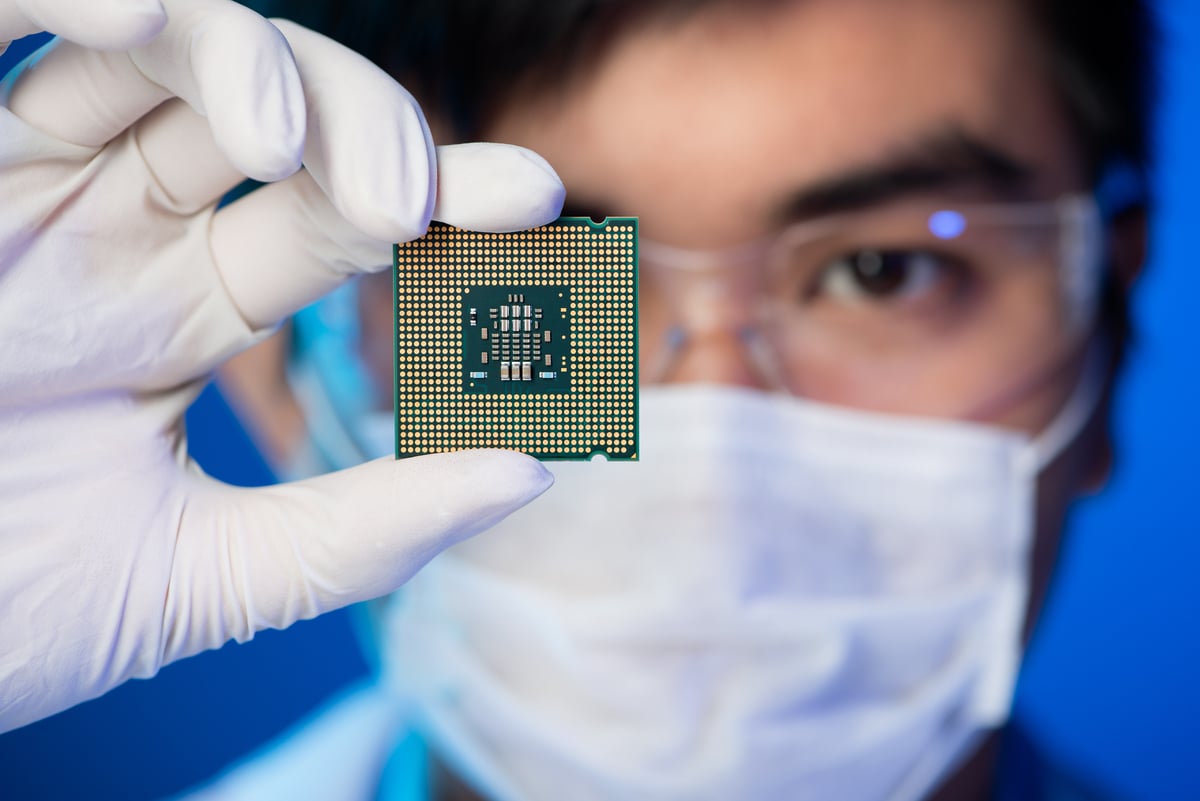
Micron specializes in creating high-performance memory chips. These are vital for the AI boom because large language models (LLMs) are trained on vast amounts of data, which must be stored on these devices. Reuters reports that the massive demand for computer memory has created shortages, allowing producers to raise prices across their product lines.

Image source: Getty Images.
Micron seems to be benefiting from the favorable industry dynamics. In its fiscal first quarter (which ended in December), revenue jumped 57% year over year to $13.6 billion, driven by strength in the company's cloud-memory unit, where it serves AI data center clients. Margins remain high with the company reporting $8.4 billion in free cash flow from operations.
The most attractive thing about Micron might be its valuation. Despite the stellar growth, shares trade for a forward price-to-earnings (P/E) multiple of just 11.5, which is significantly lower than the S&P 500 average of 22.

NASDAQ: MU
Key Data Points
Rivian Automotive
Electric vehicles (EVs) have somewhat fallen off Wall Street's radar as investor excitement turns to new opportunities like generative AI. But that doesn't mean there aren't opportunities to be had in this struggling sector. Rivian stands out because of its ability to benefit from fading competition and new product releases to drive growth.
Last year, the Trump administration effectively axed U.S. government support for EV adoption, which had previously included a $7,000 tax credit on new purchases and various emissions regulations that penalized automakers for producing traditional gasoline-powered vehicles. U.S. EV sales dropped by a whopping 41% in November, reflecting how important these incentives were for driving adoption. That said, Rivian looks poised to turn this near-term challenge into a long-term opportunity.

NASDAQ: RIVN
Key Data Points
For starters, the company's vehicles generally didn't even benefit from the incentive because of battery sourcing requirements and price. Furthermore, the loss of government support is scaring away Rivian's biggest rival, Ford Motor Company, which has totally scrapped its all-electric F-150 Lightning, which directly competes with Rivian's R1T pickup truck.
In December, Ford revealed a $19.5 billion asset write-down charge related to a slew of canceled EV models. And the larger company's retreat from the market gives Rivian more room to capture market share and establish brand recognition in the market for fully electric trucks.
Rivian's valuation is also appealing. With a price-to-sales (P/S) ratio of just 3.2, the stock is dramatically cheaper than pure-play alternative Tesla, which boasts a P/S multiple of 15.5. Rivian's Q3 revenue grew 78% year over year to $1.56 billion. And the embattled electric automaker may finally be on the cusp of a sustainable rebound.
Pivoting to affordable growth opportunities
The stock market has absolutely surged recently, with the S&P 500 up around 77% over the last few years, partially driven by new hype cycles like generative AI. But while this is great news for investors, it is also a sign to be cautious about a potential correction. Rivian and Micron are good picks in this pricy market because they trade for lower valuations than their peers, significantly reducing long-term downside risk.