Rigetti Computing (RGTI +2.62%), a developer of quantum computing chips and systems, has taken its investors on a wild ride since it went public through a merger with a special purpose acquisition company (SPAC) on March 2, 2022. Its stock opened at $9.75 on that first day, sank to a record low of $0.38 on May 3, 2023, but soared to a record high of $56.34 on Oct. 15, 2025.
Today, Rigetti's stock trades at about $22. Like many other SPAC-backed quantum stocks, it was a polarizing investment. The bulls praised its new chips, systems, and bundling strategies, but the bears claimed it faced too much competition and its stock was overvalued. Let's see which thesis makes more sense, and where its stock might be headed over the next 12 months.
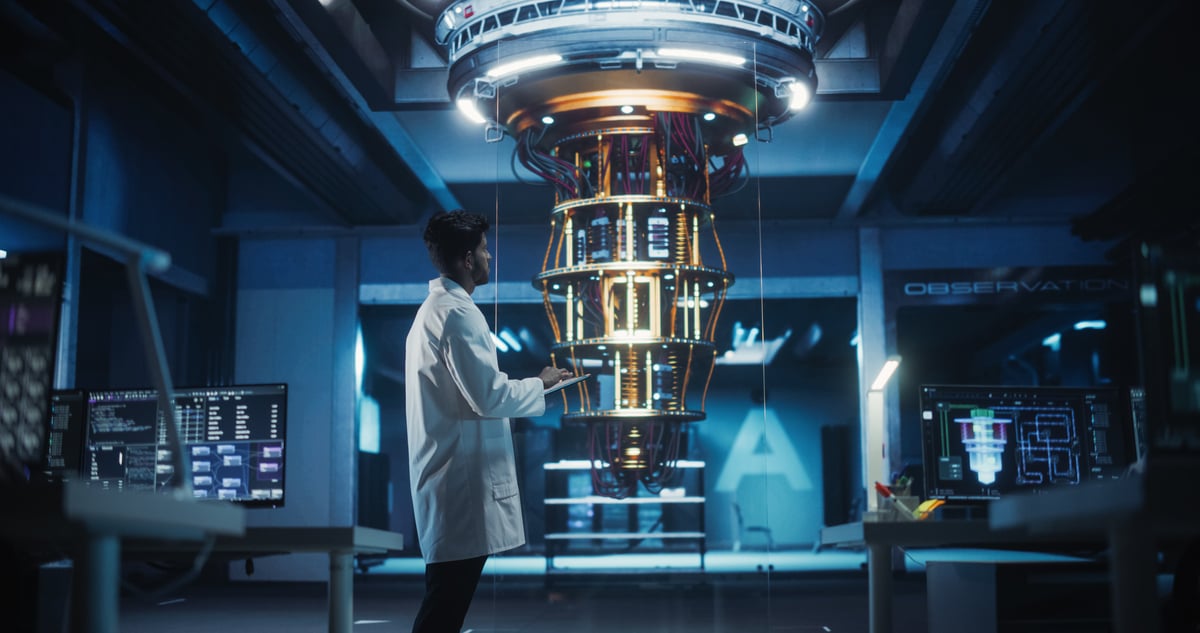
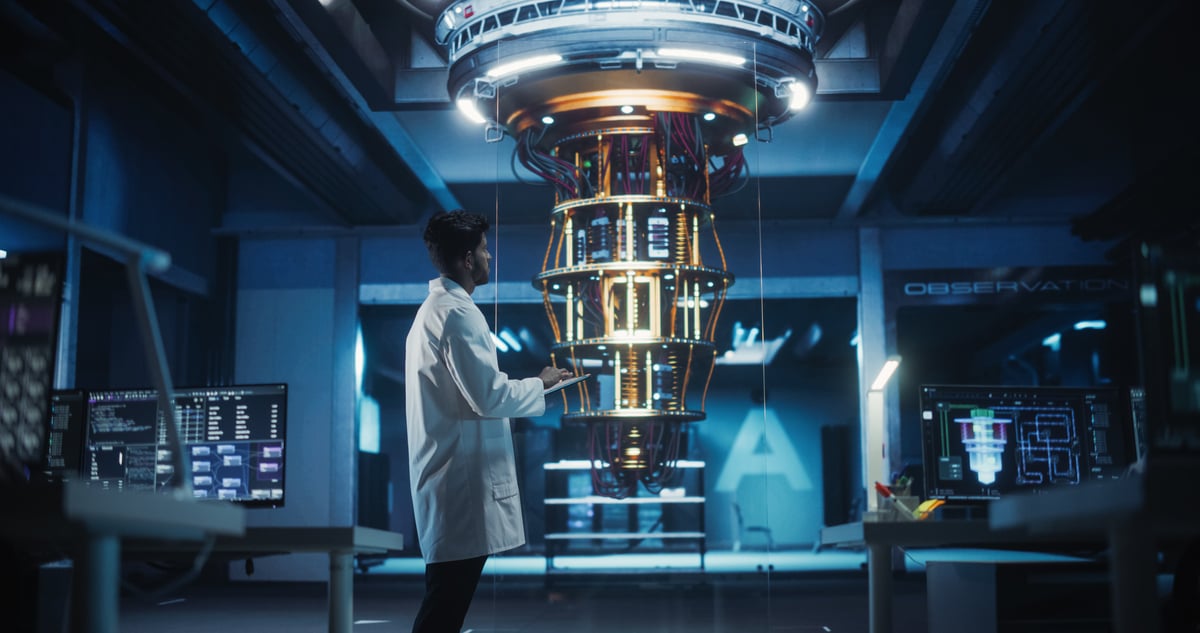
Image source: Getty Images.
What the bulls will tell you about Rigetti
Classical computers store their data in binary bits of zeros and ones, but quantum computers store those zeros and ones simultaneously in qubits. That difference enables quantum computers to process more data and perform specific tasks much faster than classical computers, but they're also bigger, pricier, less accurate, and more power-hungry. That's why they're still mainly used for niche research projects at universities and government agencies.
Rigetti manufactures modular and non-modular quantum processing units (QPUs), installs them in its own quantum computing systems, and enables developers to create their own quantum algorithms on its cloud-based quantum computing platform, Forest. By bundling that hardware and software together, it promotes itself as a "full-stack" quantum computing company, which serves as a "one-stop shop" for customers who want to invest in the nascent technology.
The bulls will point out that Rigetti already sells two completed systems: Ankaa-3, an 84-qubit system that runs on a single non-modular chip; and Cepheus-1-36Q, a 36-qubit system that links four modular 9-qubit chips. Rigetti aims to deploy a new 108-qubit system this year, followed by a 150+ qubit system, and a 1,000+ qubit system by the end of 2027. It also expects to lock more companies into Forest's quantum-computing-as-a-service.
If Rigetti hits those ambitious targets, analysts expect its revenue to jump 168% to $20.4 million in 2026 and surge another 123% to $45.4 million in 2027 as it narrows its net losses. The bulls believe those explosive growth rates justify its premium valuation.

NASDAQ: RGTI
Key Data Points
What the bears will tell you about Rigetti
The bears believe that too much of that future growth is already baked into its stock. With a market capitalization of $7.18 billion, it already trades at 160 times its projected 2027 sales.
They'll also point out that Rigetti's systems use older technology, which is now facing fresh competition from newer systems. Rigetti uses electron-driven superconducting loops, which are expensive to operate because they require cryogenic refrigeration.
Newer companies like IonQ (IONQ +5.03%) and Quantum Computing (QUBT +4.34%) are already developing systems that don't require any refrigeration. IonQ's systems trap ions with tiny lasers, while Quantum Computing is developing simpler, light-driven photonic chips. Meanwhile, larger electron-driven quantum companies -- such as IBM (IBM 0.77%) and Alphabet's (GOOG +0.40%) (GOOGL +0.40%) Google -- have been aggressively expanding their systems to dilute their operating costs.
All of that competition could make it hard for Rigetti to achieve its near-term goals. The company has already postponed the launch of its 108-qubit system from late 2025 to early 2026, and it's still far behind IBM -- which launched its 1,121-qubit Condor chip in 2023 and its 156-qubit R2 Heron chip in 2024 -- in raw computing power.
Moreover, Rigetti's revenue actually declined in 2023, 2024, and 2025. That slowdown, which it attributed to the expiration of a contract with the U.S. National Quantum Initiative (NQI) and the lumpy timing of its other government contracts, indicates its future growth could be wildly unpredictable. It's already increased its outstanding shares by 190% since its public debut, and that dilution will likely continue as long as it remains unprofitable.
Where will Rigetti's stock be in a year?
Rigetti's stock might gain more attention this year if it successfully launches its 108-qubit and 150+ qubit systems this year while locking in more partnerships, but its sky-high valuation could limit its gains. It also needs to prove its capital-intensive "full-stack" approach to quantum computing is sustainable and enough to widen its moat against tech giants like IBM and Google.
I believe Rigetti could struggle to check all of those boxes, and its high valuation could make it an easy target for the short sellers if this wobbly market crashes. Therefore, I expect Rigetti's stock to either trade sideways or slide lower again over the next 12 months.