GE Vernova (GEV +0.44%) has been a stand-alone business since April 2024, after being spun off from General Electric, which is now known as GE Aerospace (GE +2.48%). Since that time, the stock has risen by more than 400%. Wall Street is clearly very excited about the opportunity ahead of this business now that it is on its own. Is it worth buying today?
What does GE Vernova do?
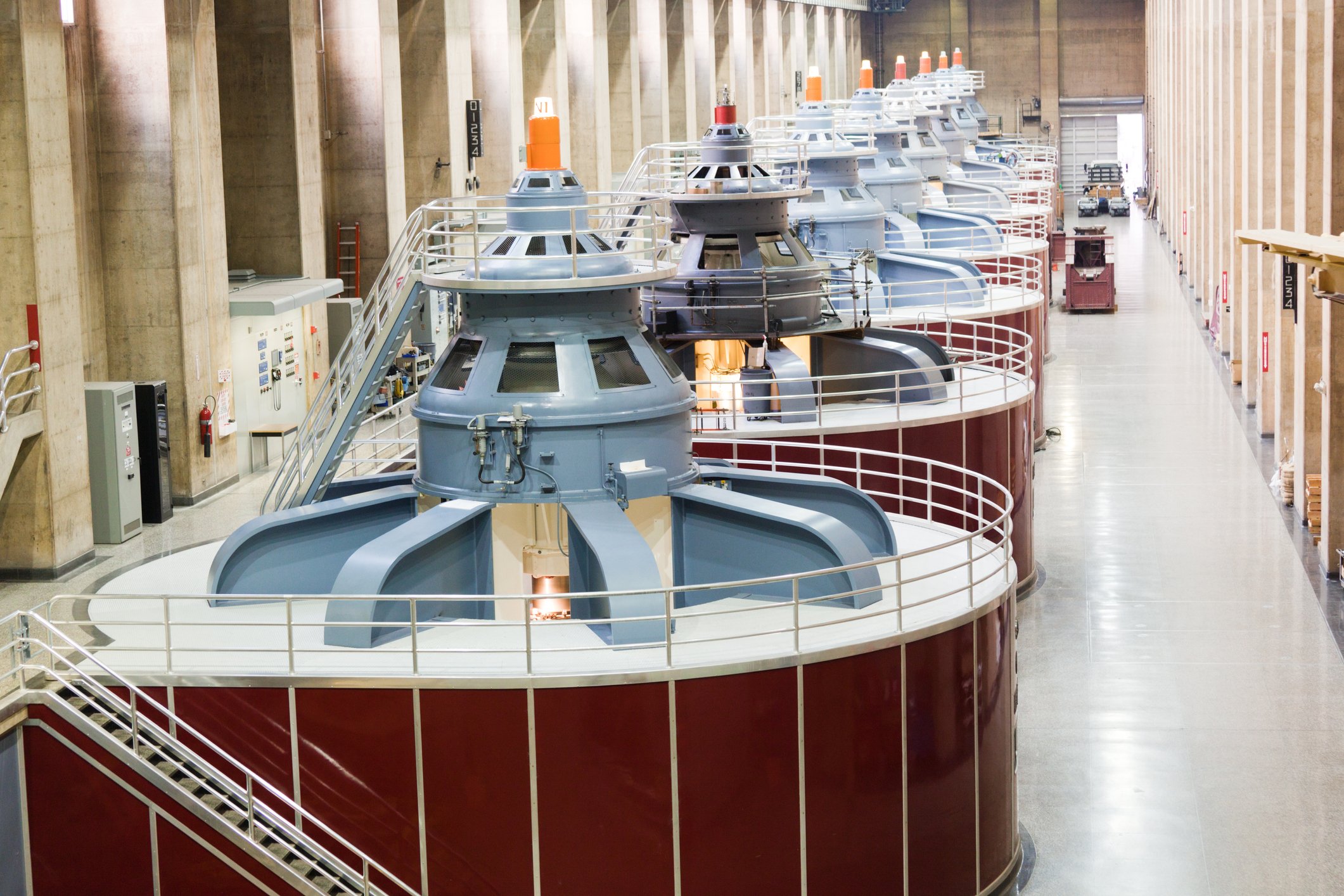
GE Vernova is an industrial company that makes equipment for the electricity industry. It doesn't make small things like light switches; it makes gigantic things like natural gas turbines and wind turbines. These are massive capital investments for buyers, who are often electrical utilities. In fact, GE Vernova competes in sectors where there are usually just a few dominant suppliers. It is a key player across all product categories in which it competes.

Image source: Getty Images.
The business looks very strong in many regards. For example, natural gas turbine sales often come with long-term service contracts. So sales can lead to an annuity-like income stream on the back end. Within the company's wind power business, it appears well positioned to benefit as the world continues to shift toward cleaner energy. And, looking out longer term, the company is also working on small modular nuclear reactor (SMR) technology. SMRs could be a massive game changer in the nuclear power sector.
All in all, there's a lot to like about GE Vernova's story. That's highlighted by the company's backlog. At the end of the third quarter of 2025, the backlog stood at $135 billion. That's work the company has lined up in the years ahead. However, management expects the backlog to continue to grow. By 2028, it expects the figure to stand at as much as $200 billion. That should provide a foundation for solid earnings into the 2030s, if management estimates prove accurate.
The problem with GE Vernova isn't the business
From a fundamental business perspective, GE Vernova appears attractive. The problem with the stock goes back to an important observation from Benjamin Graham, the man who helped to train famed investor Warren Buffett. If you pay too much for a good business, you can turn it into a bad investment.
Graham was a value investor, so he had his own investment biases. And GE Vernova only has a short history as a stand-alone business and public stock. That makes it impossible to put the stock's valuation into a historical context. However, GE Vernova's price-to-earnings ratio is currently 108, and its price-to-book (P/B) value ratio is nearly 21. The average industrial stock, using Vanguard Industrials ETF (VIS 1.17%) as an industry proxy, has a P/E ratio of 26.5 and a P/B ratio of 5.2. That comparison point makes GE Vernova stock look shockingly expensive.

NYSE: GEV
Key Data Points
But that's not the only shocking comparison point you can come up with. The average P/E for the technology sector, using Vanguard Information Technology ETF (VGT 1.63%) as an industry proxy, is 38.6. The average P/B ratio is 8.9. So GE Vernova, an industrial company, also looks far more expensive than technology stocks on the whole. Notably, it is the technology sector that has been driving the broader market toward its own all-time highs. Very clearly, Wall Street is pricing in a lot of good news for GE Vernova.
Well-positioned and expensive
If, like Benjamin Graham, you have a value bias, you are not likely to find GE Vernova attractive right now. However, even a growth investor should probably step back and consider the price being paid for this industrial giant. It seems investors could be pricing the stock for perfection, which is an awfully high bar.