On Oct. 29, 2025, Nvidia's (NVDA +8.01%) stock closed at an all-time high of $207.03 per share, boosting its market capitalization to $5.03 trillion. That made it the first company in the world to ever cross the $5 trillion mark.
Since then, Nvidia's stock has declined 11%, reducing its market cap to about $4.5 trillion. The bears claim it will head even lower as the "AI bubble" bursts, but I believe it will return to $5 trillion -- and beyond -- by the end of the year as it overcomes its near-term challenges.

Image source: Getty Images.
Why do the bears believe Nvidia's rally is over?
Nvidia's stock has soared nearly 1,200% over the past five years. Most of that growth was driven by the rapid expansion of the AI market. Nvidia's discrete GPUs are better suited for handling complex AI applications than stand-alone CPUs. That's because GPUs are optimized for parallel processing, while CPUs are better at sequential tasks.
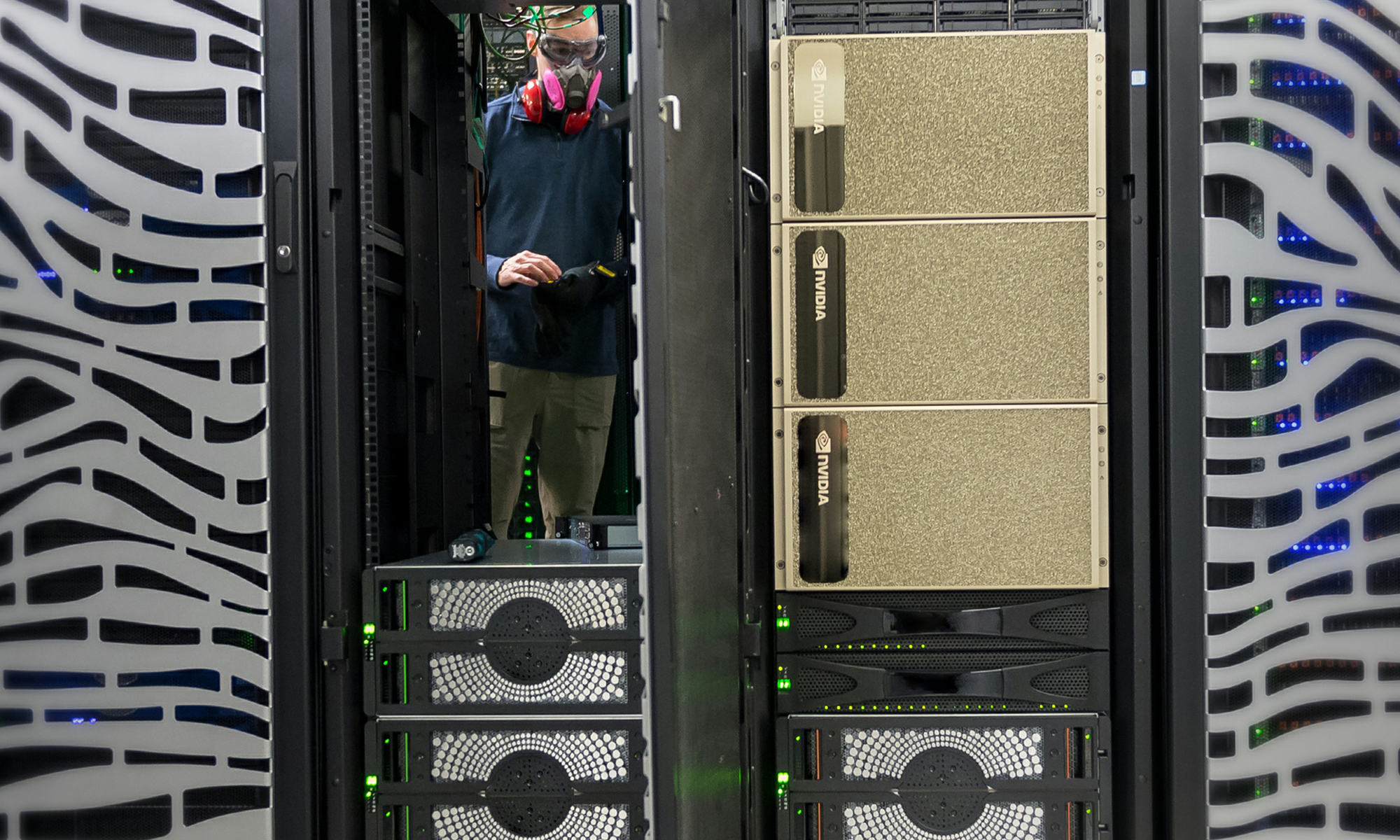
Today, most of the world's top AI companies use Nvidia's data center GPUs to train their AI algorithms. It now controls more than 90% of the discrete GPU market, and it locks in those clients with CUDA (Compute Unified Device Architecture), its proprietary programming platform optimized for its own chips, and other sticky services. In other words, Nvidia is still selling the best picks and shovels for the AI gold rush.

NASDAQ: NVDA
Key Data Points
From fiscal 2025 (which ended last January) to fiscal 2028, analysts expect its revenue and EPS to grow at CAGRs of 47% and 46%, respectively, as the AI market continues to expand. Those are exceptional growth rates for a stock trading at 24 times next year's earnings.
However, the bears expect Nvidia's growth to slow down as it faces tougher competition from AMD's (AMD +8.32%) cheaper data center GPUs, Broadcom's (AVGO +7.26%) more cost-efficient custom AI accelerators for hyperscalers, and custom chips built for inference (handling the actual requests) instead of simply training the AI algorithms.
Why will Nvidia's market cap soar past $5 trillion again?
Those concerns are valid, but Nvidia's scale, reliability, and the stickiness of its ecosystem should keep it at the top of the booming AI market for the foreseeable future. There's also probably plenty of room for AMD, Broadcom, and custom inference chipmakers to thrive in this expanding market without stomping on each other's toes.
Assuming Nvidia matches analysts' forecasts and still trades at 24 times forward earnings, its stock could rise nearly 20% over the next 12 months. That would easily lift its market cap back above $5 trillion -- and it could have even more room to grow over the next few years.