When Anthropic released Claude Code in early 2026, something unusual happened. The market didn't reward artificial intelligence (AI) innovation -- it punished software stocks for it. At the time, the iShares Expanded Tech-Software Sector ETF dropped more than 14%, the exchange-traded fund's worst stretch since 2008.
Why were software stocks hit? Because Claude Code was touted as a potential AI-powered replacement for some of the hottest software-as-a-service (SaaS) offerings out there.
Individual software companies got caught up in the sell-off, including Microsoft (MSFT 1.13%) (down 23.3% year to date), Shopify (SHOP 2.24%) (down 26.4%), Adobe (ADBE +1.89%) (down 32.2%), and Salesforce (CRM 0.18%) (down 31.3%). Traders started calling it "the SaaSpocalypse," a phrase for these software-as-a-service stocks that was used by Jefferies equity trader Jeffrey Favuzza, who told Bloomberg the style of selling was "get me out."
Let's take a closer look at what actually happened here, because I think the market reaction is more interesting and more nuanced than the headlines suggest.

Image source: Getty Images.
Investors' logic may be broken here
The logic driving the sell-off goes something like this: If AI agents can access, read, write, and execute tasks inside enterprise software, why would any company pay per-seat SaaS licensing fees? If Anthropic's Claude can route through Salesforce's interface without a human touching it, doesn't that erode Salesforce's pricing power?
That fear is very real, and it isn't wrong. It's the palpable "AI will take your job" conversations in real life.
But analysts at J.P. Morgan called the resulting stock declines "broken logic," and here's why: Investors are somehow holding two contradictory fears at once. On one hand, they're worried AI disrupts software.
On the other hand, they're worried hyperscalers are spending too much on AI infrastructure. If AI is both threatening software companies and overinvesting in the models that threaten them, the market is pricing in a contradictory world. Charu Chanana, chief investment strategist at Saxo Bank, put it well: "AI is not being abandoned by markets. It is being priced more carefully."

NASDAQ: MSFT
Key Data Points
What does all this money rotation actually tell investors?
Here's what's really happening beneath the surface. The S&P 500 software and services index is trading about 21% below its 200-day moving average. This level has not been seen since June 2022.
Analysts at Goldman Sachs and others note that short interest in mid- to large-cap software has surged over the past three months, with cybersecurity and SaaS companies seeing the biggest spike in bearish bets. That's usually what happens right before a category reset. The companies that will survive and thrive are the ones where AI deepens the moat rather than erodes it.
Think about what AI actually requires: real data, proprietary workflows, customer relationships, and deep integration with existing infrastructure. That's not a generic description of software -- it's a description of the specific kind of software that's hard to replicate with a general-purpose AI agent. So, the companies getting crushed are the ones whose products are primarily wrappers around manual workflows, meaning those products are tied to tasks AI can do faster and cheaper.
The companies that will emerge stronger are those whose data, customer relationships, or infrastructure position creates something an AI agent can't replace.

NYSE: CRM
Key Data Points
Is this new AI the beginning of the end for SaaS?
This upcoming period might be the beginning of a harder, more selective phase of the AI trade. The easy version of "anything with AI exposure goes up" is clearly over. What comes next is messier: Investors will need to separate the companies that are genuinely transformed by AI from the ones that are genuinely threatened by it.
During a panic sell-off, it's hard to separate the strong from the weak since everything gets sold. The winners here will be those for whom the fears prove wrong, and their rebounds are often swift. Right now, it feels like investors are in the middle of one of those moments.
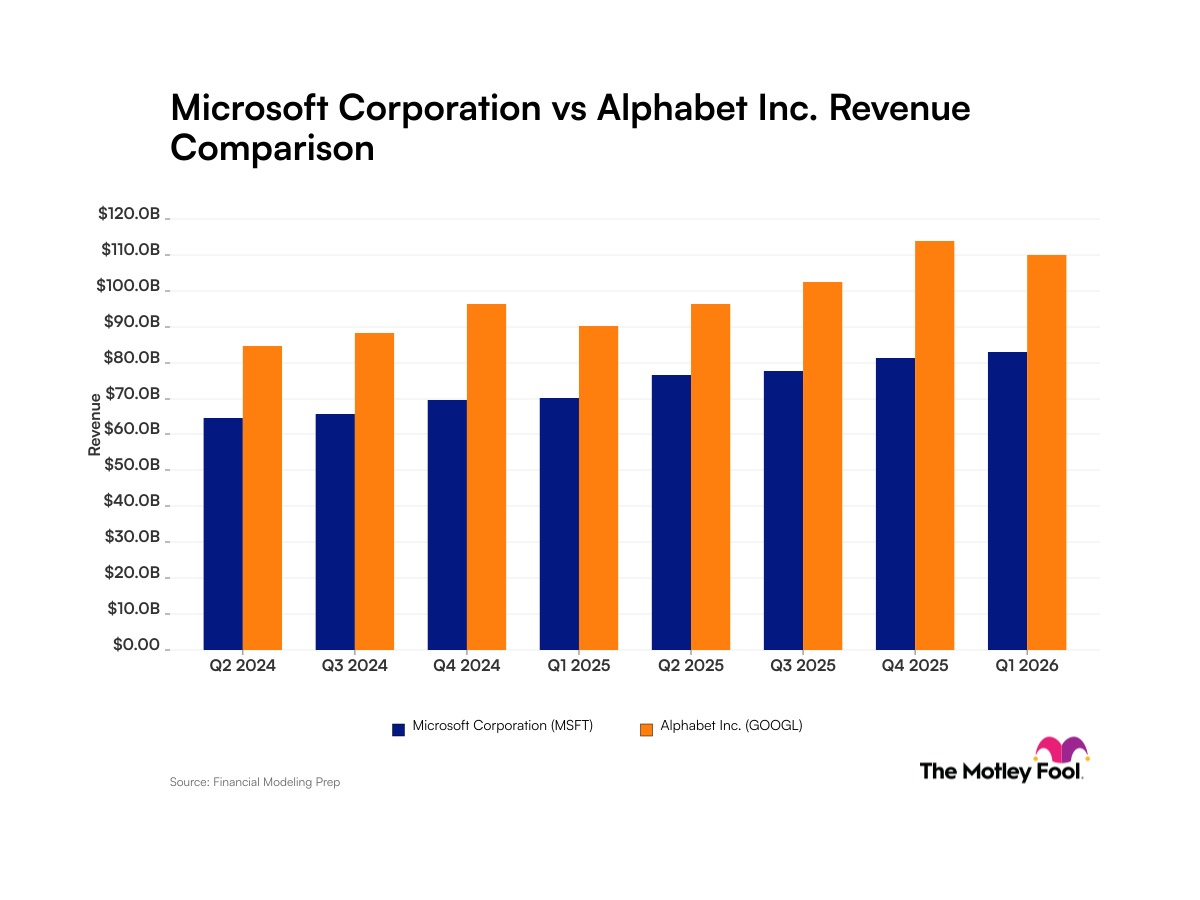
As for the stocks mentioned above caught up in the sell-off, Microsoft looks the least like a victim and the most like a beneficiary. Its advantage isn't just software, and its ownership is of the full stack: Azure infrastructure, enterprise distribution, and deep integration across products like Office and GitHub.
Tools like Copilot don't displace Microsoft. Instead, they increase switching costs and embed AI directly into existing workflows. If anything, AI agents routing through enterprise systems makes Microsoft more central, not less. There is a high probability of rebound and longer growth.
Salesforce faces some real risk as AI agents threaten its per-seat model, but its control over customer data and workflows positions it to anchor the AI orchestration layer (via tools like Einstein Copilot). I think a short-term rebound here is imminent, but I'm not as long-term bullish as I am with Microsoft. People will genuinely ask about Salesforce's value.
For Adobe and Shopify, generative AI might automate certain creative tasks, but Adobe's strength lies in its ecosystem (Photoshop, Premiere, and Firefly) and its professional user base. AI serves as a feature enhancer rather than a replacement. I expect Adobe to rebound, while Shopify remains well-positioned, supported by its robust client base and enduring e-commerce demand.