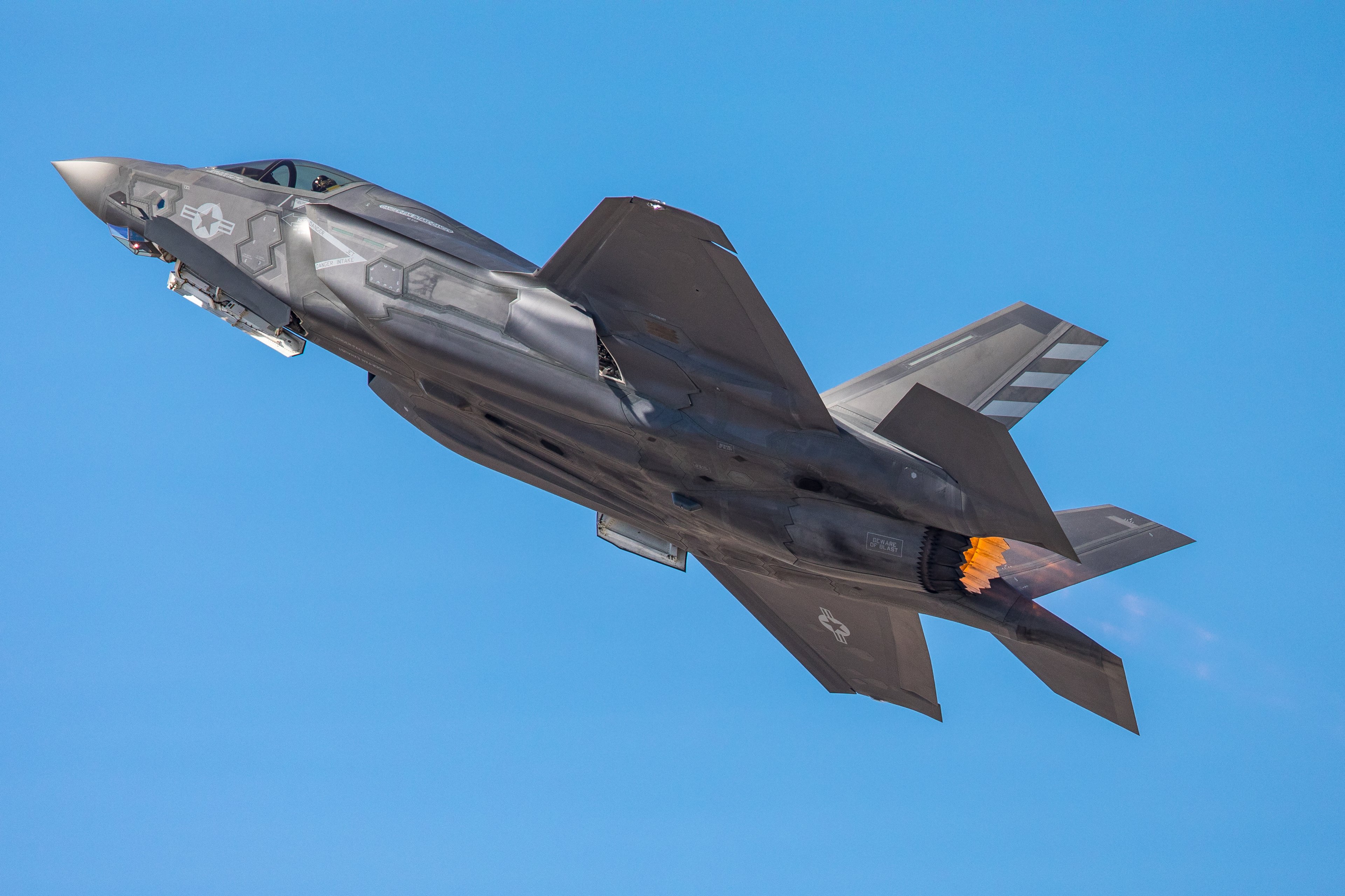
The last few years have shown the ugly side of geopolitical conflicts, with many disputes turning hot across the globe and others with rising tensions. This has kicked the United States military into high gear, creating a sense of urgency to modernize its defense and war forces with innovative technologies. You can even see this quantitatively: The initial 2027 defense budget proposal is $1.5 trillion, compared to $1 trillion in 2026.
That is $500 billion in new spending for contracts with applications ranging from outer space to underwater technologies. Here are three unstoppable defense stocks on the Pentagon's short list, and whether they look like intriguing buys today.

Image source: Getty Images.
Rocket Lab's defense satellite boost
Space is the future of the defense market. Whether it be satellite surveillance or missile defense systems, the United States government and the Space Force will see a massive increase in spending in the years ahead, with projects such as the Golden Dome, which has a lifetime budget estimate of $185 billion.
Rocket Lab (RKLB +16.23%) is an upstart that should benefit from this spending. It is one of the few companies capable of launching rockets into space, and with high-level security clearances to work on defense projects. As well, it has built a vertically integrated satellite business, meaning it can not only get your payload into orbit, but also build your satellite.

NASDAQ: RKLB
Key Data Points
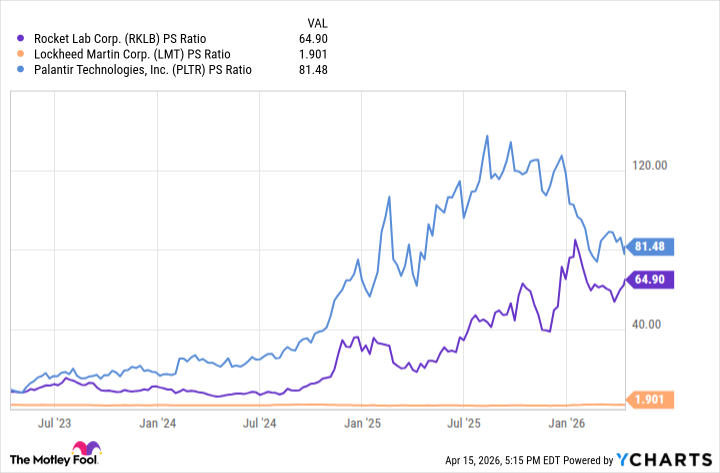
This is why Rocket Lab recently won a $816 million contract to build missile-detection satellites, among others. As a new defense prime contractor, Rocket Lab should see steady government revenue in the years ahead. However, if we look at the stock's current valuation, with a price-to-sales ratio (P/S) of 65, it appears investors have already priced in significant success for a business that comes with many risks. Keep Rocket Lab on the watch list, but don't buy for now.
A legacy contractor with space exposure
One of the top legacy contractors with contracts in urgent areas for the United States is Lockheed Martin (LMT 1.05%). These include the F-35 fighter jet, Patriot interceptor missiles, and a space division that generated over $13 billion in revenue last year.
It may not be as sexy as direct rocket launchers like Rocket Lab or SpaceX, but Lockheed Martin is one of the key players in the space defense market and benefits from long-term contracts such as the F-35 fighter jet program. Diversified programs have led to steady growth for Lockheed Martin, with revenue up 62% cumulatively over the last 10 years. It will not grow as quickly as a smaller player like Rocket Lab, but with a forward price-to-earnings ratio (P/E) of 20 and a P/S ratio of 1.9, the stock is significantly cheaper than Rocket Lab and can be a steady asset in any investor's portfolio.
Data by YCharts.
Palantir's meteoric rise
Perhaps the most popular defense stock at the moment is Palantir Technologies (PLTR +2.53%). It certainly has the largest market cap, worth $340 billion as of this writing, with a stock price of $142.
Palantir provides analytical services to government groups such as the CIA, the United States military, and its allies. The software programs are built for secure analysis across reams of data, and there may not be an organization with more data to process than the United States government.

NASDAQ: PLTR
Key Data Points
For example, Palantir signed a $10 billion, 10-year contract with the U.S. Army last year. Along with its fast-growing commercial business, Palantir's revenue grew 70% year over year last quarter.
However, like Rocket Lab, Palantir's stock should be treated with caution due to its premium valuation. It trades at an even higher ratio to sales, with a P/S of 81.5 as of this writing. This makes Palantir stock prohibitive to own until its share price falls further.