President Trump extended the ceasefire with Iran on Tuesday, one day before the two-week agreement would have expired. The announcement came as a surprise, given that the President said earlier in the day that bombing would resume if the U.S. didn't reach a deal with Iran by the time the ceasefire expired. However, the President opted to give the "seriously fractured" Iranian government time to submit a "unified proposal" to end the war.
The indefinite extension of the ceasefire has major implications for the oil market. Here's a look at how this will impact the oil market and how to position your portfolio for what might come next.
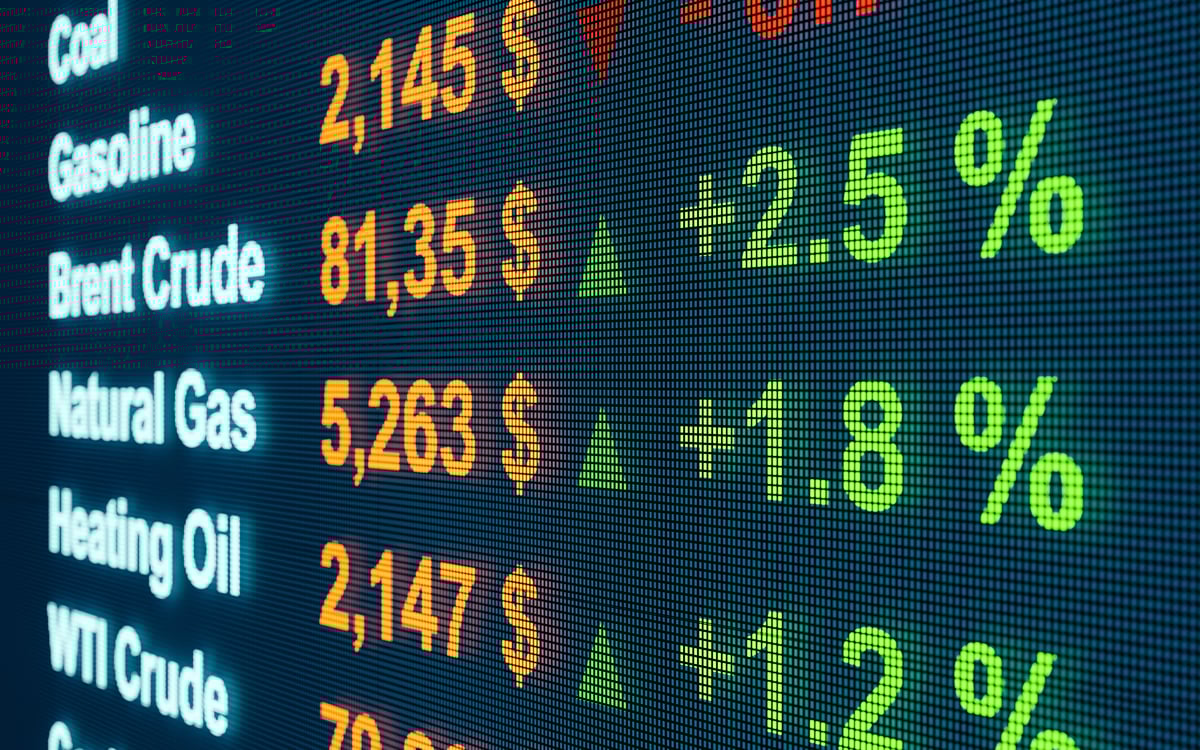
Image source: Getty Images.
The losses are piling up
One condition of the ceasefire agreements was that Iran was to reopen the Strait of Hormuz to commercial traffic. While its foreign minister announced the reopening of the Strait of Hormuz last Friday, Iran immediately backtracked, citing the U.S. Navy's blockade of Iranian-linked ships. As a result, ships still aren't passing through that key waterway. Before the war, 20% of global oil and liquefied natural gas (LNG) supplies traversed it each day.
Saudi Arabia is rerouting some of its oil through the recently expanded East-West pipeline to a Red Sea port. Likewise, the UAE is shipping more oil through its Abu Dhabi Crude Oil Pipeline to a port on the other side of the Strait. However, these bypass pipelines aren't fully offsetting the impact of the closure.
According to an estimate by analytics firm Kpler, the global economy has lost a cumulative 500 million barrels of oil supply since the war began ($50 billion in lost value). That's the equivalent of all of Europe's oil demand for more than a month. As a result, countries are draining their emergency reserves to fill the gap.
The lost supply grows each day the Strait remains close, draining additional storage inventory. An indefinite extension of the ceasefire means there's no end in sight to when supplies will start flowing out of the Persian Gulf again. Making matters worse, even if it reopens soon, it will take months to normalize because restarting shut-in oil wells in the Persian Gulf takes time.
Prepare for the prospect of higher oil prices for longer
Oil prices have moved up on news of the ceasefire extension. Brent oil, the global benchmark price, was up 3% by mid-morning to over $101 a barrel. Meanwhile, WTI, the primary U.S. oil price benchmark, rose more than 2% to $92 a barrel. A prolonged ceasefire means it will take longer for the oil market to normalize. Meanwhile, a resumption of the war risks Iran striking additional energy infrastructure in the Gulf and potentially closing the Bab el-Mandeb in the Red Sea, choking off another major oil supply route. Either way, oil prices could continue to rise and remain high for much longer than initially expected.
Investors should consider ways to prepare for the prospect that oil prices will remain higher for longer. For example, evaluate whether to sell stocks sensitive to high oil prices, such as airline stocks. Likewise, looming fuel shortages could begin to impact economic growth, making now a time to consider reducing your allocation to cyclical stocks.
On the other side of the equation, you might want to consider investing in some oil stocks. Buying shares of an oil producer such as ExxonMobil (XOM 0.35%) could offer upside if oil prices rise further. The oil giant is investing heavily in its lowest-cost, highest margin assets while also working hard to reduce costs. This strategy will make it much more profitable at lower prices, while enabling it to cash in if they're higher. However, oil companies aren't without risk if the war resumes. Two of Exxon's LNG facilities in the Middle East experienced damage from Iranian attacks, while some of its production in the region remains shut-in.

NYSE: XOM
Key Data Points
Now is the time to evaluate
The indefinite ceasefire extension won't help the oil market, as oil flows out of the Persian Gulf remain blocked. It increases the risk that oil prices will rise even further, especially given the growing likelihood of a resumption of the military conflict. That makes now the time to prepare your portfolio for the possibility of a scenario in which oil prices stay higher for longer.