Like it or not, CEO pay in America continues to rise in comparison to the average employee. It's viewed as necessary to attract top talent in a highly competitive industry and to align shareholders' interests with management in creating long-term value through better product development, increasing market share, operational improvements to grow margins, and others.
Just recently news hit the markets that General Motors' (GM 0.97%) CEO, Mary Barra, was the highest-paid Big Three CEO, and one simple graph shows exactly why.
How much are we talking?
Mary Barra earned $29.9 million last year, which was a total compensation package worth a modest 1.4% more than the prior year, according to a company filing. The modest increase was largely due to base salary and stock awards being nearly offset by nonequity incentive plan compensation falling 26% down to almost $5 million. Barra's base salary has been consistent at $2.1 million for a few years, and last year her stock awards jumped 11% to $21.6 million, the bulk of the compensation package.
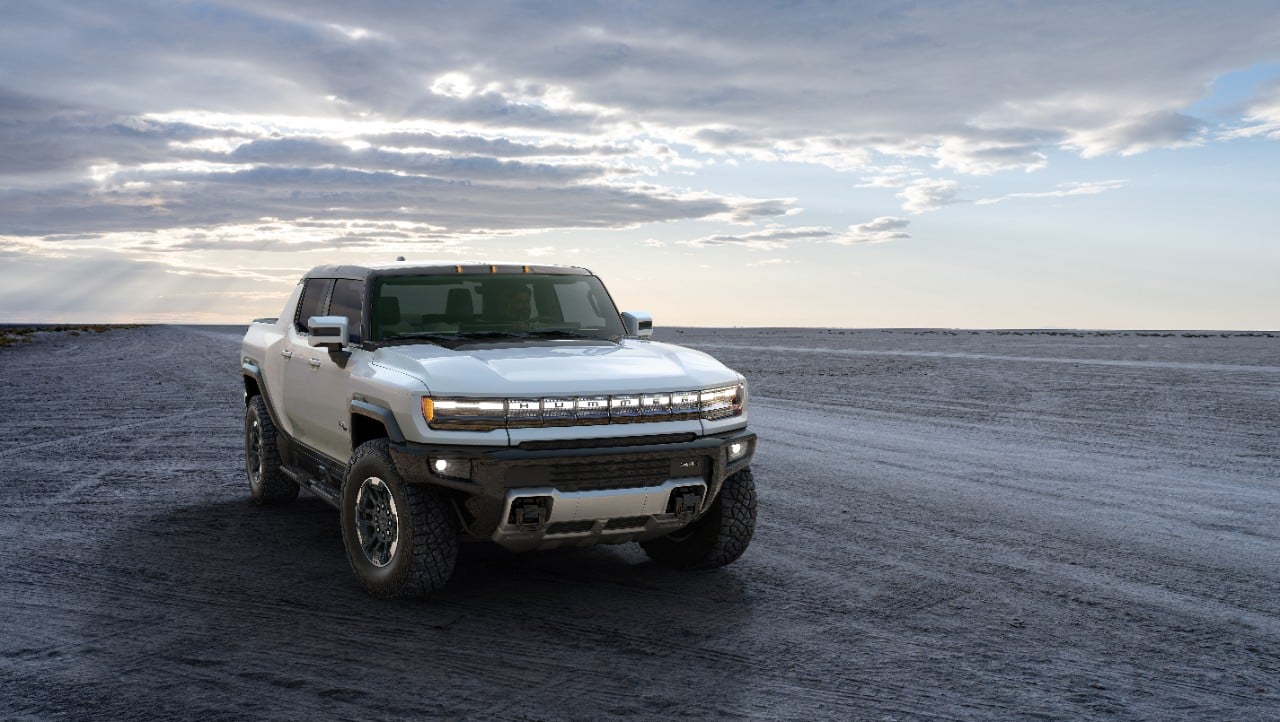
Image source: General Motors.
Devin Wenig, chairman of GM's compensation committee, wrote in the SEC filing:
Together, the targets we set for our 2025 compensation program were intended to incentivize management to navigate uncertainty, continue to make great products that our customers love, and drive improved profitability. We believe that these clear and challenging targets rewarded management for delivering results that are fully aligned with our shareholder interests.
The one graph that can justify Barra's pay is a simple one, but it shows the progress GM has made in navigating uncertain trade policy, tariff changes, volatile electric vehicle (EV) demand, and many other speed bumps along the way.
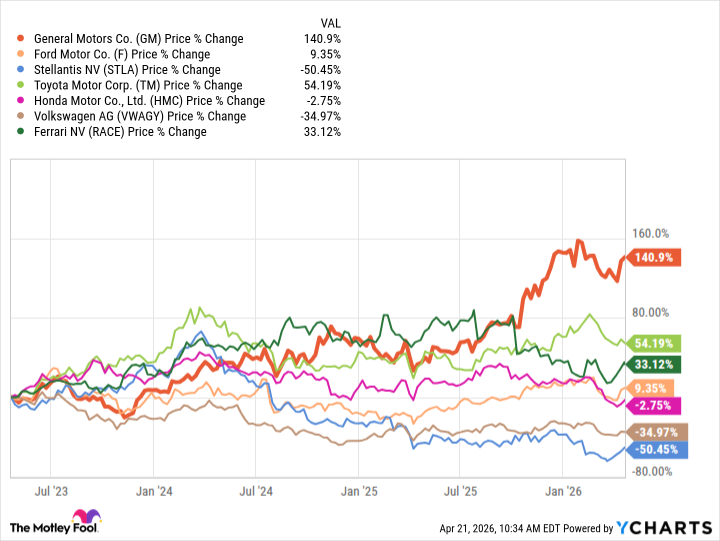
GM has drastically outperformed rivals over the past three years, nearly tripling its closest competitor and trivializing Ford Motor Company's modest gain and/or Stellantis' 50% drop in value. It even greatly outpaced gains at Ferrari, which by many accounts remains one of the top auto investments out there.
Comparison check
Barra's compensation topped that of her closest rival, Ford Motor Company's CEO Jim Farley. Farley's total compensation jumped 11% last year to just over $27.5 million, which was the highest payout he has received since taking over the automaker in October 2020.
It's fair to note that Farley's payout increased at a time Ford reached only 64% of its earnings targets and rather reached the maximum of 200% of quality goals related to newer vehicles (with zero to three months in service).

NYSE: GM
Key Data Points
That could have some investors scratching their heads, as Ford's number of recalls last year set historical records, and quality has been a consistent problem over recent years, even hindering earnings once in a while due to spikes in warranty costs.
For context, Ford obliterated the previous all-time record for the number of recalls, with 153 such campaigns, a record investors would rather leave in the dust. Ford's recalls covered nearly 13 million Ford and Lincoln vehicles, which was drastically larger than Toyota's and Stellantis' 3.2 million and 2.8 million vehicles, respectively. According to Ford, however, the company's internal metrics indicate the automaker is making significant progress on newer vehicles while mounting recalls are from older vehicles in the national fleet.
High-end CEO talent gets paid the big bucks; that much is clear. There are many ways to justify it, but it all comes down to aligning shareholder interests with management. GM has been performing incredibly well in just about any metric and has returned immense value with tens of billions in share buybacks in recent years. Investors might not like the high compensation packages, or perhaps it's a nonfactor, but GM's stock performance speaks for itself on the matter.