The best mining companies in the world focus on resources that are scarce, cheap to extract, and strategically important. TMC The Metals Company (TMC -3.73%) has these, plus one more: a potential mother lode of battery metals sitting on the deep-sea floor.
If you were to take a Magic School Bus to the Pacific Ocean floor, you would find trillions of these potato-sized rocks lying openly for anyone to grab -- a true mother lode that consulting firm Arthur Little once valued as a staggering $20 trillion opportunity. Nobody is commercially mining them yet. No one, not even TMC, has the right to mine them, nor has the official rulebook for extracting them even been written.
Yet TMC seems first in line to extract them. And, if all goes according to plan, early investors could be handsomely rewarded by this metals stock.
What "according to plan" means for TMC
TMC isn't a new company. It doesn't have technological hurdles or manufacturing problems. It has shown that its sea floor collector vehicles -- basically a giant Wall-E -- can vacuum up nodules efficiently, and it has successfully calcinated and smelted those nodules into high-grade nickel-copper-cobalt alloy and manganese silicate.
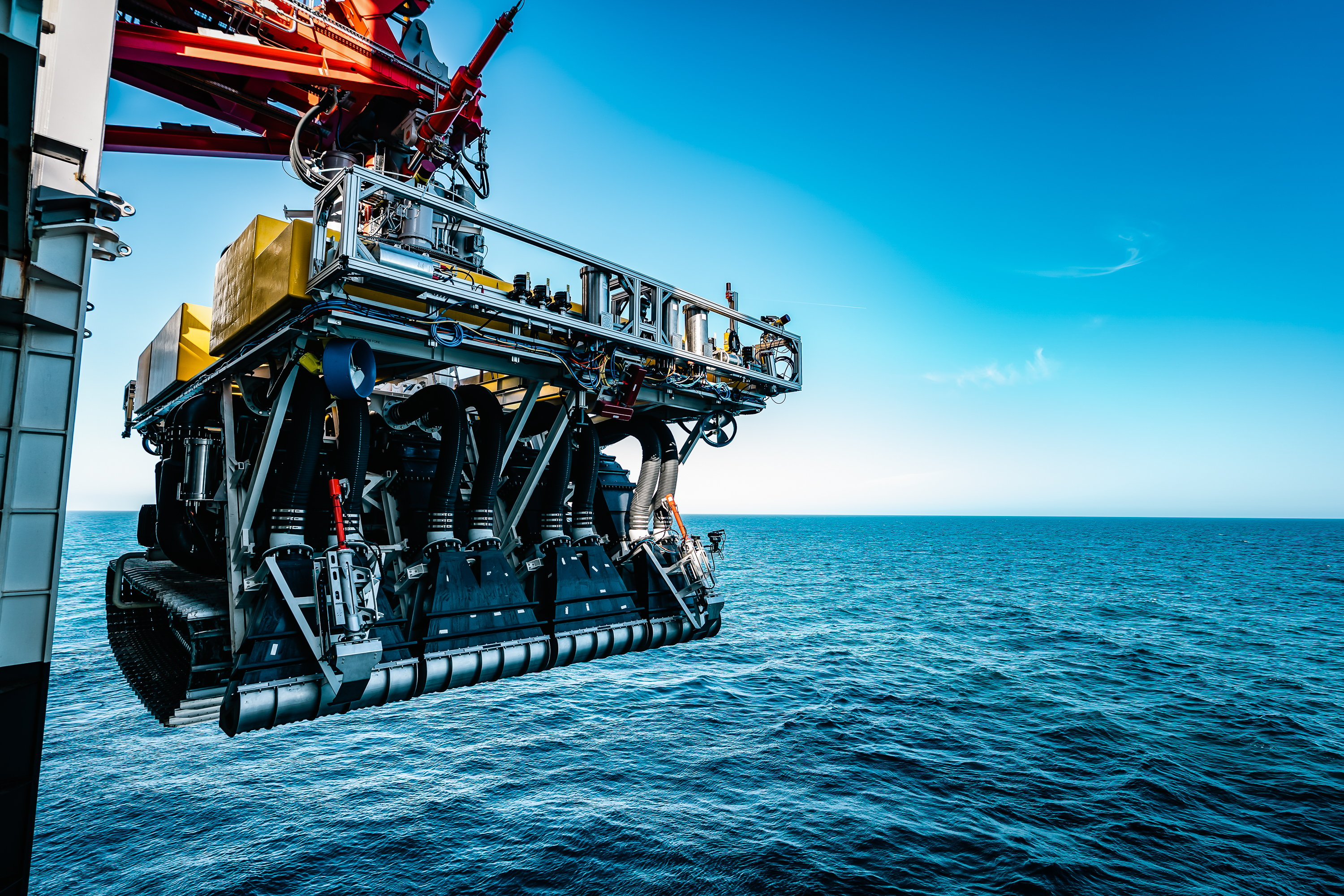
Image source: TMC The Metals Company.
No, TMC doesn't have a major industrial problem. It has a regulatory one.
The deep sea floor is home to thousands of species -- possibly hundreds of thousands. We simply don't know how many species exist there, since the deep sea remains largely unknown and its species undiscovered. Deep sea mining, while allegedly less destructive overall than land mining, can still kill and disturb life in the deep ocean. Results from early studies show that mining in the Clarion-Clipperton Zone (CCZ) -- exactly where TMC has exploratory rights to extract nodules -- led to a 37% decline in animal numbers and 32% decline in species diversity.
And TMC hasn't even cranked up production yet. The sensitivity of deep-sea animals to mining is something the International Seabed Authority (ISA), the governing body of international waters, takes seriously. It's why, to this day, the ISA hasn't finalized a rulebook for deep-sea mining: It knows the strategic importance of these nodules -- TMC's lode alone could power 280 million electric vehicles -- yet it can't in good conscience authorize the destruction of a habitat we know very little about today.
But here's where things get interesting. The U.S., under President Ronald Reagan, decided not to sign the treaty that created the ISA. It doesn't recognize the ISA's authority, and it handles deep-seabed mining through its own legislation. That U.S. route has given TMC -- a Canadian company pursuing permits under a U.S. subsidiary -- a potential second path to commercialization.
As such, TMC now expects to start commercial mining in the final quarter of 2027, which is a much firmer target than the regulatory fog that once loomed over it.

NASDAQ: TMC
Key Data Points
Could TMC set investors up for life?
Potentially, yes, but don't think for a moment that TMC's regulatory battle has been won. Even with U.S. backing, going against global consensus and scientific research could invite legal challenges, sanctions, or other geopolitical consequences the White House would simply not want right now.
Besides -- TMC may have the White House's support now, but an administration change in 2028 could freeze its operations or push back its commercialization plans.
Today, TMC carries a $2.3 billion market capitalization, and it sits on a nodule lode worth about $24 billion. The potential to set investors up for life is there, but if that lode never sees the light of day, this stock could sink right down with its nodules.