China's juggernaut electric vehicle (EV) maker, BYD (BYDDY +3.72%), has taken the world by storm over the past few years. Considering the automaker only stopped producing internal combustion engine (ICE) vehicles in 2022, switching its entire product lineup to EVs and plug-in hybrids, overtaking Tesla (TSLA +1.97%) in EV sales for the full-year 2025 was impressive. Now BYD is taking it a step further and outdoing Tesla in another aspect, one that was critically important to the latter's initial surge.
What's going on with BYD and Tesla?
One of the most valuable developments for the broader U.S. EV industry was Tesla's expanding Supercharger network. It was crucial as it helped reduce range anxiety, which was one of the biggest barriers to mainstream EV adoption. Building a reliable, expanding, and, maybe most importantly, fast-charging system quickly enabled early adopters to jump on board. It turned long-range EV travel into reality.
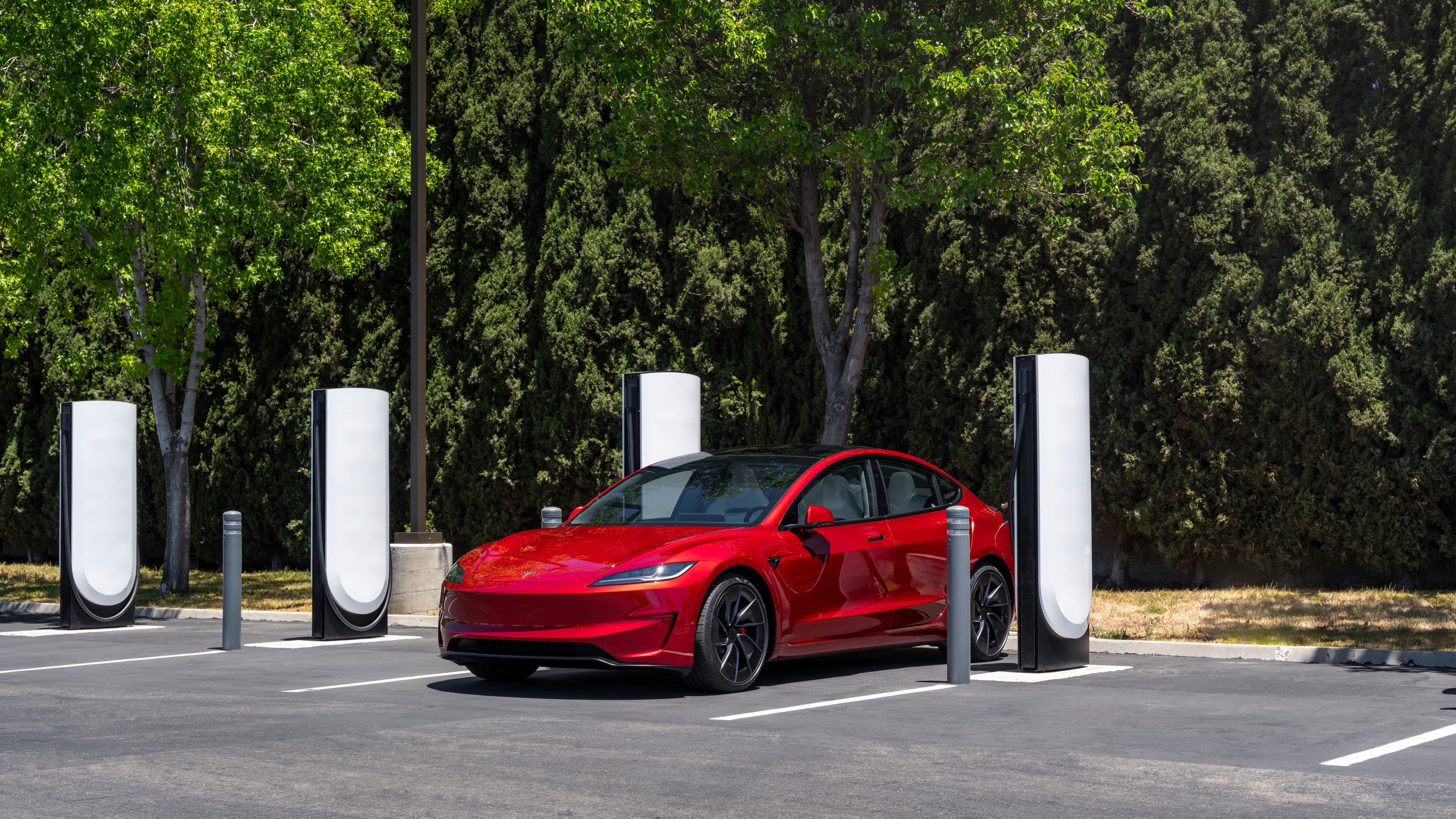
Image source: Tesla.
BYD is trying to take it a step further for its own expansion, and in some ways, the Chinese EV maker's charging network is making its rivals' networks appear slow. BYD has deployed 5,700 Flash Charging stations in China in just a few months and has also opened its first overseas charging stations in Europe. BYD isn't resting on its laurels either and is targeting 20,000 stations in China by the end of this year.
These charging stations can deliver up to 1,500 kW of power, roughly 3 times the output of Tesla's latest V4 Superchargers. BYD's partnership with Sinopec, China's largest fuel retail network boasting over 30,000 stations, could accelerate the network rollout even further. Electrek ran the numbers, and it won't take long for BYD to surpass Tesla's network: "If both companies continue at their current growth rates -- Tesla at roughly 18% annual growth, BYD at the pace implied by its 2026 targets -- BYD's network (measured in stall-equivalents) could surpass Tesla's globally between 2029 and 2030 -- in just roughly 4 years."

OTC: BYDDY
Key Data Points
What it all means for BYD
There are a couple of factors for investors to consider as BYD's charging infrastructure expands. First, while BYD's network could rapidly catch Tesla's reach and numbers, that's not the only advantage the latter currently has. That's because Tesla has gained over a decade of valuable route planning data, proven 99% uptime reliability, and boasts the NACS standard that has essentially converted other automakers' vehicles into Tesla Supercharger network customers.
Secondly, while it's fun to compare the development progress of the two important networks, it's fair to note that tariffs and trade policy currently prevent BYD from competing in the U.S. market, thus giving Tesla's network control of the region. That said, in China specifically, BYD is on pace to match or surpass Tesla's local charging network within the next year to year and a half. Tesla has roughly 3,000 stations across the Asia-Pacific region.
Tesla's Supercharger network was instrumental in the broader EV revolution in the markets it competes in, and remains an advantage for the EV maker. BYD is replicating this advantage overseas, and it should only boost the EV maker's growing sales momentum globally. BYD remains a top automotive stock, and it doesn't appear to be slowing down in just about any metric.