Historically, the S&P 500 index has outperformed the Russell 2000. But through market close on July 22, the Vanguard Russell 2000 ETF (VTWO -0.58%), which mirrors the latter index, has more than doubled the former's returns this year -- up 19.3% to the S&P 500's 8%.
Investors have slowed their buying of megacap tech stocks because those stocks have become so expensive. Instead, they are venturing into small-cap stocks, where there has been more value to be found lately.
Broadly speaking, recent macroeconomic changes may alter this trajectory over the remainder of the year. More specifically, despite VTWO's impressive performance so far, it's worth keeping an eye on interest rates, given how they tend to affect smaller companies.

Image source: Getty Images.
Interest rates are typically increased to help fight inflation. And although June 2026's overall inflation numbers (based on the CPI-U) came in lower than May's, quieting calls to increase interest rates, renewed conflict in the Middle East could drive energy prices right back up. This would increase the possibility of an interest-rate increase at some point this year.
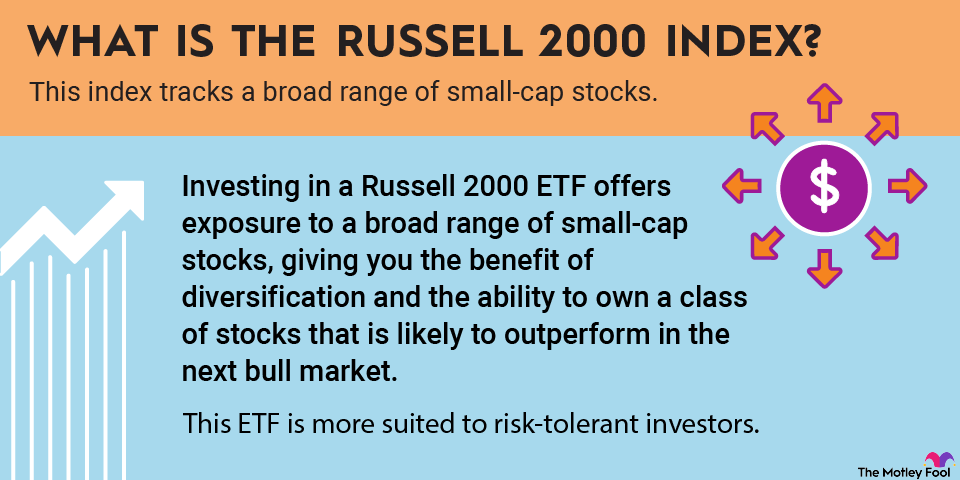
Why is this relevant to the Vanguard Russell 2000 ETF? Small-cap stocks are generally more sensitive to interest rates than larger companies because they rely more on debt financing. A multinational company with billions of dollars in revenue and cash flow is generally less likely to carry debt than the more than 40% of Russell 2000 companies that are unprofitable.
If interest rates rise, many small-cap stocks will face higher borrowing costs, which will likely increase losses or squeeze already tight margins. This won't necessarily cause VTWO to underperform, but I wouldn't be surprised to see it slow down a bit.

NASDAQ: VTWO
Key Data Points
The Vanguard Russell 2000 ETF is a great portfolio option to add diversification. Most popular ETFs are full of large-cap stocks, so having exposure to smaller companies can help hedge against top-heavy concentration and offer different growth opportunities, as seen through the first half of the year. Investing in a small-cap ETF shouldn't replace the S&P 500 by any means, but some exposure is nice.