Tesla (TSLA +4.65%) is down by close to 20% over the last year and trades at a price-to-earnings ratio of around 345, making it the worst-performing and worst-valued stock among the highest-market-cap companies.
That combination puts Tesla on the wrong side of a simple risk/reward equation: Investors are paying a steep premium for a stock that hasn't delivered the returns to match.
On top of that, Tesla's business is still primarily based on selling electric vehicles (EVs), and it's been under some strain for a while. Vehicle deliveries have faced pressure, competition has intensified, and repeated price cuts have squeezed its margins. Plus, much of its promised future in AI and robotics is already baked into today's price, which means investors today could be paying an excessive premium.

Image source: Getty Images.
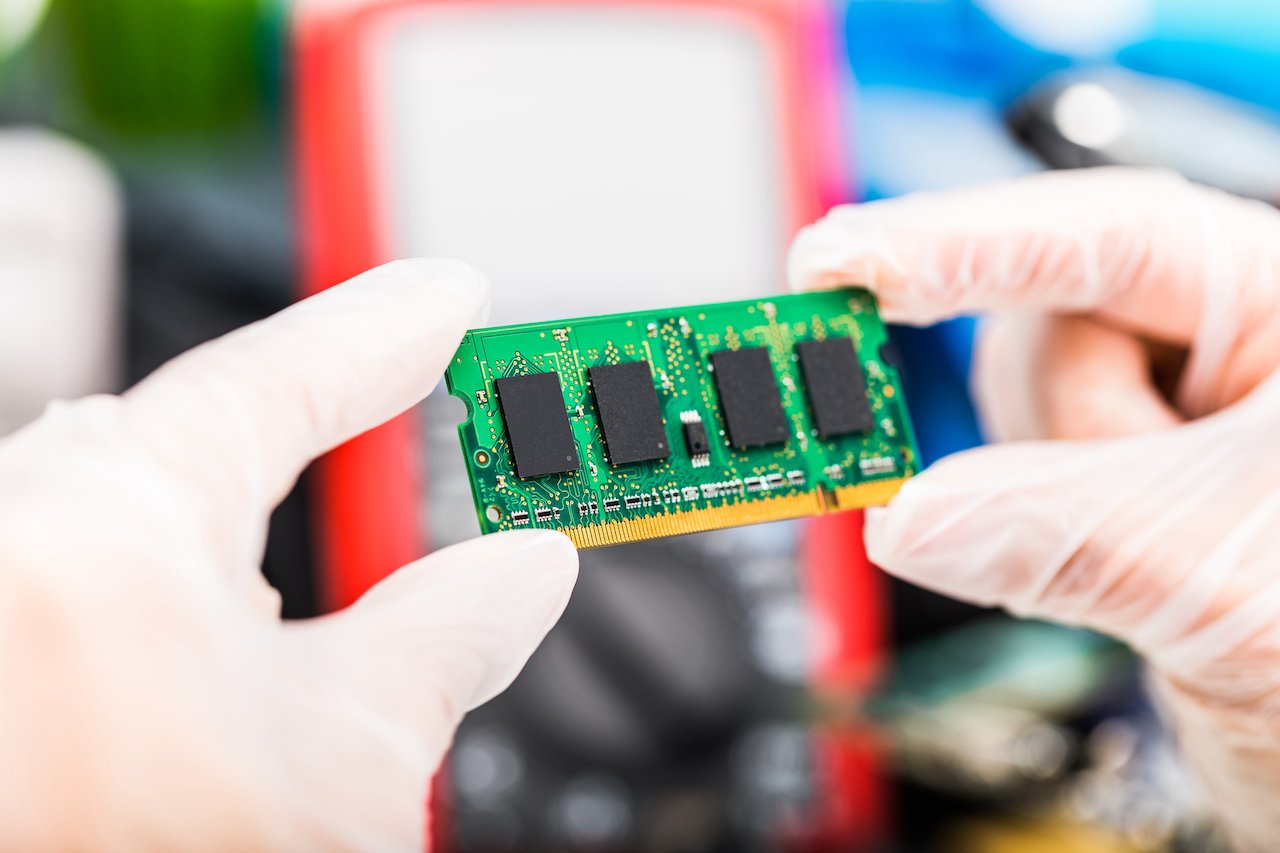
Instead, I'd consider Micron Technology (MU -2.05%). Even with all the hype around the AI-driven shortage of memory, which has driven the stock price up by almost 500% over the past year, Micron still has plenty of gas in the tank. Here's why.
Micron's business is already cashing in on AI
Tesla, despite claiming to be a technology company, is still mostly an automaker. In the second quarter of 2026, 73% of its revenue still came from EV sales. Its much-hyped AI, robotics, and autonomous rideshare businesses have yet to make meaningful dents in its revenue mix. That said, its revenue grew 23% year over year, though net income shrank by 5% on a GAAP basis, while its operating margin compressed by 269 basis points to a razor-thin 1.4%.
On the other hand, Micron is a tech company that now sits in an advantageous position at the center of the AI revolution. Its high bandwidth memory (HBM) chips are selling like hotcakes. In its fiscal 2026 fourth quarter (which ended Sept. 3), the company reported 31% year-over-year revenue growth and 33% year-over-year GAAP net income growth. Even better, it did all that at an impressive operating margin of about 81%.
So, put simply, Micron is already minting money from the AI boom, while Tesla is asking investors to bet on what its AI and robotics businesses could become.
How much are investors actually paying for that uncertainty?
Micron's valuation looks cheap next to its sector
At today's prices, investors are paying roughly $345 for every $1 of Tesla's earnings. Expectations for the future look a bit better. Its 1-year forward P/E ratio is about 171. But that's based on predicted earnings, which are not guaranteed to materialize.
Moreover, P/E ratios in isolation usually aren't enough data for investors to make an informed decision about a stock. That's why investors typically compare a stock's valuation with its sector average. In this case, the best benchmark is the S&P 500 Consumer Discretionary index, which trades at an average P/E of around 24.4. This means Tesla is priced more than 14 times its sector average on a price-to-earnings basis.

NASDAQ: MU
Key Data Points
Compare that with Micron, which trades at a trailing P/E of just 14, even after its almost 6x climb over the last year. That means even though Micron's stock price has skyrocketed, it still trades below the sector average on traditional valuation metrics. That makes it look cheaper by comparison and, perhaps more importantly, gives Micron plenty of headroom for further gains without pushing its valuation into extreme territory.
But a cheap valuation and strong fundamentals only matter if Wall Street agrees.
Which stock makes more sense for investors now?
Among the 41 analysts tracking Tesla, there's a significant divergence of views: 15 call it a strong buy, but 20 call it a hold, and four call it a strong sell.
By contrast, fully 80% of those covering Micron rate it a strong buy, and none recommend selling. That gap in sentiment lines up with the valuation gap, too. Tesla's average 12-month price target is $405.20 -- about 9% higher than the current price -- while Micron's price target of $1,486.33 implies upside of about 38%.
Put all of that together, and the better buy becomes pretty clear.
So if investors are weighing Tesla against Micron, the smarter move would be Micron. For those who want a steadier way to ride the AI boom at a more reasonable price, Micron fits the bill, while Tesla remains a bet best suited to investors comfortable with steep premiums and even steeper volatility.