How do you know when a space stock like Rocket Lab (RKLB -7.98%) is on a roll? Here's a hint.
Take a look at just a few of the headlines I've penned about Rocket Lab in 2026:
- Just in Time for 2026, Rocket Lab Won Its Biggest Contract Ever (Jan. 4, $816 million to build 18 missile defense satellites for the U.S. Space Force.)
- Rocket Lab Just Won Its Biggest Contract Ever (March 28, $190 million to launch 20 HASTE suborbital rockets for the Department of Defense.)
- Rocket Lab Just Signed Its Biggest Contract Ever (May 11, a contract for five Neutron rocket launches and three Electrons.)
- Rocket Lab Wins One of Its Biggest Contracts Ever (Aug. 18, a $397 million Space Force contract for missile defense satellites.)
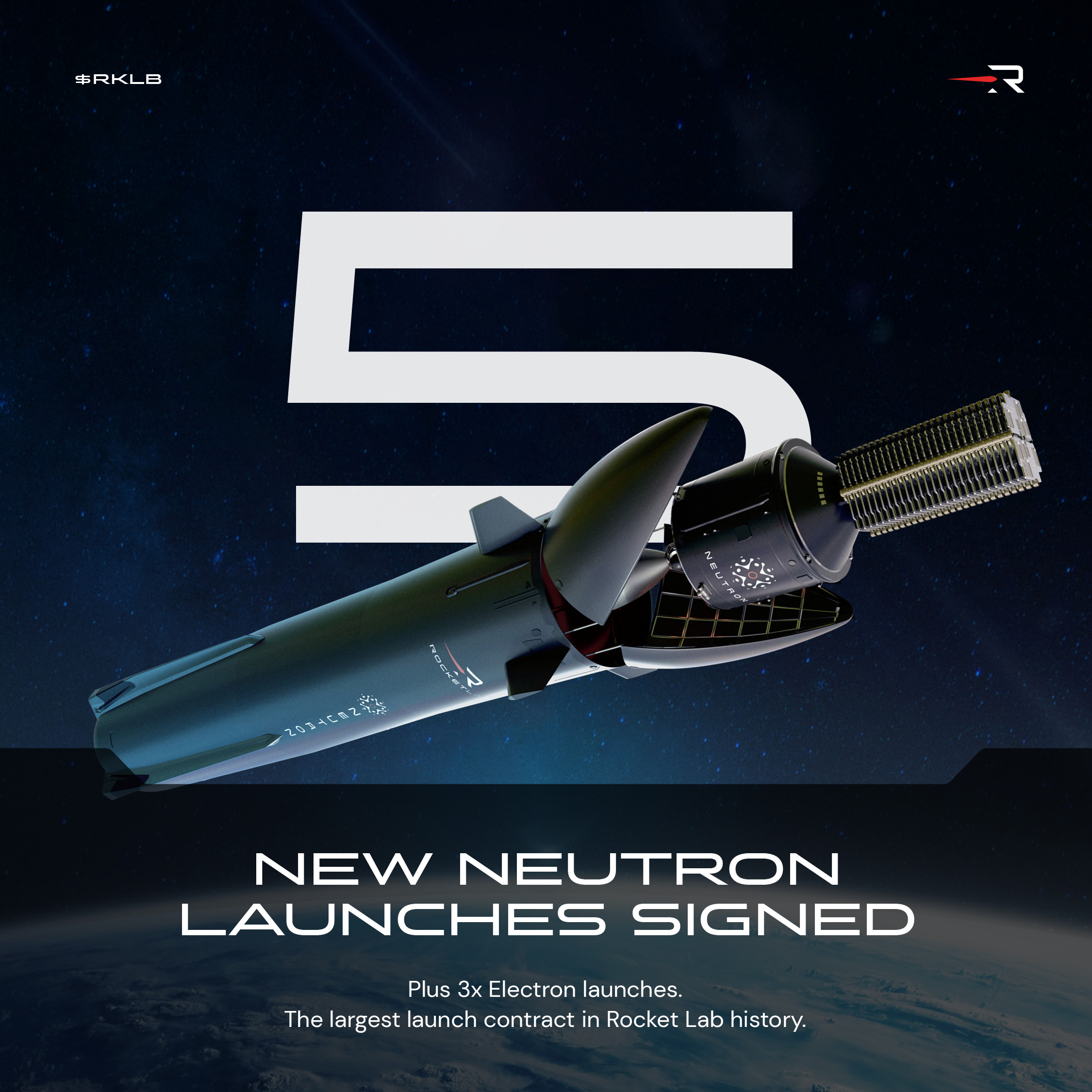
Image source: Rocket Lab.
Are my headlines unoriginal? Guilty as charged.
But are they accurate? Yes, because this rocket stock has a commendable habit of doing one "biggest-ever" thing after another, like clockwork! There are still two months to go in 2026, yet Rocket Lab has already notched notable victories four times this year. Depending on the benchmark you use, it's delivered four straight "biggest ever" deals in a row.
And now here's a fifth: Rocket Lab's latest win came on Sept. 30, when it said that Japanese customer Synspective has ordered another 20 rocket launches to more than triple the size of its Synthetic Aperture Radar satellite constellation.
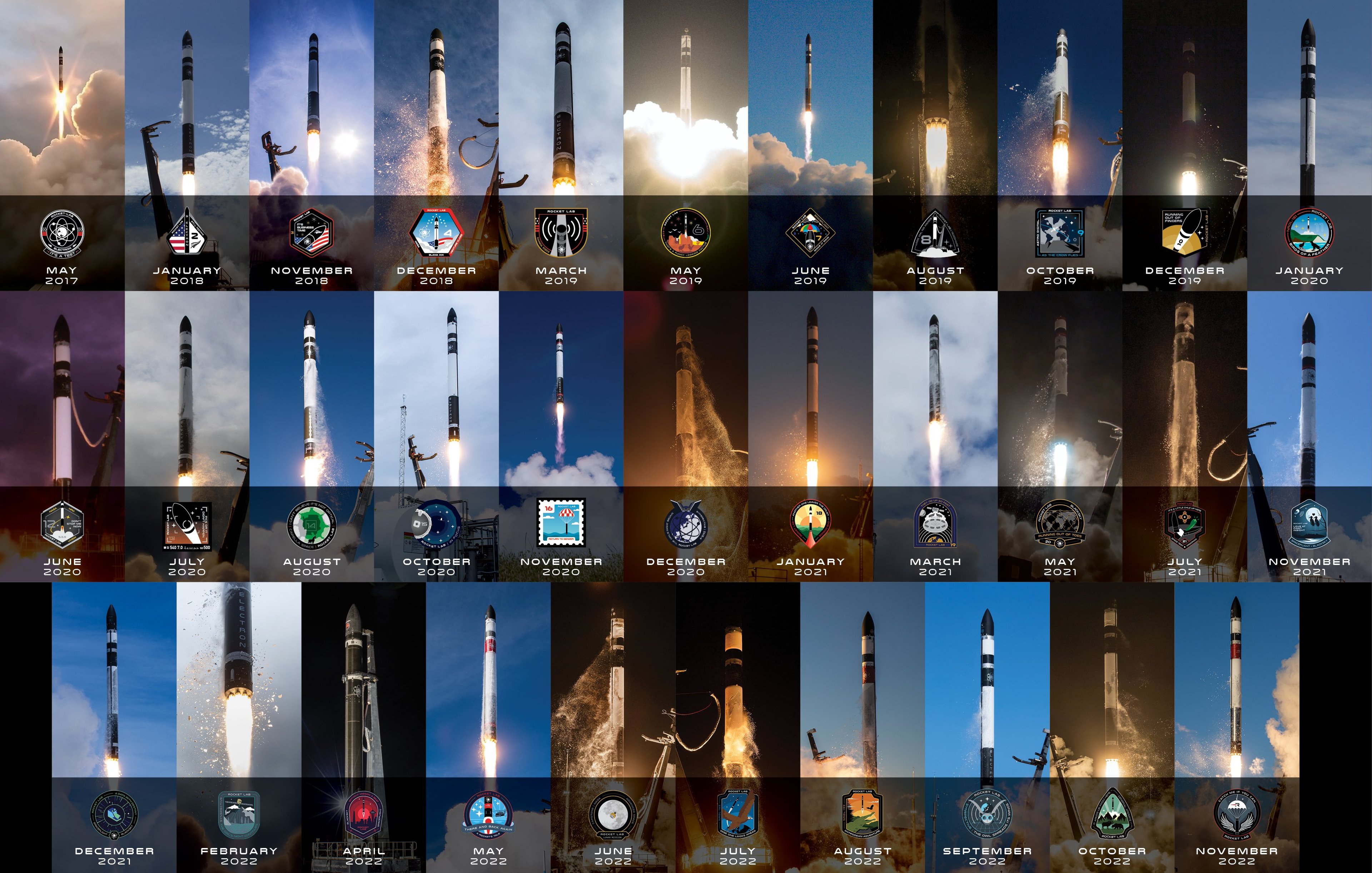
Image source: Rocket Lab.
More rockets, please
Rocket Lab confirms that this is its "largest-ever" deal for Electron rocket launches. (At least it is if you don't count the 20 HASTE launches, with HASTE being based on the Electron launch vehicle.) And certainly, Synspective's total order for 47 rocket launches makes that company Rocket Lab's biggest customer.
Rocket Lab declined to disclose the launch price. But assuming the company is holding firm with its most recent advertised price of $8.4 million per launch -- neither raising it in a market starved for launch capacity nor giving Synspective a large volume discount -- then 20 launches should yield $168 million in revenue for Rocket Lab.
Rocket Lab notes that the launches will run from 2028 to 2031, thus averaging about five launches and $42 million annually over those four years. It will also boost the company's total backlog of launches "beyond 100 missions" -- or more than $840 million in future revenue.
RKLB Rocket Lab
NASDAQ · As of 4:00 PM ET 10/16/26

What's next for Rocket Lab stock?
And Rocket Lab's not slowing down. Still to come is the company's first launch of a Neutron reusable rocket, capable of delivering 13 tons of payload to low earth orbit (LEO).
With roughly 40 times the payload capacity of an Electron, and a price tag reported to be just six times that of an Electron launch, Neutron has the potential to transform Rocket Lab's business. A larger rocket will open new markets for Rocket Lab, serving customers needing to put larger satellites into orbit. A higher per-launch price should increase Rocket Lab's total revenue.
At the same time, a lower price per kilogram to LEO should help Rocket Lab break into the market for large satellite launches, winning market share among customers looking for prices below what SpaceX charges for Falcon 9.
What will that mean for the stock?
Not immediate profitability, unfortunately. For one thing, Rocket Lab announced Wednesday that it is postponing Neutron's first launch into 2027. For another, few analysts polled by S&P Global Market Intelligence expect Neutron's arrival to turn Rocket Lab instantly profitable even once it does start launching. After all, Rocket Lab only expects to launch Neutron once in its first year of operation, then three times in its second, and five times in its third -- so it's going to be a slow ramp-up in launch cadence, and Electron will continue to dominate Rocket Lab launches for years.
The good news for investors is that thanks to the pending purchase of Iridium, Rocket Lab will probably turn profitable (and free cash flow positive, too) in 2027 -- with or without Neutron. Once that happens, it will become a whole lot easier to value Rocket Lab based on its profits and decide whether it's a stock worth buying.