IonQ (IONQ -0.26%) is a quantum computing building trapped-ion quantum computers, a design that uses electrically charged atoms held in place and controlled with lasers. The company says this approach can deliver high accuracy and scale over time.
IonQ makes its systems available through major cloud platforms, including services from Google, Amazon, and Microsoft, and also works with select customers through direct partnerships. Quantum computing is still early, but it could eventually impact areas like drug discovery, materials science, and complex modeling.
Founded in 2015, IonQ went public in 2021 and is often viewed as one of the few pure-play quantum computing stocks.
How to buy IonQ stock
Here's what you need to know to add shares of IonQ stock to your portfolio.
- Open your brokerage account: Log in to your brokerage account where you handle your investments. If you don't have one yet, take a look at our favorite brokers and trading platforms to find the right one for you.
- Search for IonQ: Enter the ticker "IONQ" into the search bar to bring up the stock's trading page.
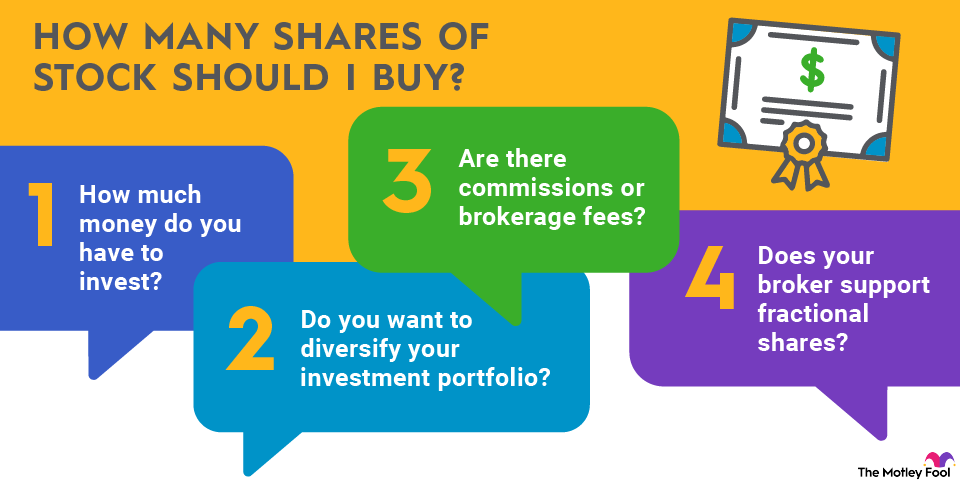
- Decide how many shares to buy: Consider your investment goals and how much of your portfolio you want to allocate to this stock.
- Select order type: Choose between a market order to buy at the current price or a limit order to specify the maximum price you're willing to pay.
- Submit your order: Confirm the details and submit your buy order.
- Review your purchase: Check your portfolio to ensure your order was filled as expected and adjust your investment strategy accordingly.

NYSE: IONQ
Key Data Points
Is IonQ profitable?
IonQ is not currently profitable and has reported serious net losses, including a $331.6 million net loss for 2024 and $209.8 million in the first six months of 2025. It has also yet to report anything but negative cash flows. Many quantum computing companies like IonQ are focused on research and development, and it may take time for them to generate commercial revenue streams.
Does IonQ pay a dividend?
IonQ does not pay a dividend. Given that IonQ is not reporting positive earnings or cash flow at this point, the likelihood of a dividend seems extremely low at any point in the near future.
How to invest in IonQ through ETFs
Investing in stocks through an exchange-traded fund (ETF) can be a great way to gain exposure to different companies while becoming instantly diversified. Numerous ETFs hold shares of IonQ stock.
Several examples of quantum computing ETFs include:
Exchange-Traded Fund (ETF)
Will IonQ stock split?
IonQ has never split its stock. A stock split is when a company divides its existing shares into multiple shares, effectively lowering the price per share while maintaining the overall company value. IonQ went public in 2021 through a business combination with a special purpose acquisition company (SPAC). It has never traded above $75 a share.
The bottom line
IonQ is a major player in the quantum computing industry with lucrative contracts with government and commercial players, including some of the largest tech companies in the world. Its trapped-ion technology is seen as a leading approach that is capable of achieving high qubit counts and potentially lower error rates compared to other quantum computing platforms.
The company has consistently reported net losses, raising concerns about its long-term sustainability. It has raised significant capital through equity offerings, but its reliance on external funding rather than generating profitability could be a concern in the long run.
Some investors remain unconvinced about the immediate practical applications and long-term commercial success of quantum computing. Advances by competitors, especially those with more financial resources, could challenge IonQ's position. Broader economic concerns, like recessionary headwinds, could also negatively impact quantum computing stocks.
For investors who want to have a position in a company with a leading presence that is also a pure play in the emerging quantum computing landscape, IonQ could be worth a second look. Investors looking for a less risky business or a more profitable venture with low industry volatility might want to look elsewhere.
Related investing topics
FAQ
About the Author