ESG investing combines financial returns with social responsibility, evaluating companies on their environmental impact, treatment of stakeholders, and corporate governance practices.
During the COVID-19 market turbulence, this approach gained serious credibility. Companies with strong ESG track records showed lower volatility than their peers, validating the premise that good corporate behavior translates to better business results.
The approach has also caught the SEC's attention. In March 2024, the agency finalized rules standardizing climate disclosures for public companies. However, legal challenges prevented implementation, and by March 2025, the SEC ended its defense of those rules.
What does ESG stand for?
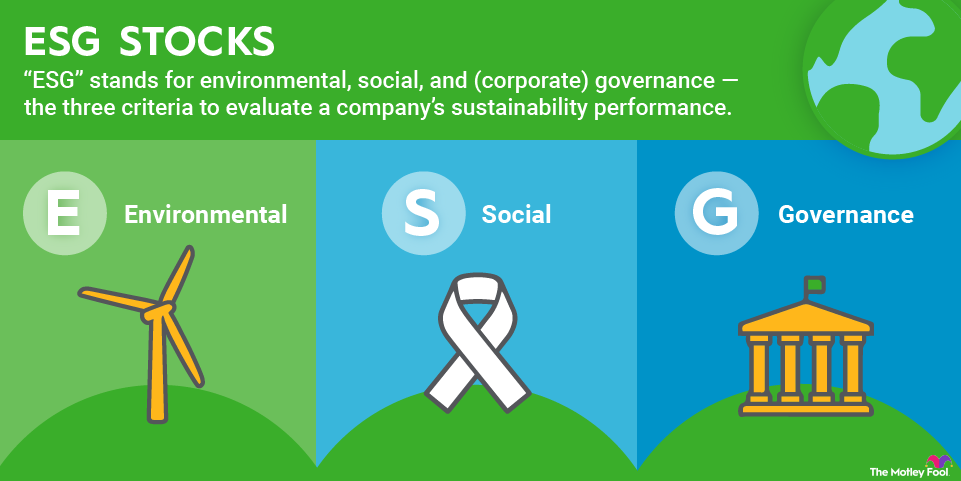
"ESG" stands for environmental, social, and (corporate) governance -- the three lenses investors use to evaluate corporate sustainability.

- Environmental: How companies impact the planet through climate policies, emissions reduction, water conservation, renewable energy adoption, waste management, and green technologies. This includes relationships with environmental regulators like the EPA.
- Social: How companies treat their people and communities. This covers employee compensation and safety, diversity and inclusion practices, ethical supply chains, customer protection, and public stances on social justice issues.
- Governance: How companies are led and held accountable. Key factors include executive compensation tied to long-term value, board independence and diversity, ethical business practices, shareholder rights, transparency in communications, and regulatory relationships.
How to evaluate corporate ESG performance
1. Start with corporate reporting.
Companies committed to ESG initiatives should publish measurable goals, plus the progress against those goals, in periodic sustainability reports.
Some sustainability reports are better than others, however. Look for reporting that follows ESG standards established by the Global Reporting Initiative (GRI) and/or the United Nations Principles for Responsible Investment (PRI).
2. Verify with third-party sources.
You can also use third-party sources to validate sustainability reports, such as:
For employee-related issues specifically, see:
- Fortune's Best Companies to Work For
- Forbes' Just 100
- Employee reviews on websites such as Glassdoor.com
To research corporate governance attributes, access proxy statements on the SEC's website by searching for the filing type DEF 14A.
Why consider ESG investing?
It reduces portfolio risk
Environmental, social, and governance failures can devastate operations and profits. Companies addressing these risks proactively face fewer disruptions and deliver more reliable results. Consider what could have been avoided:
- Tesla paid $1.5 million in 2024 for allegedly mishandling hazardous waste
- Tyson Foods faced wrongful death lawsuits after allegedly ordering symptomatic employees to work during COVID-19
- TD Bank paid nearly $28 million in penalties for providing inaccurate customer data to credit agencies
It can deliver strong returns
Research increasingly shows ESG companies match or outperform their peers financially. Arabesque found that top-quintile ESG companies in the S&P 500 beat bottom-quintile performers by over 25% between 2014 and 2018, with lower volatility. Academic research in The Journal of Applied Corporate Finance concluded that companies with strong non-financial quality indicators "perform significantly better on market and accounting-based metrics."
It signals strong leadership
One theory for ESG outperformance: these initiatives require exceptional leadership. Managing long-term ESG programs while running day-to-day operations well is a competitive advantage that benefits the entire business.
Risks of ESG investing
- Lack of universal ESG standards: There are no agreed-upon standards for evaluating ESG performance, creating inconsistencies in ESG portfolios and funds. You may be surprised to find some ESG funds hold tobacco stocks, for example.
- No long-term data on the financial performance of ESG companies: Longer-term data could show that ESG companies aren't as resilient as once thought. If that happened, investors who are wholly focused on financial returns would likely shift away from the ESG sector.
- Companies could stop reporting on ESG issues: Companies could stop voluntarily reporting sustainability data. Lowering the priority of ESG attributes could reduce the supply of high-quality, investable ESG companies.
Is ESG investing right for you?
If you want competitive financial returns while supporting companies building sustainable, future-oriented businesses, ESG investing may fit your goals. It's designed for investors who believe corporate responsibility and profitability can work together, and increasingly, the data backs that up.