Why are COOs important to a company?
A COO plays a crucial role in a company. Although the exact functions can vary by company or industry, they're vital to its success. The COO typically has a very close working relationship with the CEO. They often take over the day-to-day operational and administrative role to free up the CEO's time for more critical tasks.
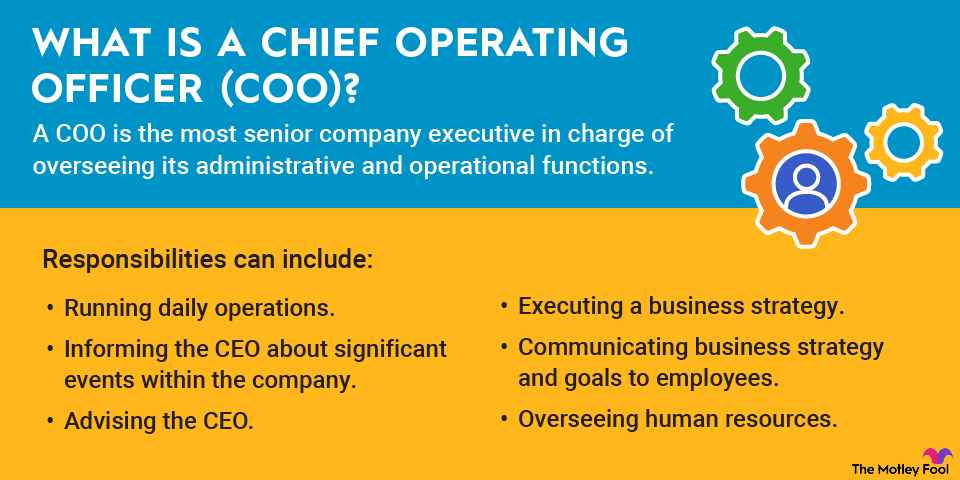
The responsibilities of a COO can include:
- Running the company's daily operations.
- Informing the CEO about significant events within the company.
- Advising the CEO about important decisions.
- Executing a company's business strategy.
- Communicating a company's business strategy and goals to employees.
- Overseeing human resources.
A company's CEO focuses on external issues by overseeing its overall strategy and direction; the COO focuses on internal issues. It's their job to ensure a company operates at its full potential. They're also responsible for making changes to improve a company's operations if they fail to meet expectations.
Why investors should know a company's COO
The CEO is often the face of a company. Most investors know the name and some background information about the CEO leading one of the companies in which they’re invested. They also might know about the company's CFO since that person often speaks on the quarterly conference call and may provide a quote or two in an earnings press release.
In addition to knowing about those two top executives, investors should also learn the name and background of a company's COO, if it has one. Companies often hire COOs (either through an internal promotion or by bringing in a high-performing executive from another company) to take the business to the next level.
COOs often make great future CEOs. Many companies will promote a top internal performer to the COO role as a stepping stone to eventually becoming its CEO when the current one leaves. Other companies will hire a COO from another company to become their CEO if they don't have a strong internal candidate.
Related investing topics