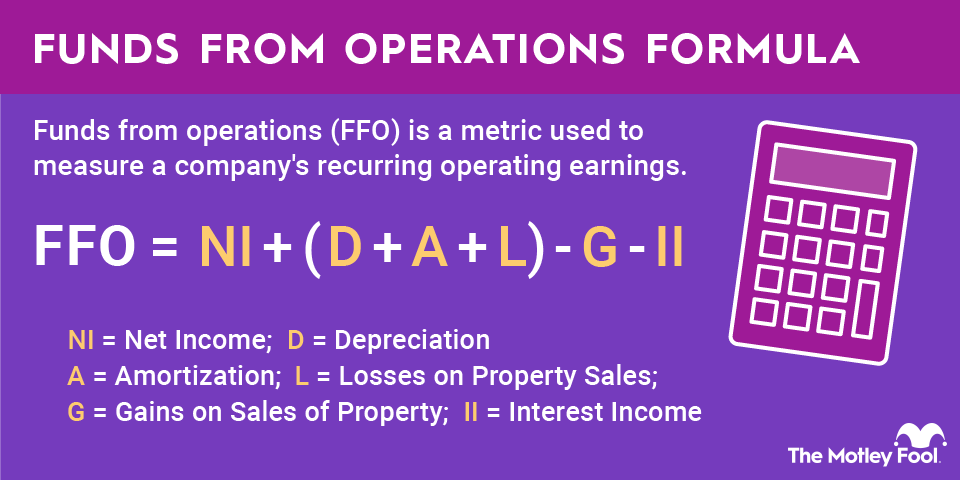
Adjusted FFO
Some REITs will also report an adjusted version of FFO to provide an even more accurate reflection of their recurring income for dividend purposes. The most common is adjusted FFO (AFFO). Other variations include FFO as adjusted (FFOAA), normalized FFO, core FFO, and funds available for distribution (FAD). These metrics make adjustments for things such as straight-line rent, amortization of debt costs, share-based compensation, non-cash fair value adjustments, and some recurring capital expenses.
Investors can use the adjusted numbers to get an even more accurate reflection of a company's recurring income. They can be ideal for comparing two periods of a REIT's financial results since they attempt to strip out all non-recurring impacts.
Investors can also use the adjusted FFO metrics to calculate the dividend payout ratio more precisely. Because the metrics strive to normalize recurring income, they give investors a good picture of how much cash a company produces that it could pay to investors via dividends.
Although companies adjust FFO to provide investors with a more accurate reflection of their recurring income, these aren't standardized measures. Because of that, they're not the best for making apples-to-apples comparisons between two REITs. An investor should use FFO or ensure that both companies make the same adjustments to determine their adjusted FFO.
The bottom line on FFO
FFO is an important metric for providing investors with a more accurate reflection of a company's recurring income. It gives them more insight into a company's ability to pay and maintain its dividend. It's also a helpful valuation metric. That makes FFO a handy tool for making investment decisions.