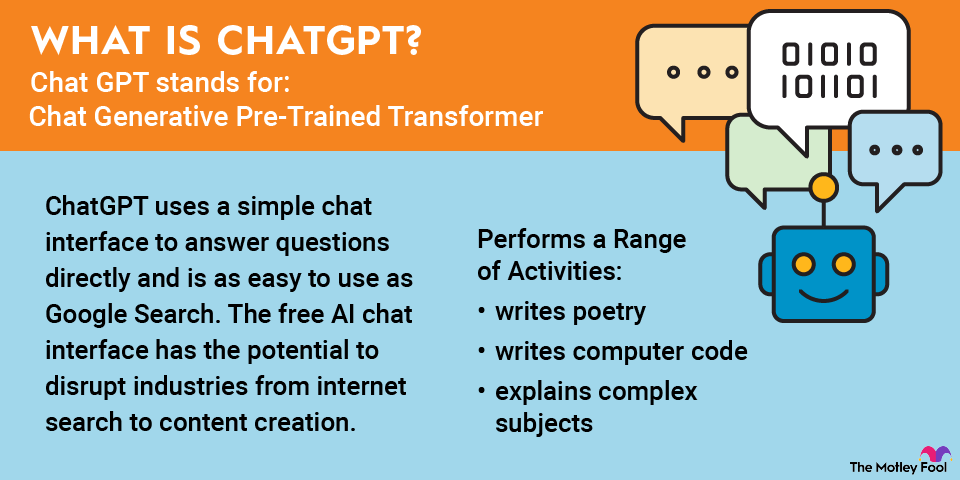
Artificial intelligence is already reshaping industries and driving real revenue growth for the companies building and powering it. From chips and cloud infrastructure to software and automation, AI is becoming a core competitive advantage.
Below are some of the top AI stocks to consider buying now, followed by tips on how to invest in the space.
10 AI stocks to buy in 2026
| Name and ticker | Market cap | Dividend yield | Industry |
|---|---|---|---|
| Nvidia (NASDAQ:NVDA) | $4.2 trillion | 0.02% | Semiconductors and Semiconductor Equipment |
| Alphabet (NASDAQ:GOOG) | $3.5 trillion | 0.29% | Interactive Media and Services |
| Alphabet (NASDAQ:GOOGL) | $3.5 trillion | 0.29% | Interactive Media and Services |
| Microsoft (NASDAQ:MSFT) | $2.7 trillion | 0.94% | Software |
| CoreWeave (NASDAQ:CRWV) | $40.7 billion | 0.00% | IT Services |
| Meta Platforms (NASDAQ:META) | $1.4 trillion | 0.37% | Interactive Media and Services |
| Adobe (NASDAQ:ADBE) | $98.3 billion | 0.00% | Software |
| Alibaba Group (NYSE:BABA) | $281.9 billion | 0.84% | Multiline Retail |
| Amazon (NASDAQ:AMZN) | $2.2 trillion | 0.00% | Multiline Retail |
| Palantir Technologies (NASDAQ:PLTR) | $349.9 billion | 0.00% | Software |
| Oracle (NYSE:ORCL) | $423.1 billion | 1.36% | Software |
1. Nvidia

NASDAQ: NVDA
Key Data Points
2. Alphabet

NASDAQ: GOOGL
Key Data Points

NASDAQ: MSFT
Key Data Points

NASDAQ: CRWV
Key Data Points

NASDAQ: META
Key Data Points

NASDAQ: ADBE
Key Data Points

NYSE: BABA
Key Data Points

NASDAQ: AMZN
Key Data Points
In some ways, Amazon has lagged its big tech peers in AI. It doesn't have a leading large language model, and it seems to have gotten off to a late start in generative AI.
However, Amazon does have a competitive advantage in AI. It still has the largest cloud infrastructure in Amazon Web Services (AWS), and that includes Amazon Bedrock, a fully managed service that provides access to foundation models, allowing AWS customers to deploy AI models as needed.
Amazon is using AI in other ways, including with Alexa+ and Amazon Seller Assistant, an agentic AI tool for its marketplace sellers.
9. Palantir

NASDAQ: PLTR
Key Data Points
Palantir has become one of the stars of the AI era as the stock began to skyrocket after the company launched its artificial intelligence platform (AIP) in 2023. That platform combines with the rest of its stack to help its customers more easily search through and analyze their data.
AIP has helped cut down process time significantly for some of its customers' projects, driving strong growth both from the government and commercial businesses.
Palantir has little direct competition, and the success of AIP has widened the gap between Palantir and would-be challengers.
10. Oracle

NYSE: ORCL
Key Data Points
Oracle has traditionally been known for database software, but more recently, the stock has moved according to the company's prospects in AI.
Oracle's cloud infrastructure division has been growing rapidly thanks to AI demand, and the company is spending aggressively on capital expenditures, seeing it reach $50 billion for the fiscal year ending in May 2026.
It's also embedding generative AI in its cloud software applications, and has a $300 billion deal to supply computing power to OpenAI, showing it has big plans to ramp up AI-focused data centers.
How to invest in AI stocks
If you're looking to invest in AI stocks, it's a simple process. Just follow the steps below.
- Open your brokerage app: Log in to your brokerage account where you handle your investments.
- Search for the stock: Enter the ticker or company name into the search bar to bring up the stock's trading page.
- Decide how many shares to buy: Consider your investment goals and how much of your portfolio you want to allocate to this stock.
- Select order type: Choose between a market order to buy at the current price or a limit order to specify the maximum price you're willing to pay.
- Submit your order: Confirm the details and submit your buy order.
- Review your purchase: Check your portfolio to ensure your order was filled as expected and adjust your investment strategy accordingly.
AI technologies powering these companies
Most AI innovation across these stocks falls into a few core categories:
- Machine learning: Models trained on large datasets to identify patterns and make predictions.
- Deep learning: Advanced neural networks used in language models, image recognition, and autonomous systems.
- Generative AI: Tools that create text, images, video, or code in response to prompts.
Pros and cons of investing in AI stocks
Pros
- Significant long-term growth potential
- Broad adoption across industries
- Potentially transformative technology
Cons
- Valuations can be volatile
- Heavy capital spending may not pay off
- Competition and disruption remain intense
What to consider when investing in AI stocks
Investing in AI stocks requires a lot of the same analysis and considerations as investing in any stock. Here are some things to consider if you're investing in AI stocks.
Look for durable advantages
Most AI stocks are well-established tech companies, but some have stronger competitive advantages than others in AI. Nvidia, for example, dominates the market for data center GPUs, giving it a strong competitive advantage.
Understand the business model
There are lots of different ways to make money in AI. There are chip companies like Nvidia, infrastructure companies like CoreWeave, software companies like Adobe, and companies like Microsoft that are diversified across verticals. Each one of these subsectors offers a different set of risks and opportunities, and it's important to understand how they differ from each other.
Assess AI exposure
Most tech stocks are doing something with AI, but some companies have more exposure than others. Nvidia and CoreWeave, for example, are virtually pure-play AI stocks, making most of their revenue directly by powering AI. Meta, on the other hand, makes almost all of its revenue from advertising, though it says that AI has enhanced its advertising product.
Strategies for investing in AI stocks
The AI sector is relatively new, and having a strategy is key to success.
First, it's a good idea to diversify your holdings across different AI subsectors. This means, in addition to holding a semiconductor stock like Nvidia. You'll also want to consider a hyperscaler like Amazon or Alphabet, or a software stock like Microsoft and Palantir. Perhaps even a physical AI company like Tesla. You can also diversify internationally with a stock like Alibaba, Taiwan Semiconductor, or ASML. Even within semiconductors, you can diversify with an equipment maker or manufacturer like ASML or Taiwan Semi, or a memory-chip maker like Micron.
You can also consider using ETFs to invest in AI stocks, as they will do the work of diversifying. Some good options are the Van Eck Semiconductor ETF, and the Global X Artificial Intelligence & Technology ETF.
You'll also want to consider growth rate and valuation. Most AI stocks are growing rapidly, but not all of them are. Additionally, valuations are lower than you might expect for some of these stocks, especially in the semiconductor sector.
Finally, it's worth considering how much exposure these stocks have to AI. Some, like Nvidia and CoreWeave, have a high degree of exposure, while others, like Amazon and Meta, are mostly moving in line with their core businesses.
The bottom line
AI is already translating into real revenue and sustained investment, and the strongest opportunities in 2026 are coming from the companies building and deploying AI at scale.
If you’re investing in AI stocks, a long-term mindset and diversification across several leaders can help balance growth potential with risk.
Related investing topics
FAQ
Artificial intelligence stocks: FAQ
About the Author
Jeremy Bowman has positions in Amazon, CoreWeave, Meta Platforms, and Nvidia. The Motley Fool has positions in and recommends Adobe, Alphabet, Amazon, Meta Platforms, Microsoft, Nvidia, Oracle, and Palantir Technologies. The Motley Fool recommends Alibaba Group and recommends the following options: long January 2028 $330 calls on Adobe and short January 2028 $340 calls on Adobe. The Motley Fool has a disclosure policy.