Only a small number of companies ever manage to increase their dividends for 50 consecutive years. Reaching Dividend King status is a remarkable achievement, demonstrating both consistency and resilience in the face of adversity.
Currently, there's one Dividend King facing some business headwinds, but an activist investor could steer the company in the right direction and help its shareholders with a 20% price breakout. Here's the company, and what you need to know before you make a purchase.
A diversified consumer staples giant
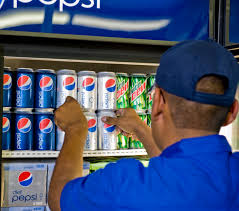
PepsiCo (PEP +0.13%) is the seventh-largest consumer staples company globally by market capitalization, and the second-largest food-related corporation on the list after Coca-Cola (KO +1.41%). Coca-Cola is a direct competitor, since both companies are giants in the beverage segment. However, while Coca-Cola focuses on beverages, PepsiCo is actually one of the most diversified food makers you can buy: It has material businesses in beverages (including Pepsi), snacks (including Fritos and Lay's), and packaged foods (including Quaker Oats).

Image source: Getty Images.
The company's ability to thrive over the long term is highlighted by its status as a Dividend King. However, even successful companies experience challenging times, and PepsiCo isn't performing at its best right now. For example, while Coca-Cola posted organic revenue growth of 6% in its third quarter (which ended Sept. 26), PepsiCo's organic revenue growth for its Q3 (which ended Sept. 6) came in at just 1.3%.
History suggests that PepsiCo will muddle through its woes, eventually. Management is making some moves from its already successful playbook. Specifically, it has been using acquisitions to refresh its brand portfolio, and innovation to keep up with shifting consumer preferences. This is what strong brand managers do when they need to turn a business around. In time, PepsiCo and its shareholders are likely to benefit.
A near-term catalyst for PepsiCo
The truth is that PepsiCo's stock has risen by around 15% over the past six months. Wall Street is already starting to sense that the foundation to build back after a weak patch is being laid. However, the stock is still down roughly 25% from its 2023 highs. Another 20% jump would only take the stock part of the way back to those highs.
The impetus for such a rally could be PepsiCo's work with Elliott Investment Management, an activist shareholder. Discussions with Elliott informed a recent strategic update, in which PepsiCo management outlined a plan to accelerate growth. One key piece is "carefully evaluating an integrated model." Unlike Coca-Cola, which uses bottlers, PepsiCo handles its own bottling. Doing this work in-house reduces profit margins, even though it increases the company's control over its distribution system.

NASDAQ: PEP
Key Data Points
Elliott Investment Management has been urging PepsiCo to adopt Coca-Cola's higher-margin approach. Assuming that PepsiCo does that, which seems to be what the management update is hinting at, it wouldn't be a surprise to see shares rise on the news. A 20% price breakout is an entirely reasonable expectation.
However, there is a possibility that PepsiCo doesn't do what Elliott wants. In that case, investors will have to wait for the company's acquisitions and its innovation to pay off. Even in this case, however, investors who buy the stock today won't fare too badly. PepsiCo's current 3.8% dividend yield is toward the high end of its historical yield range, so you'd be getting paid well to wait.
PepsiCo has more upside potential from here
Elliott Investment Management has a long history of helping businesses regain momentum. It appears that PepsiCo is collaborating with this activist investor rather than opposing it. The outsider view here is likely to help management more quickly return PepsiCo to growth, even if it chooses to stick with its current distribution model.
However, if Elliott gets its way, a stock-price bump could be swift and large. If you've been considering buying PepsiCo shares, you may want to make your move sooner rather than later. The worst-case scenario is that you collect an attractive dividend yield while waiting for incremental changes to bear fruit.