Largest companies by market cap in the consumer staples sector
(Editor's note: Rankings are as of April 4, 2026.)
1. Walmart
- Market cap: $1.00 trillion (as of April 4)
- Revenue (TTM): $713.2 billion
- Gross profit (TTM): $177.8 billion
- Five-year annualized return: 22.71%
- Year founded: 1962
TTM = trailing 12 months.

NASDAQ: WMT
Key Data Points
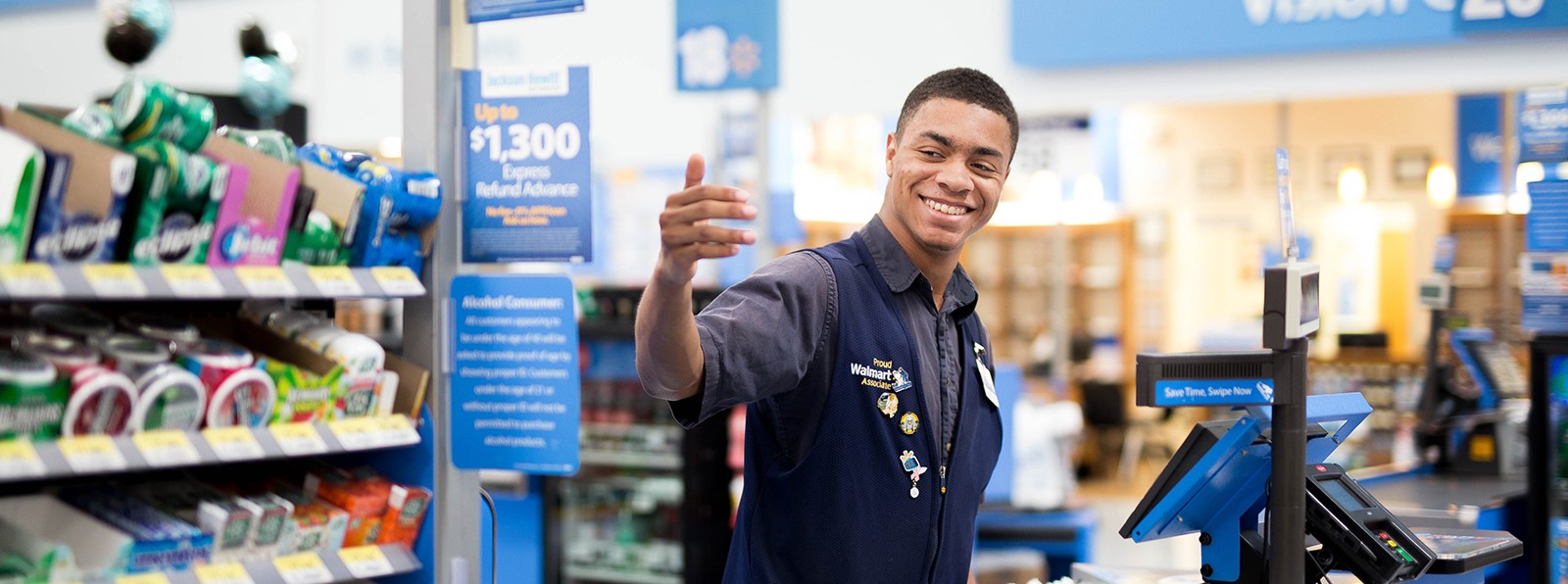
Retail giant Walmart is the world's largest company by revenue and the world's largest family-owned business. The Walton family owns over 40% of the total shares.
Founder Sam Walton also launched Sam's Club, a popular warehouse club owned by Walmart. Across both brands, Walmart operates more than 10,800 retail locations in 19 countries and has approximately 2.1 million associates worldwide.
2. Costco Wholesale
- Market cap: $450.51 billion (as of April 4)
- Revenue (TTM): $286.3 billion
- Gross profit (TTM): $37.0 billion
- Five-year annualized return: 23.38%
- Year founded: 1983

NASDAQ: COST
Key Data Points
Costco is the most popular warehouse club in the U.S., boasting 81 million paid members, per its 2025 annual report. It has a unique business model that generates enough revenue from membership fees to cover most of its operating expenses. This allows it to offer lower prices on the products it carries.
The product selection at Costco warehouses and its website includes groceries, electronics, appliances, and clothing. Warehouses also have food courts, and Costco offers several other services, including a pharmacy and a travel booking service.
3. Procter & Gamble
- Market cap: $334.43 billion (as of April 4)
- Revenue (TTM): $85.3 billion
- Gross profit (TTM): $43.2 billion
- Five-year annualized return: 1.28%
- Year founded: 1837

NYSE: PG
Key Data Points
Procter & Gamble is the company behind many of the most well-known household products. Its portfolio comprises dozens of popular brands, including Ariel laundry products, Pampers diapers, Bounty paper towels, Gillette razors, and various skincare products.
This company has established strong retail partnerships worldwide, and its products are available in more than 180 countries. It employs about 109,000 people.
4. Coca-Cola
- Market cap: $330.22 billion (as of April 4)
- Revenue (TTM): $47.9 billion
- Gross profit (TTM): $29.5 billion
- Five-year annualized return: 7.88%
- Year founded: 189

NYSE: KO
Key Data Points
Coca-Cola (KO -0.93%) gets its name from its flagship product, the iconic Coca-Cola soft drink. Coca-Cola is now one of the beverage company's more than 500 brands, a list that also includes Minute Maid, Sprite, Dasani, and Powerade.
Coca-Cola products are sold in more than 200 countries. Worldwide, more than 2.2 billion servings of Coca-Cola beverage products are consumed every day.
5. Philip Morris International
- Market cap: $246.40 billion (as of April 4)
- Revenue (TTM): $40.6 billion
- Gross profit (TTM): $27.3 billion
- Five-year annualized return: 12.42%
- Year founded: 1847

NYSE: PM
Key Data Points
Philip Morris International (PM -2.68%) is the world's biggest tobacco company. Its leading brand is Marlboro, the best-selling international cigarette, and its portfolio includes L&M, Chesterfield, Philip Morris, and Parliament. In 2014, Philip Morris started offering smoke-free products, and it now sells nicotine pouches, heated tobacco devices, and e-vapor products.
It's worth noting that this company doesn't sell cigarettes in the U.S. In 2008, Philip Morris was split into two companies: Philip Morris International and Philip Morris USA, the latter of which is now a separate entity within Altria Group (MO +0.06%). Philip Morris International continues to operate in the U.S. through its smoke-free portfolio.
6. L'Oréal
- Market cap: $220.48 billion (as of April 4)
- Revenue (TTM): $50.8 billion*
- Gross profit (TTM): $37.7 billion*
- Five-year annualized return: 1.56%
- Year founded: 1909
*Converted from euros.

OTC: LRLCY
Key Data Points

NASDAQ: PEP
Key Data Points
A leading food and beverage company, PepsiCo (PEP -1.32%) began with the soft drink Pepsi, which is still its flagship product. It merged with Frito-Lay in 1965 and has since acquired numerous brands, resulting in a diverse portfolio of products.
PepsiCo has a market presence in more than 200 countries and territories and has over 20 brands that generate more than $1 billion in annual revenue. Some of its major brands include Doritos, Gatorade, Quaker Oats, and Rockstar.
8. Anheuser-Busch InBev
- Market cap: $138.60 billion (as of April 4)
- Revenue (TTM): $59.3 billion
- Gross profit (TTM): $33.2 billion
- Five-year annualized return: 2.25%
- Year founded: 1852 (Anheuser-Busch), 2008 (acquired by AB InBev)

NYSE: BUD
Key Data Points
Anheuser-Busch InBev (BUD -3.02%) is the world's largest brewing company, with more than 500 brands sold in 150 countries. Its brands include Budweiser, Corona, and Michelob ULTRA.
The Anheuser-Busch brewing company traces its roots to 1852, when it was known as the Bavarian Brewery. It eventually became the largest brewer in the U.S. In 2008, drink and brewing company AB InBev acquired Anheuser-Busch for $52 billion.
9. British American Tobacco
- Market cap: $126.27 billion (as of April 4)
- Revenue (TTM): $33.8 billion*
- Gross profit (TTM): $28.2 billion*
- Five-year annualized return: 8.74%
- Year founded: 1902
*Converted from British pounds.
British American Tobacco (BTI -3.86%) owns the Lucky Strike, Dunhill, Camel, and Newport brands of cigarettes, among others. It also owns the Grizzly brand of dipping tobacco.
With tobacco's declining popularity and regulatory issues surrounding it, British American Tobacco has invested in what it calls "reduced-risk" alternatives. The tobacco company launched its first vaping product in 2013 with the Vuse line of electronic cigarettes. Vuse is now the top global vaping brand.
10. Unilever
- Market cap: $121.10 billion (as of April 4)
- Revenue (TTM): $58.2 billion*
- Gross profit (TTM): $27.3 billion*
- Five-year annualized return: -1.51%
- Year founded: 1929
*Converted from euros.