For years, the automotive industry was looked down upon by most investors because it tends to be a fiercely competitive market, is capital-intensive, and is notoriously low-margin (unless you're Ferrari). That investment attitude is slowly changing as vehicles load more technology into the ride, driverless vehicle programs expand, and artificial intelligence (AI) works its way into the industry.
Recently, Ford Motor Company (F 0.72%) and Rivian (RIVN 4.56%) both announced new developments worthy of investor attention. But do these developments move the needle and make the two stocks buys now?
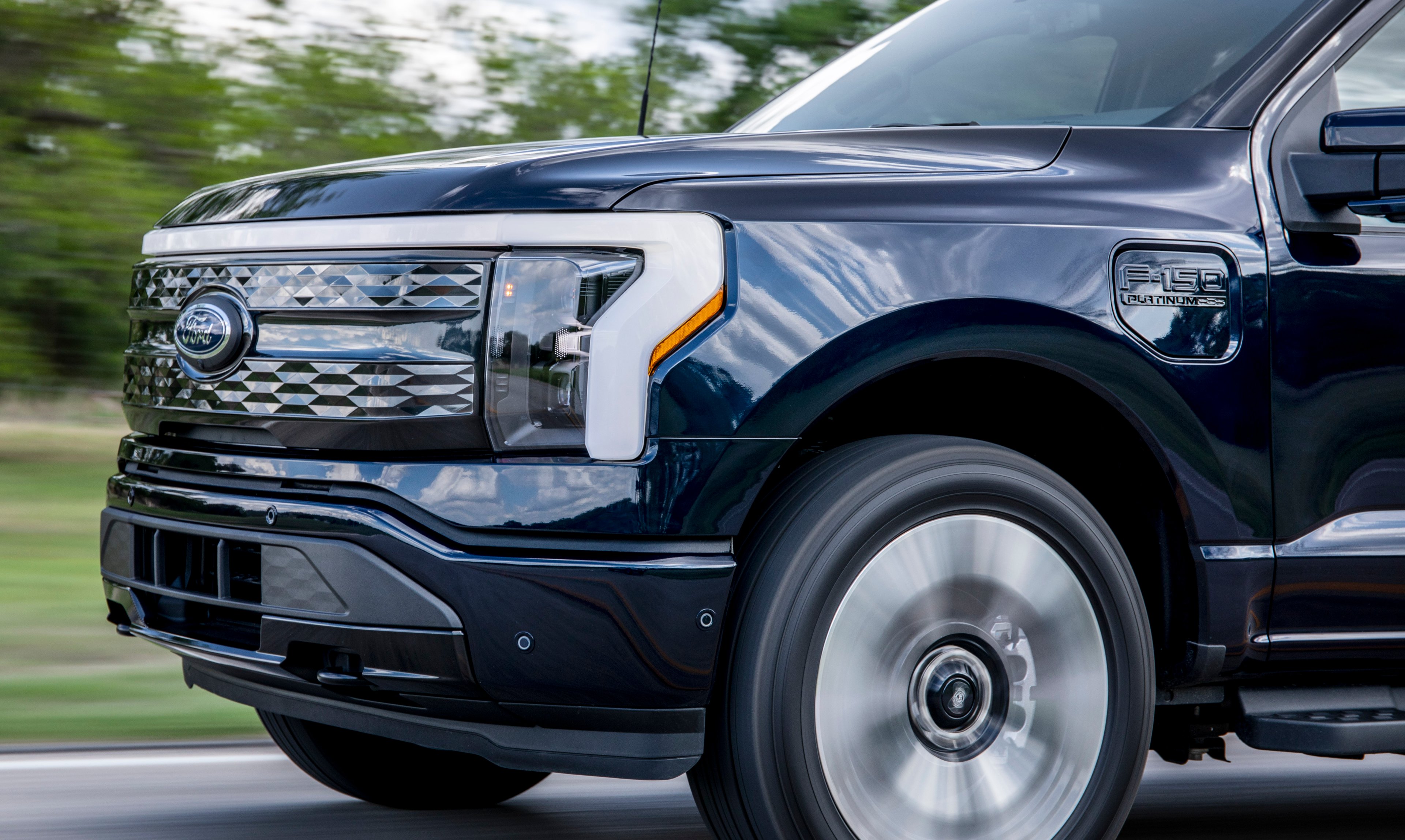
Image source: Ford Motor Company.
Rivian's AI chip
Rivian is looking to accelerate the rollout of autonomous driving features. It has developed its own AI computer chip and said that it will add lidar sensors to the upcoming R2 SUV. The Rivian Autonomy Processor will power its upcoming third-generation Autonomy computer. The chip can process 5 billion pixels per second and enables a "dramatic expansion of Rivian's autonomy capabilities," said Rivian CEO RJ Scaringe, according to Automotive News.
Rivian's new chip marks its most aggressive push into autonomous driving technology and positions the company to compete more directly with Tesla, especially when the R2 SUV hits the roads in 2026 and goes head to head with Tesla's top-selling Model Y. Another positive from Rivian developing its own chip is that it can move faster to deploy advanced driver-assistance features than it could if it was forced to work with suppliers.
For investors, as far as revenue streams go, the new Autonomy+ driver-assistance package will cost $2,500 as an upfront payment or $49.99 per month, according to Rivian. That's noticeably cheaper than Tesla's Full Self-Driving (FSD) system, which costs consumers $8,000 upfront or $99 per month.
The question, however, is: Does this recent development make Rivian stock a buy? Not necessarily. It's a great headline, and it's certainly technology that investors want Rivian to develop, but it doesn't seem like a game-changer for an investment thesis. At least, it doesn't change the investment thesis until perhaps it's more intertwined with joint venture business, potential licensing, or other new revenue streams.
Developing this simply puts Rivian on par with, or in the vicinity of, Tesla's current technology. While it does open the doors in the future for more ambitious autonomous projects that could be game-changing, what should really matter to investors right now is the R2. Until then, watch Rivian stock from the sidelines as it builds scale and continues to improve gross profits.

NASDAQ: RIVN
Key Data Points
$19.5 billion pivot away from EVs
Ford had its own massive development as the Detroit automaker announced it would take a charge of $19.5 billion over the next couple of years in a pivot away from full electric vehicles (EVs) to place a renewed focus on hybrids. Ford made a massive decision when it saw a market that wasn't buying high-end EVs -- think in the $50,000 to $80,000 range -- to pivot and focus on not only hybrids but more affordable EVs based on its new, low-cost, flexible Universal EV Platform.
Ford now expects about 50% of its global volume to be hybrids, extended-range EVs, and full EVs by 2030, up substantially from this year's 17%.
But those strategic changes and that pivot only explain the massive charge. What was also interesting in Ford's broader announcement was that the company is dipping its toes into a new business: Battery energy storage systems (BESS). The plan is to repurpose an existing U.S. battery manufacturing plant in Kentucky to serve the expanding BESS market, creating a new and profitable revenue stream for Ford.
To support its new endeavor, the automaker plans to invest roughly $2 billion over the next two years to scale the business. It's a move that Ford hopes will capture the increasing demand for energy storage as AI data centers and other infrastructure weigh on the energy grid.

NYSE: F
Key Data Points
Long road ahead
Both Rivian and Ford made solid moves with future potential aplenty. Rivian's venture into developing its own AI chips could certainly provide competitive advantages, especially as it develops partnerships -- such as the one with Volkswagen Group -- to generate revenue from its software stack. While the automaker is a long way from competing with tech giants in the space, there is an intriguing future where Rivian's autonomous vehicle technology could power its growth potential.
Ford, on the other hand, is fine-tuning its growth strategy to focus its investments on higher-growth-potential opportunities. It's great news for investors that Ford is willing to pivot toward where the market actually is, rather than where they hoped it would be, and a focus on hybrids could prove a wise business move in the near term. It's a positive development, but not something that would fundamentally change your investment thesis. Investors might be wise to take a wait-and-see approach on both stocks, for the time being.