ASML (ASML +3.22%) and Taiwan Semiconductor (TSMC) (TSM +0.53%) are arguably the two most essential artificial intelligence (AI) stocks in the hardware space. TSMC is well known for being the foundry of choice for Nvidia, Apple, and other top semiconductor companies.
However, TSMC's success is not possible without ASML. It uses the extreme ultraviolet lithography (EUV) machines built by ASML to manufacture the world's most advanced chips.
This creates a harder job for investors trying to discern which stock is more likely to make the highest long-term gains. Although both companies are critical to this process, investors need to take a closer look to see which is the more suitable stock for them to own.
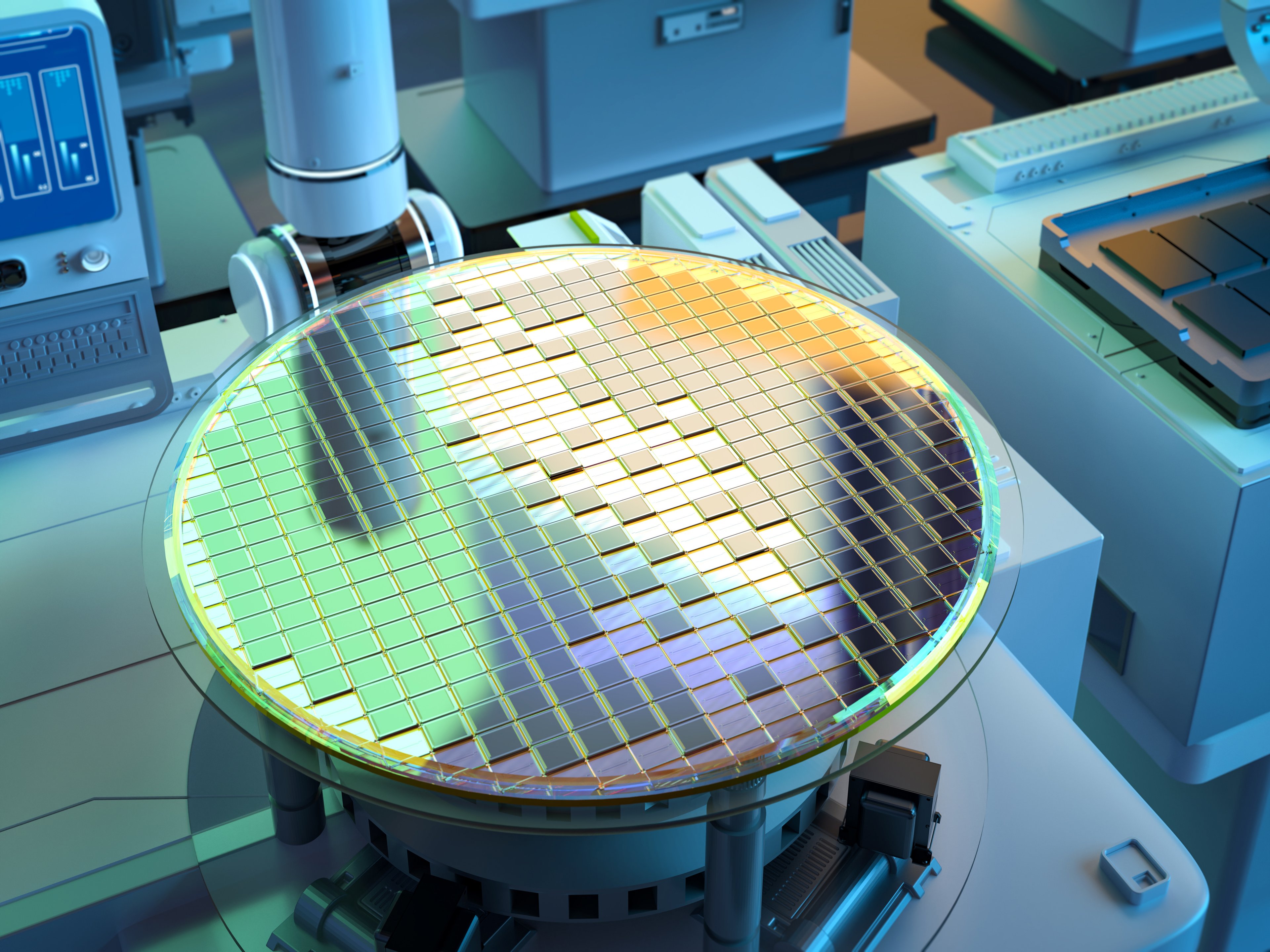
Image source: Getty Images.
The case for ASML
Investors should remember one thing about ASML. Despite ASML's importance, only a tiny client base is interested in its EUV machines, which can cost as much as $400 million each. Worse, political concerns bar what equipment it can sell to countries like China, further adding to that limitation.
Nonetheless, companies such as Samsung and Intel are among the companies buying EUV machines. Additionally, ASML operates in the deep ultraviolet lithography (DUV) market. Although the market has more competitors, it also allows it to earn business from foundry companies that produce other types of chips.
Furthermore, such costly equipment needs periodic maintenance. With that, the Netherlands-based company runs a thriving maintenance business that accounts for more than one-third of ASML's revenue.
Amid the growth in AI, its machines are more in demand, so much so that ASML earned almost 23 billion euros ($27 billion) in revenue in the first nine months of 2025, a yearly increase of 21%.
Also, ASML limited expense growth, leading to a net income of 6.8 billion euros ($7.9 billion), a 39% rise from year-ago levels. With the rising profits, the stock is up by almost 50% over the last year.

NASDAQ: ASML
Key Data Points
Investors should also note the price-to-earnings (P/E) ratio of 40. While that is above the S&P 500
average of 31, it closely approximates the company's average over the last five years. Considering the demand in AI, such a valuation is unlikely to deter investors from bidding the stock price higher over time.
Why investors might consider TSMC
However, with a larger client base, investors might find TSMC stock more appealing. They might also like its dominance.
As mentioned, TSMC makes the world's most advanced chips. While companies like Samsung and Intel have attempted to compete, TSMC's dominant market share continues to grow. As of the second quarter of 2025, that market share reached 70%, giving the company a tremendous competitive advantage.
This arguably makes TSMC's biggest threat operating in Taiwan, an island that has dealt with periodic threats of an invasion by China. Since Chinese companies also depend on its chips, the threat could be overblown. Still, it was concerning enough that Warren Buffett reversed a decision by his lieutenants to invest Berkshire Hathaway's capital in the company.
That threat has not stopped TSMC's growth. The $87 billion in revenue TSMC earned in the first nine months of 2025 rose 36% compared to the same period last year.
Also, like with ASML, expenses grew more slowly than revenue. Still, with other comprehensive losses weighing on the bottom line, its comprehensive income of $35 billion in the first three quarters of 2025 increased by 30% year over year. If not including those losses, net income would have grown by 52%.
Amid the rising demand and income, TSMC stock is up by almost 50% over the last year. Also, with a 30 P/E ratio, it is cheaper than ASML and trades at a valuation that closely matches the S&P 500 average.

NYSE: TSM
Key Data Points
Still, TSMC has tended to trade at a discount, and for that reason, it is above its average earnings multiple of 25 over the last five years. That makes it unclear whether TSMC is a better bargain, or whether investors feel the geopolitical concerns justify the discounted multiples of the past.
ASML or TSMC?
Considering these similarities, investors will likely win by choosing either or both stocks. However, choosing between the two probably comes down to risk tolerances.
TSMC offers similar revenue and stock price growth at a lower valuation. Hence, if one is comfortable with the geopolitical risk, it might make sense to lean more toward TSMC.
Conversely, if one feels as Buffett does about the geopolitical concerns, ASML is probably the more suitable choice, as most of its manufacturing takes place far away from geopolitical hotbeds.
Ultimately, investors have the choice between two critical AI hardware stocks that are well-positioned to outperform the market. Thus, this is one case where they should assess their risk tolerances and act accordingly.