The artificial intelligence (AI) market expanded rapidly in recent years as sophisticated AI chatbots locked in hundreds of millions of users. That secular shift is driving more companies to upgrade their AI infrastructure and integrate more AI applications into their businesses.
According to Grand View Research, the AI market will continue to expand at a CAGR of 30.6% from 2026 to 2033. Two tech giants are well-positioned to profit from that boom: Nvidia (NVDA 0.22%) and Microsoft (MSFT +2.20%). Let's see why both stocks will remain the "best in breed" plays on the growing AI application market this year.

Image source: Getty Images.
Nvidia still sells the best AI picks and shovels
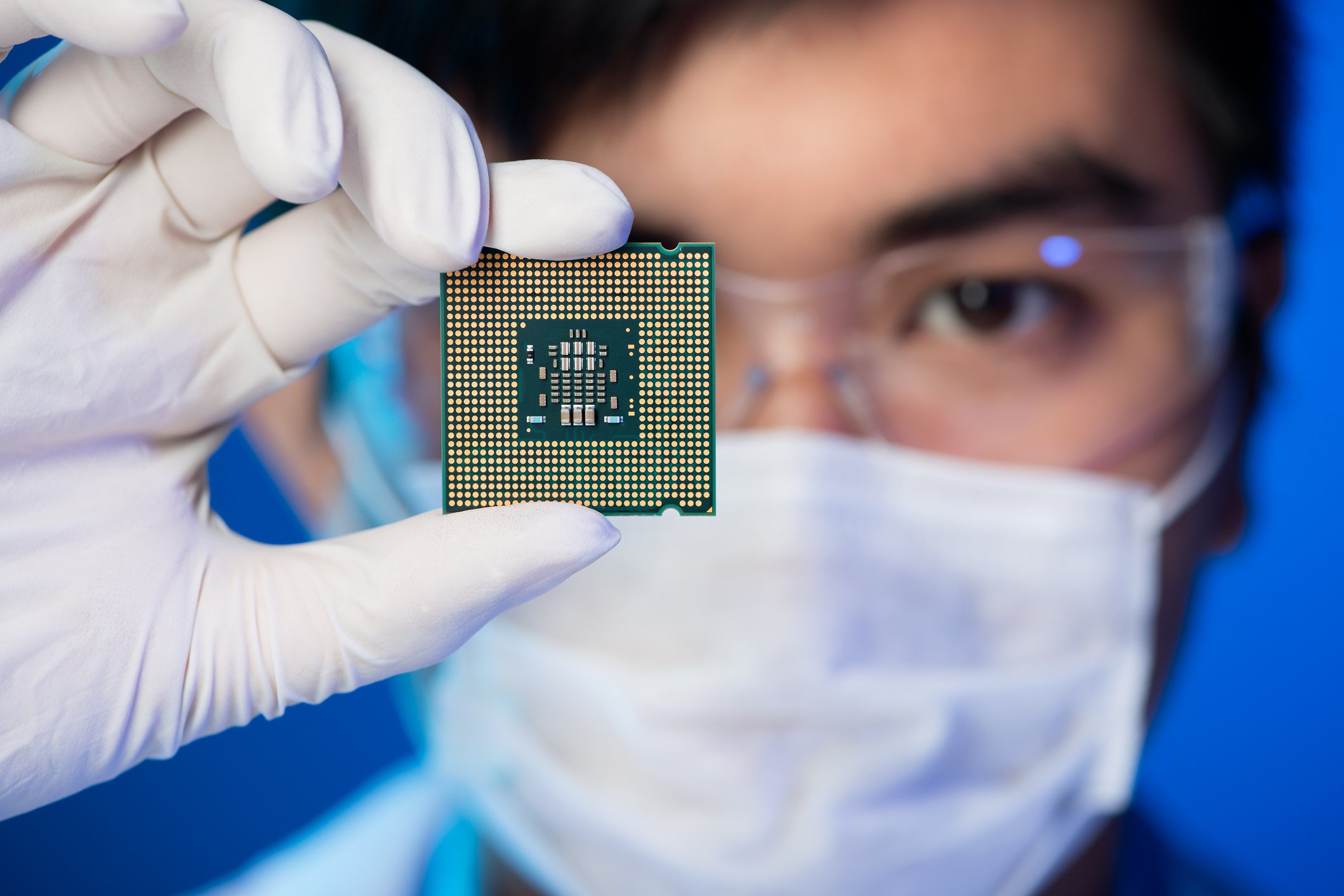
Nvidia produces more than 90% of the world's discrete GPUs. Unlike CPUs, which are optimized for sequential tasks, GPUs can handle a broad range of parallel tasks -- which makes them well-suited for complex graphics, machine learning, and AI applications.

NASDAQ: NVDA
Key Data Points
Nvidia once generated most of its revenue from gaming PCs, but its high-end data center GPUs now account for most of its top line. Most of the world's leading AI software companies -- including Microsoft, Meta, and Alphabet's Google -- are spending billions of dollars on those data center GPUs.
Nvidia locks those customers into CUDA (Compute Unified Device Architecture), a proprietary programming platform for its own chips, and other optimized services. The stickiness of that ecosystem widens its moat against its other chipmakers, and it consistently reinforces its first-mover advantage with smaller, denser, and more power-efficient chip architectures -- including Turing (2019), Ampere (2020), Hopper (2022), and Blackwell (2024).
Therefore, Nvidia should continue to sell the best picks and shovels for the AI gold rush for the foreseeable future. From fiscal 2025 (which ended last January) to fiscal 2028, analysts expect its revenue and earnings per share (EPS) to grow at CAGRs of 47% and 45%, respectively. Those are incredible growth rates for a stock that trades at 27 times next year's earnings, and it will continue to rise as long as the demand for new AI chips outstrips its available supply.
Microsoft's cloud and AI investments are paying off
Over the past decade, Microsoft underwent a "mobile first, cloud first" transformation under Satya Nadella, who took the helm as its third CEO in 2014. By sticking to that strategy, the tech giant transformed its Office desktop software into cloud-based services and mobile apps, expanded Azure into the world's second-largest cloud infrastructure platform, and turned its Windows OS into a central hub for its cloud, mobile, and AI services. It also expanded its Xbox gaming unit with significant acquisitions and launched new Surface devices.

NASDAQ: MSFT
Key Data Points
Microsoft also began investing in OpenAI, the creator of ChatGPT, in 2019. It's now the start-up's largest investor, and it integrates OpenAI's technology into its Copilot generative AI platform, Azure cloud services, and other Microsoft 365 productivity services. Those AI upgrades locked in its enterprise customers and widened its moat against competitors.
Over the next year, Microsoft will continue to expand Copilot by rolling out more specialized agents for the finance, legal, sales, healthcare, and engineering markets. It also expects to gain more employees per licensed customer as it maintains its pricing power. As Copilot gains more momentum, economies of scale should kick in, helping to dilute its infrastructure expenses. Its development of custom AI chips -- including Maia and Cobalt -- could further improve Azure's performance-per-dollar, strengthen its margins, and gradually reduce its dependence on Nvidia. Meanwhile, Azure will continue to profit from the AI boom as more companies upgrade their cloud infrastructure to support the latest AI applications.
From fiscal 2025 (which ended last June) to fiscal 2028, analysts expect Microsoft's revenue and EPS to grow at CAGRs of 16% and 18%, respectively. Its stock still looks reasonably valued at 26 times next year's earnings, and it remains a well-balanced play on the expansion of the cloud, mobile, gaming, enterprise software, and AI application markets.