Continuing my "bull vs. bear" series of articles, today I'm looking at Amazon (AMZN +3.23%). This member of the so-called "Magnificent Seven" has actually been a laggard over the past five years, with the stock failing to keep pace with the market.
I am personally very bullish on Amazon, so I'm going to start with the bearish case for the stock first.

NASDAQ: AMZN
Key Data Points
The bear case
Amazon is not the revenue growth machine it was in the past, and its multiple has come down as a result. While the company is a leader in e-commerce, this business is not immune to weak consumer spending or a recession. Meanwhile, things like tariffs and high gasoline prices are all potential headwinds.
Amazon's cloud computing business, Amazon Web Services (AWS), meanwhile, has lagged the growth of Microsoft's Azure and Alphabet's Google Cloud. And while Amazon has its own custom artificial intelligence (AI) accelerators, the chips and their ecosystem don't match those of Alphabet and its Tensor Processing Units (TPUs). At the same time, its efforts to create a foundational large language model (LLM) have largely lagged.
Amazon is set to once again go into investment mode, with plans to spend $200 billion in capital expenditures (capex) this year. That's a massive amount of money that will add to its debt load and lead the company to be free cash flow negative this year.
Image source: The Motley Fool.
The bull case
There is a lot to like about Amazon right now. Starting with its e-commerce operations, the company is just driving tremendous efficiency right now in this business. E-commerce is a high-sales, low-operating margin business, so the more Amazon is able to drive operating leverage, the faster it can grow its profits in the segment.
Amazon is doing just that through its use of AI, automation, and robotics. The company is the largest maker of robots in the world and is continually advancing their capabilities. It has over 1 million robots operating in its fulfillment centers, all coordinated by its DeepFleet AI model. At the same time, it is using AI to better optimize its logistics network.
Amazon also owns one of the world's largest digital advertising platforms, and it continues to grow quickly from a large base. Like others in the space, it is applying AI to help its advertising customers better convert users.
All this helped Amazon grow its North American operating income by 24% on just a 10% increase in revenue. Brick-and-mortar retailers like Walmart and Costco, which trade at much higher multiples, aren't seeing anywhere close to this type of operating leverage.
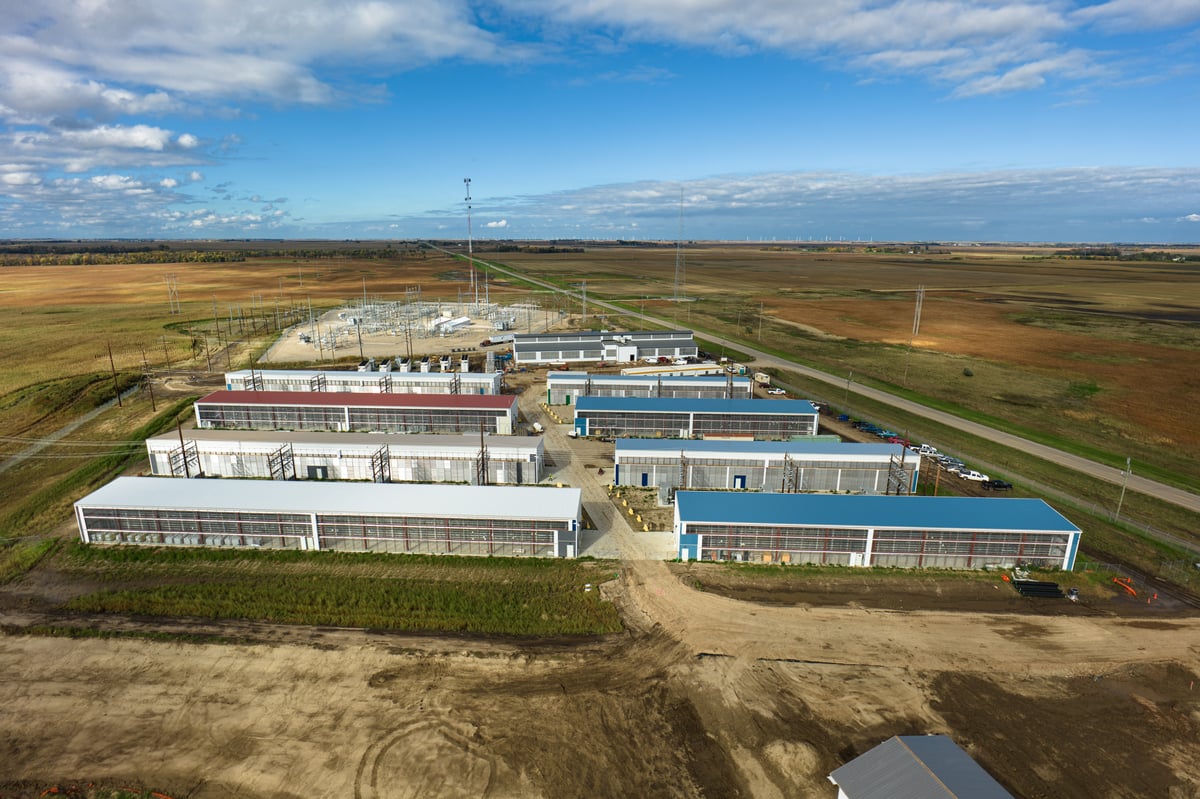
At the same time, its cloud computing revenue growth is starting to accelerate. AWS revenue climbed 24% last quarter, its highest growth rate in 13 quarters. Meanwhile, that could just be the beginning, as the company just completed a big data center dedicated to Anthropic late last year, and it's investing massively this year to try and keep up with demand.
And while the company's chip business is not as proven as Alphabet's, the Anthropic data center is being entirely run on its chips, and internal use is helping the company save billions in capex and lowering its inference costs. It also has the advantage of having developed its own custom central processing units (CPUs), which looks like it will be the next big AI infrastructure bottleneck. Amazon said its chips are a $20 billion revenue run-rate business, but including internal use, it would be $50 billion.
The company has another potential growth driver emerging with satellite internet. Its announcement that it is acquiring Globalstar will give it the spectrum and technology to help accelerate its satellite launch plans and improve its offering. As part of the deal, it will also provide satellite connectivity for the iPhone and Apple Watch.
The verdict
Amazon is a great buy today in my book. The company has so many things that are being underappreciated by the market that I don't think it will take much for the stock to break out from here.
You can find past "bull vs. bear" articles on Apple, Meta Platforms, Palantir, Micron, and Nvidia by following the links.