The U.S. war against Iran continues to dominate headlines, even though it's apparently now in ceasefire mode (but check back in five minutes -- that may have changed). Two months into the conflict, the guns have fallen silent, and Pentagon Comptroller Jay Hurst has calculated the cost to date: $25 billion.
The White House cautions that this number may still rise as the cost of maintaining a long-term naval blockade on Iran gets factored in. Indeed, as recently as April, The Washington Post reported the White House anticipated costs in the $80 billion to $100 billion range.
Even if the Iran war is over, though, and spending there doesn't grow... it may still rise elsewhere.
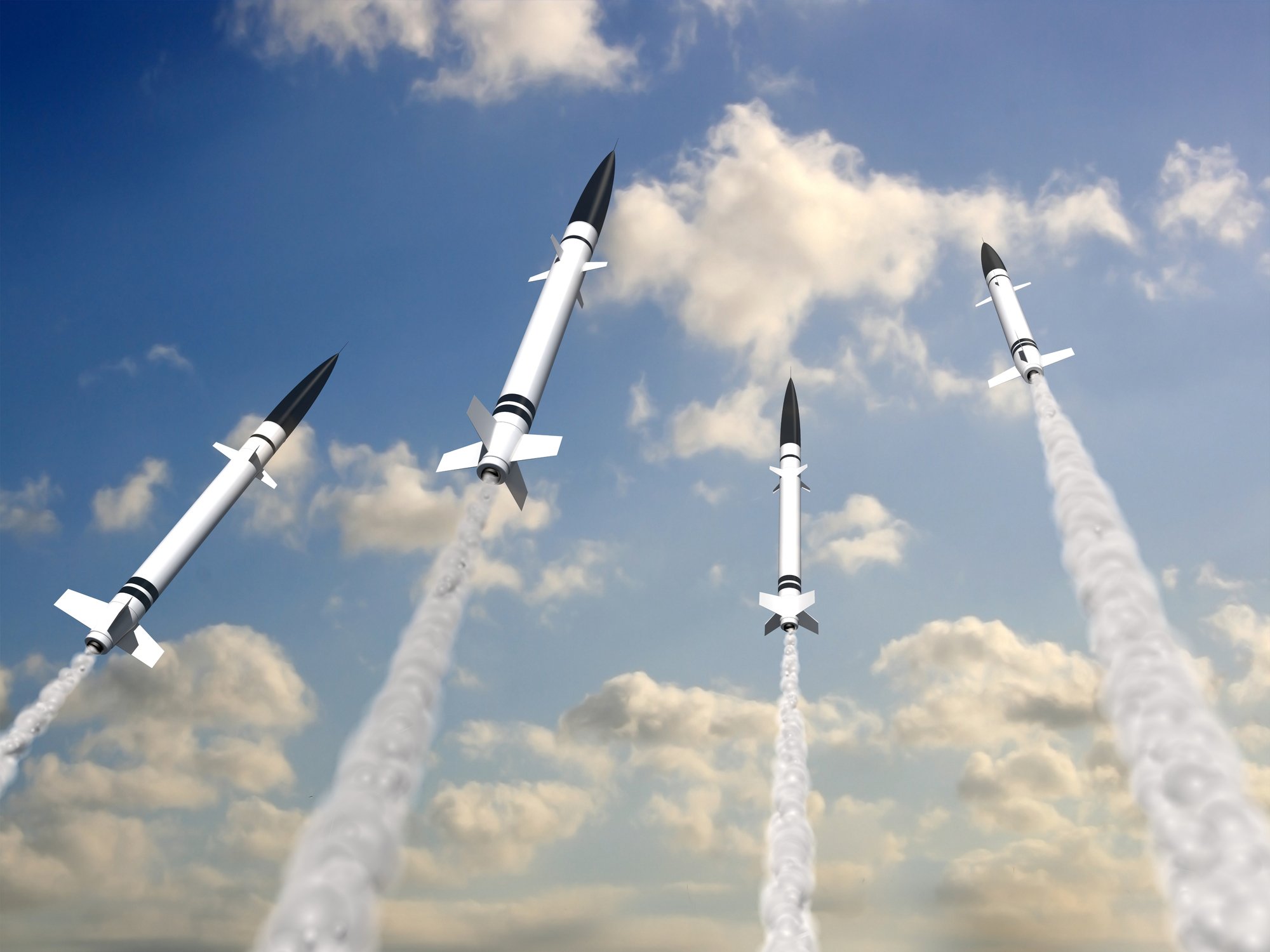
Image source: Getty Images.
Keeping an eye on Russia -- and China
In evidence of which, see a recent list of defense contracts awarded by the Pentagon, described in the April 29 daily digest from the U.S. Department of Defense. In particular, see the award of $833 million to defense contracting stalwart RTX (RTX +0.61%) to produce Evolved SeaSparrow Guided Missiles.
Developed in cooperation with NATO and built by RTX, the Evolved SeaSparrow Guided Missile (or ESSM) is described as providing "reliable ship self-defense capability against agile, high-speed, low-altitude anti-ship cruise missiles; low-velocity air threats, such as helicopters; and high-speed, maneuverable surface threats."
Cruise missiles? Low-velocity air threats like... Shahed drones? High-speed boats such as those piloted by the Iranian Revolutionary Guard? These all sound like use cases tailor-made for a military mission to defend the Strait of Hormuz.
And in fact, I suspect the U.S. Navy did put SeaSparrow to good use in the recent conflict in Iran -- but that's not the threat that last month's SeaSparrow seems to be anticipating.
As the Pentagon explains, the unspecified number of SeaSparrows that RTX will produce will go to U.S. allies in Australia, Belgium, Canada, Denmark, Germany, Greece, the Netherlands, Norway, Portugal, Spain, Turkey... and yes, also the U.S. Navy.
Excepting Turkey, though, none of these countries is located anywhere near the Middle East. Rather, they're all members of NATO -- an alliance formed with the express intention of deterring Russian aggression (except for Australia, which has its eye on China).
And what this SeaSparrow purchase says to me is that NATO (and Australia) are already looking past the Iran conflict to consider future threats from Russia and China -- and the weapons systems that might mitigate them.

NYSE: RTX
Key Data Points
How important is SeaSparrow to RTX?
So what does this mean for RTX? Broadly speaking, I'd say it means we should follow the money and start anticipating more defense contracts being awarded with Russia and China in mind. But let's put that idea on a shelf for now, and for today, just focus on RTX and what this specific contract means.
RTX comprises three main divisions. Collins Aerospace manufacturers essential components for aircraft, including avionics, flight controls, and cabin interiors. Pratt & Whitney focuses even more specifically on airplane engines. SeaSparrow missile production resides within the third major business division: Raytheon.
The three divisions are roughly equal in size, although Raytheon produces slightly less revenue than the others. Raytheon does generate more operating profit on its revenue than Pratt & Whitney, however, and at a higher operating profit margin: 11.5%.
Investors can therefore logically expect that increased SeaSparrow sales will boost the defense contractor's profits, but by how much?
SeaSparrow is just one product within a very large business division (the entire company used to be called "Raytheon," remember) that does $28 billion in annual sales. Moreover, with full delivery not due until 2030, SeaSparrow revenues won't arrive all in a single year but rather be spread out over five years. So we're really looking at an 11.5% profit margin on an extra $167 million in annual revenue, yielding about $19.2 million in additional operating profit annually.
Spread across RTX's more than 1.3 billion shares outstanding, that's only an extra penny a year in operating profit per share. It's nice to have, but it won't "move the needle" much, I'm afraid.
SeaSparrows or no SeaSparrows, with RTX stock trading for 32 times trailing earnings but expected to grow earnings only about 10% annually over the next five years, this stock sits far from the top of my must-buy-now list.