Quantum computers are an incredible innovation. They use a concept called superposition to simulate several different solutions to a given problem at once, so they're more efficient than traditional computers at processing specific workloads, particularly in areas like science and cryptography.
Rigetti Computing (RGTI -5.56%) has built some of the industry's most capable quantum computers, but they still produce relatively high error rates, making them impractical for solving many real-world problems. As a result, the company is struggling to generate meaningful revenue.
Rigetti stock has plummeted 61% from last year's record high; here's where I predict it could be in 12 months.
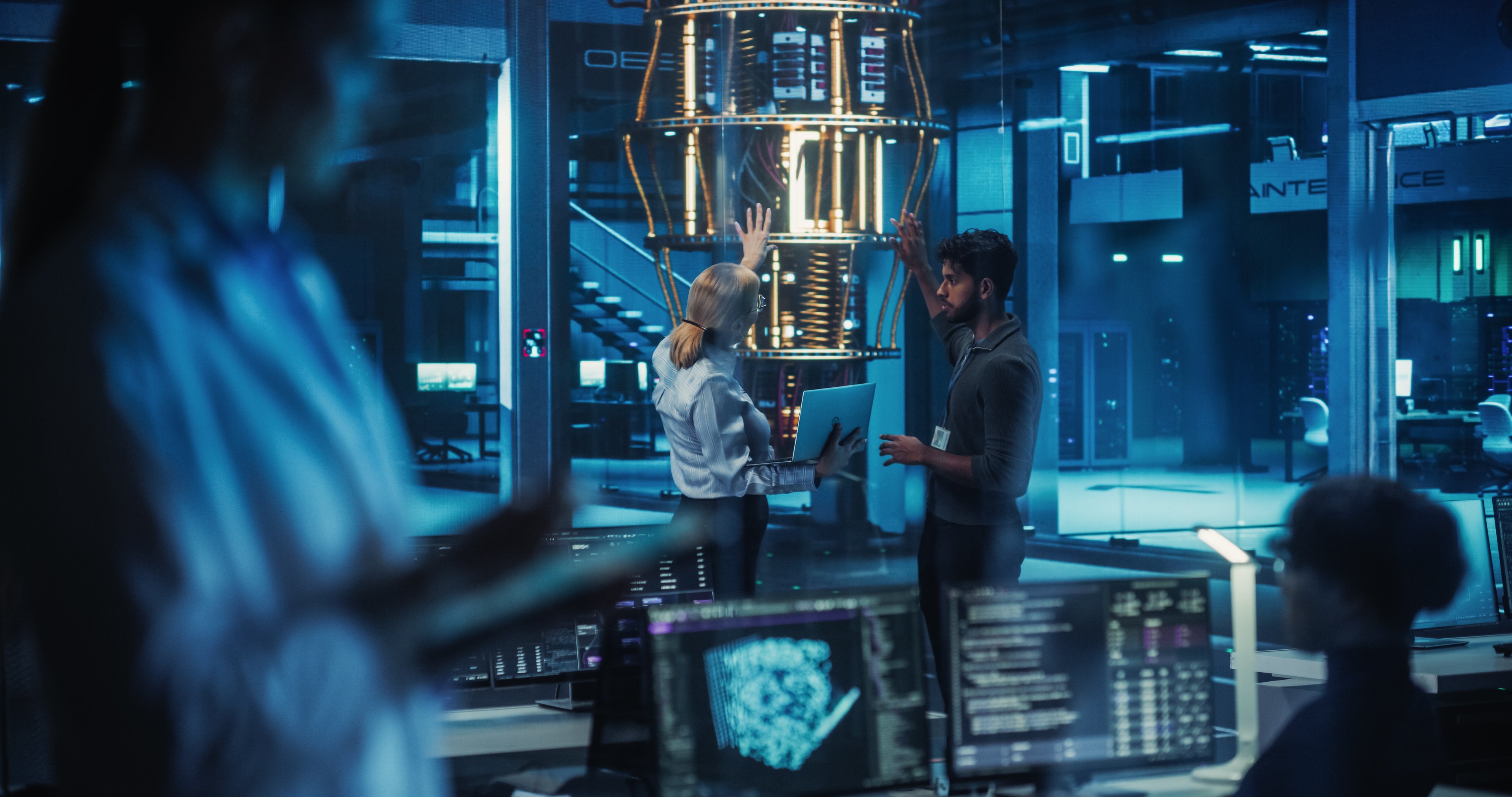
Image source: Getty Images.
Rigetti's most powerful computer is now widely available
Rigetti is unique because it built an entire in-house supply chain for its quantum computing business. It operates a fabrication facility, it created its own programming language called Quil, and it even launched its own cloud platform where it leases quantum computing capacity to enterprises for a fee.
Therefore, Rigetti can bring new computers to market and commercialize them much faster than its competitors. During the first quarter of 2026, the company made its flagship Cepheus-1-108Q system widely available through its own cloud platform, but also through third-party platforms including Amazon Braket and Microsoft Azure Quantum, giving it unprecedented reach.

NASDAQ: RGTI
Key Data Points
Cepheus-1-108Q is the industry's largest multichip quantum computer. It features 108 qubits, so it offers 3 times the scale of Rigetti's previous Cepheus-1-36Q system. It also boasts a single-qubit gate fidelity of 99.9%, which means it only makes one error in every 1,000 quantum operations.
That error rate still makes Cepheus-1-108Q impractical for solving many real-world problems. Moreover, it has a 2-qubit fidelity of just 99.1%, implying nine errors for every 1,000 quantum operations. Qubits are extremely sensitive to noise, so making two of them work together harmoniously is one of the biggest challenges in the quantum industry. However, a system that overcomes this challenge will produce some of the most reliable quantum computations the industry has ever seen.
Rigetti believes it can improve Cepheus-1-108Q to achieve a 2-qubit fidelity of 99.5% sometime this year, but the company says a larger system with a 2-qubit fidelity of 99.9% could still be three years away.
Lumpy revenue and mounting losses
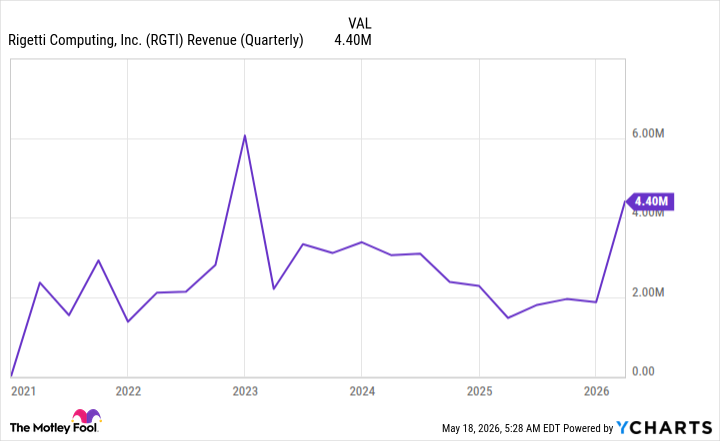
Rigetti generated $4.4 million in total revenue during the first quarter, which represented a whopping 198% increase from the year-ago period. While that was a fantastic result at face value, the company's quarterly revenue tends to be quite lumpy. In other words, there isn't a sustained upward trend just yet.
RGTI Revenue (Quarterly) data by YCharts
Rigetti says its revenue is heavily influenced by the timing of system deliveries and also government-funded projects, which is just the nature of the quantum industry given its early stage. With that said, the company is working to deliver an $8.4 million order for Cepheus-1-108Q to India's Center for Development of Advanced Computing this year, which will significantly boost its annual revenue. These orders should flow more consistently as the system's fidelity improves.
Rigetti's bottom line continues to pose a risk for investors. Scaling a quantum computing business isn't cheap, so the company's costs currently exceed its revenue by a wide margin. It had $27.3 million in total operating expenses during the first quarter, resulting in a net loss of $20.5 million on a generally accepted accounting principles (GAAP) basis.
Rigetti had $569 million in cash, cash equivalents, and short-term investments on its balance sheet at the end of the quarter, so it has plenty of resources to sustain its losses for now. However, if the company doesn't achieve profitability in the next few years, it might have to raise more money, which will dilute existing shareholders and dent their future returns.
Further downside might be ahead for Rigetti stock
Even though Rigetti stock has plummeted by 61% from last year's record high, its price-to-sales (P/S) ratio is still at a sky-high 574.
For some perspective, Alphabet, which is also developing quantum systems, has a P/S ratio of just 11. Rigetti also makes artificial intelligence (AI) giants like Nvidia and Palantir Technologies look like absolute bargains:
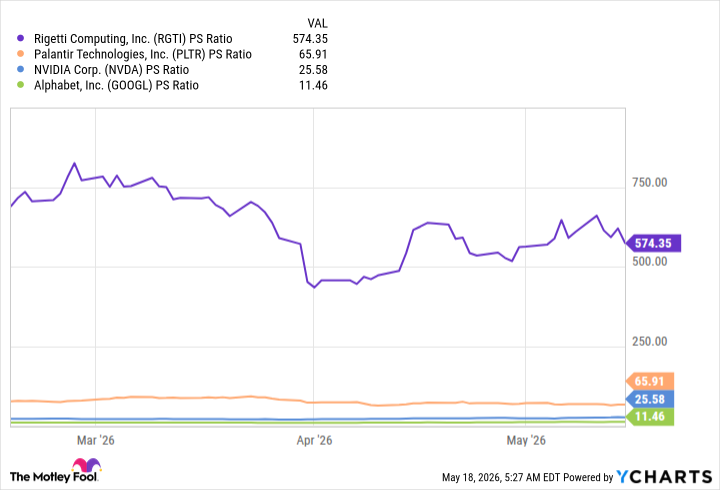
RGTI PS Ratio data by YCharts
Even if we value Rigetti stock based on Wall Street's consensus 2026 revenue estimate of $23.6 million (provided by Yahoo! Finance), its forward P/S ratio would still be 251. That suggests Rigetti would have to plunge by a further 95% over the next 12 months or so just to match Alphabet's P/S ratio of 11, implying a stock price of just $0.90.
I'm not suggesting that will happen, because many investors will happily pay a premium for Rigetti stock to capture some of the quantum industry's incredible long-term potential. However, its valuation is unsustainably high right now, so I think there is a very high probability that Rigetti's stock trades below $10 in exactly one year, and potentially below $5 if the company's progress fails to impress investors.