Nvidia is at the center of the artificial intelligence (AI) universe, thanks to its industry-leading graphics processing units (GPUs), which are the primary chips used in training and inference workloads. The company is experiencing more demand for its chips than it can possibly supply, which is boosting its revenue and earnings, resulting in a 20% gain in its stock this year so far.
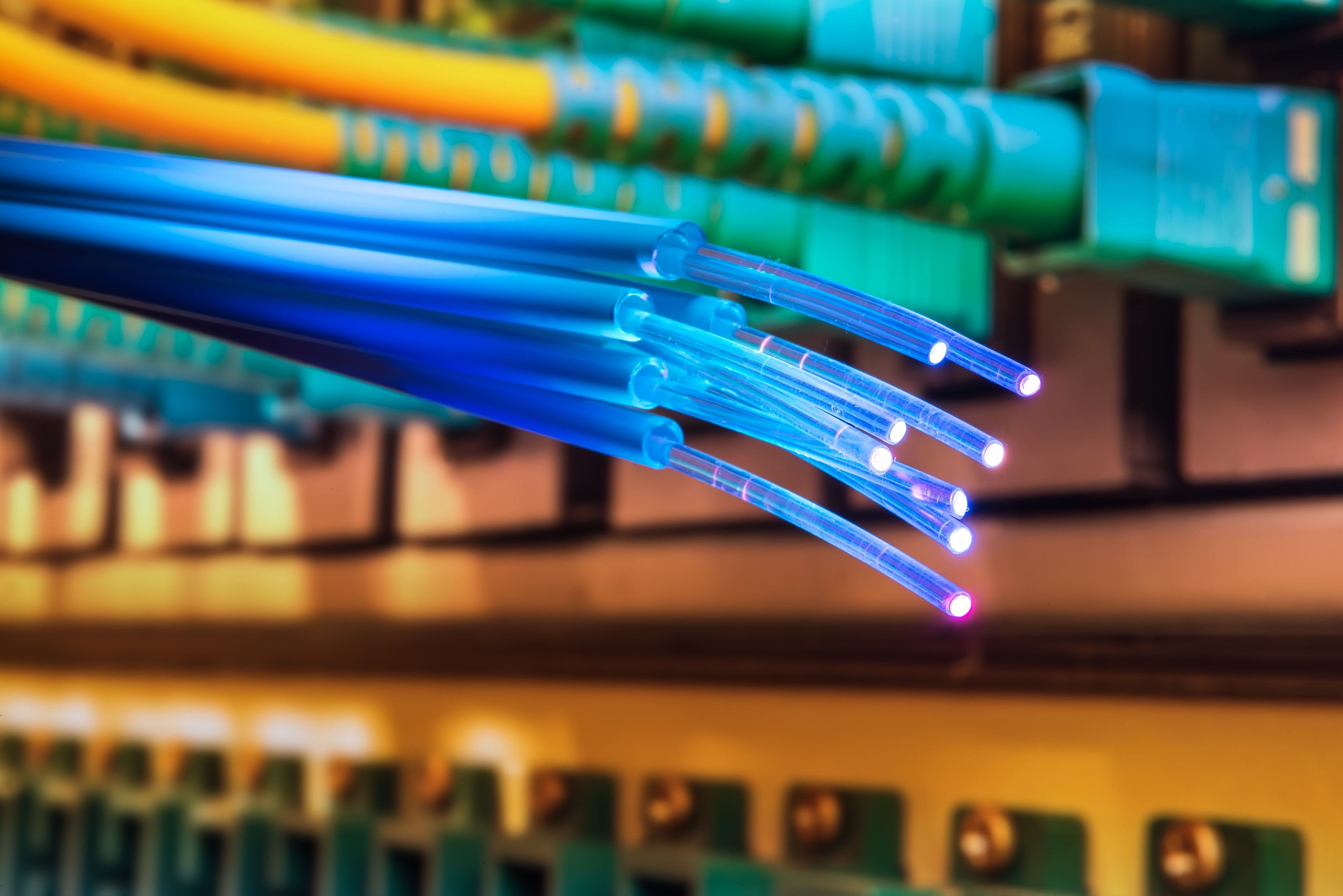
But one under-the-radar semiconductor stock is doing even better. Corning (GLW +1.68%) was founded in 1851, and it has manufactured glass for some of the world's most pivotal products, from Thomas Edison's original lightbulb to Apple's iPhone. But its stock is up 120% this year because of soaring demand for its fiber-optic cables, which improve processing speeds in the data centers used by the AI industry.
Since January alone, Corning has signed several multibillion-dollar deals with AI customers like Meta Platforms and even Nvidia, which could see its optical communications revenue grow by several orders of magnitude in the coming years.

Image source: Getty Images.
The shift to fiber-optic cables represents a major opportunity
The AI hardware stack is complex. Many operators configure Nvidia's chips in the company's NVLink-72 data center rack, which includes 72 GPUs, 36 central processing units (CPUs), Ethernet switches, and other networking equipment. These components are connected using two miles of copper cables, but there is an accelerating shift to optical fiber alternatives.
Fiber-optic cables are proven to transmit information faster than copper cables, while maintaining minimal data loss and improved energy efficiency. That is especially true for Corning's new, highly specialized product called Multicore Fiber (MCF), which combines four cores into a single 125-micron strand of fiber. With four times the density of a single-core alternative, Corning says data center operators can achieve the same performance with 75% fewer cables.
Under its deal with Nvidia, which was announced in May, Corning will expand its U.S.-based optical connectivity manufacturing capacity tenfold to deliver the supply data center operators need when deploying the chipmaker's GPUs. This will be transformative for Corning's business, but it's just one of the company's many opportunities.
In January, Meta Platforms agreed to buy $6 billion worth of optical fiber solutions from Corning over the next few years, which it will use in its AI data centers. And during a conference call with investors on April 28, Corning CEO Wendell Weeks said the company signed two more deals of similar size and scope to the Meta agreement with other hyperscale customers.
Corning's optical communications growth is accelerating
Corning produced $4.3 billion in core revenue during the first quarter -- up 18% compared to the prior-year period. Its optical communications business accounted for $1.8 billion of that revenue, and it grew at a much faster pace of 36%. In fact, that growth rate accelerated from the 35% increase the company delivered three months earlier in the fourth quarter of 2025, signaling high momentum in optical fiber sales.
The company is experiencing so much demand -- as highlighted by the deals I mentioned earlier -- that it has significant pricing power, boosting its profit margins. As a result, net income from the company's optical communications business exploded by 93% to $387 million during the first quarter. It accounted for over half of Corning's total core net income of $612 million, making AI now also a key driver of the company's bottom line.
Can Corning build on its year-to-date gain of 120%?
Despite the overwhelmingly positive picture I've painted of the Corning story so far, here's where things get tricky. Based on the company's adjusted (non-GAAP) trailing-12-month earnings of $2.69 per share, its stock is trading at a price-to-earnings (P/E) ratio of 73.9. That means it's almost twice as expensive as Nvidia stock, which trades at a P/E ratio of 38.7.

NYSE: GLW
Key Data Points
Normally, I would say it's difficult to justify that incredibly steep premium, but the revenue pipeline for Corning's optical communications business could legitimately be worth tens of billions of dollars over the next few years, based solely on the deals we already know about -- and there could be more to come. As a result, investors are simply pricing in some of that forward growth.
In fact, Wall Street's consensus estimate (provided by Yahoo! Finance) suggests Corning will grow its adjusted earnings to $4.22 per share in 2027, placing its stock at a forward P/E ratio of 47.1. Earnings forecasts for 2028 will come into focus as we move into next year, and if similar growth is on the table, then it could pave the way for further upside in Corning stock.
In summary, investors looking for short-term gains over the next few months should probably avoid this stock because of its high P/E ratio, but it could reward those willing to hold it for the next few years as the company executes on its major supply agreements.